E-mail: [email protected]
E-mail: [email protected]Address: NO. 132 Xingye Road,Fengqiao Town ,Zhuji City,Zhejiang
Whatsapp: +86-13958007768
Whatsapp: +86-13655857582




Need Help
+86-13958007768
E-mail: [email protected]
E-mail: [email protected]
Address: NO. 132 Xingye Road,Fengqiao Town ,Zhuji City,Zhejiang
Whatsapp: +86-13958007768
Whatsapp: +86-13655857582
Our team is proud to offer on time guarantee and product guarantee to customer satisfaction.
Read MoreNews
 Home / News / Industry News / Optimizing Commercial Chassis Leveling Through Advanced ECAS Solenoid Valve Fluidics and Electronic Control Loops
  2026.06.11
 Industry News
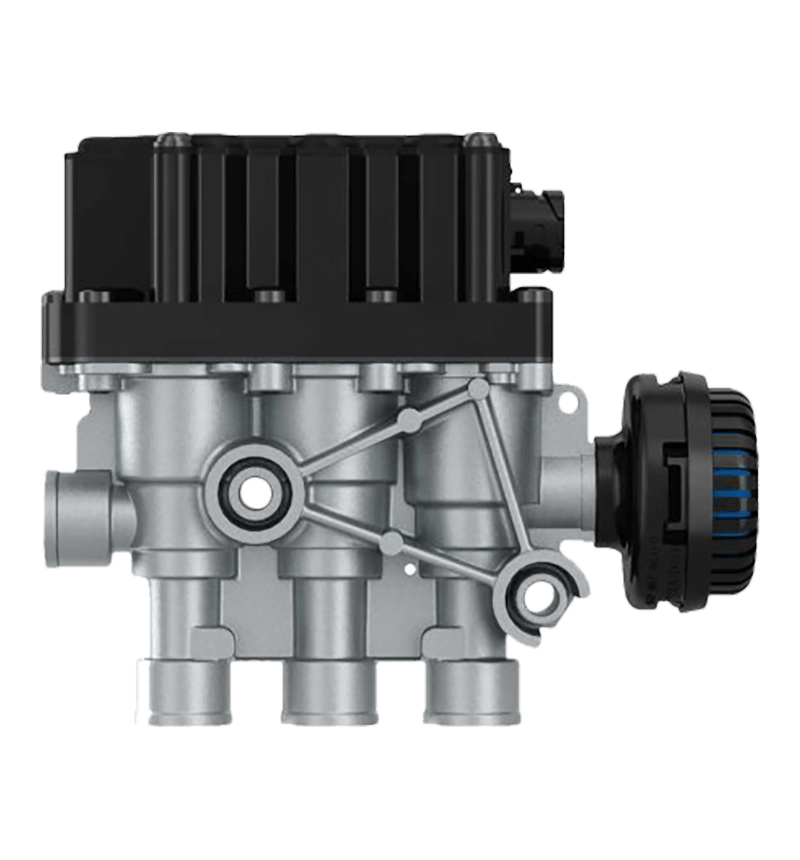
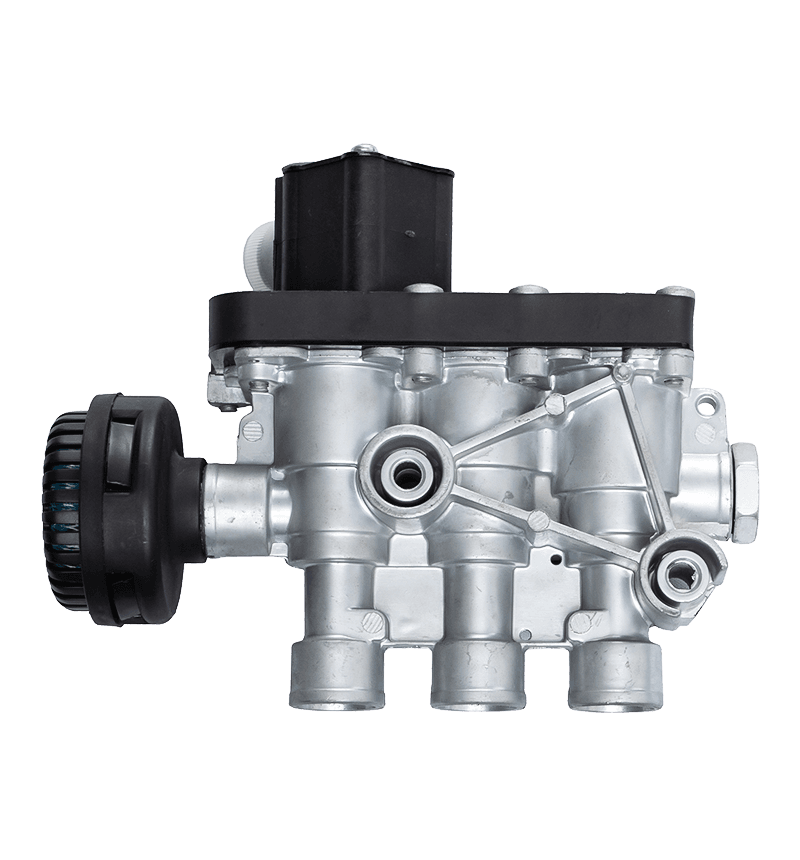
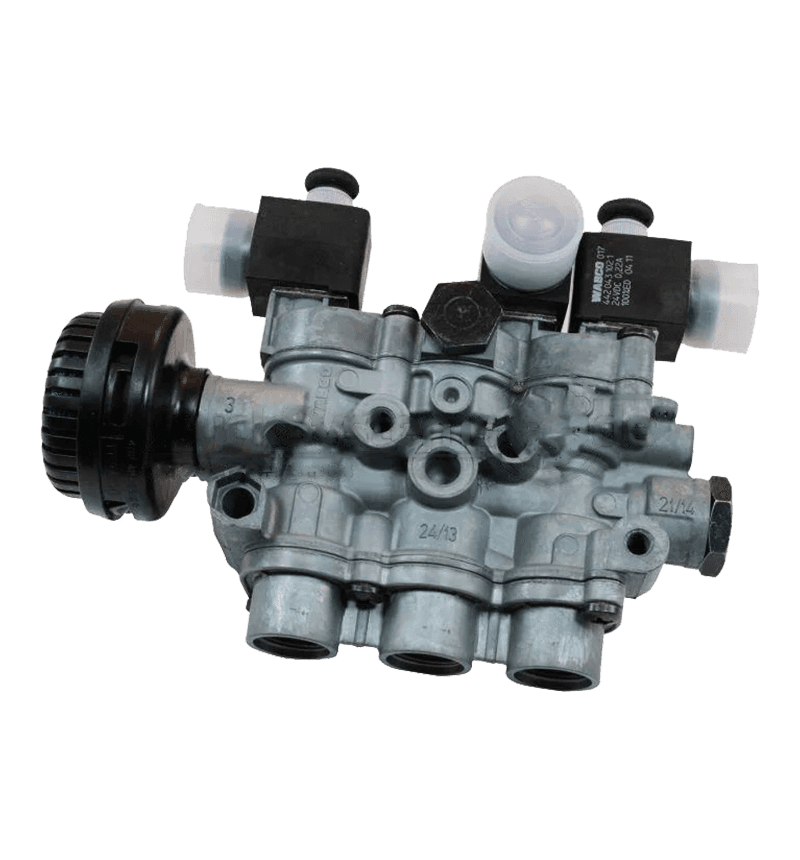
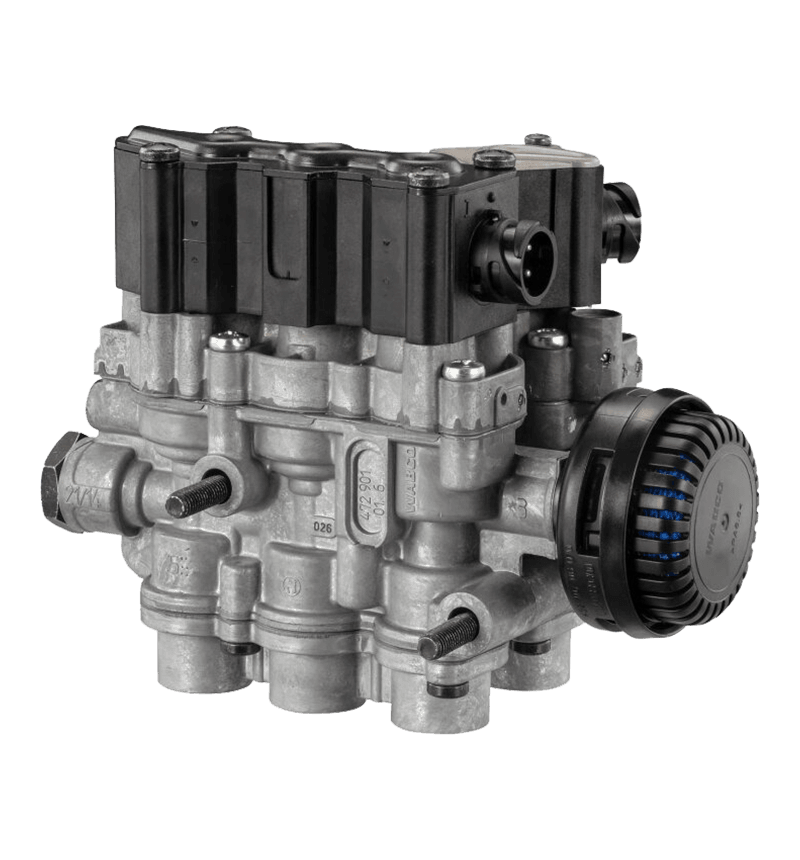
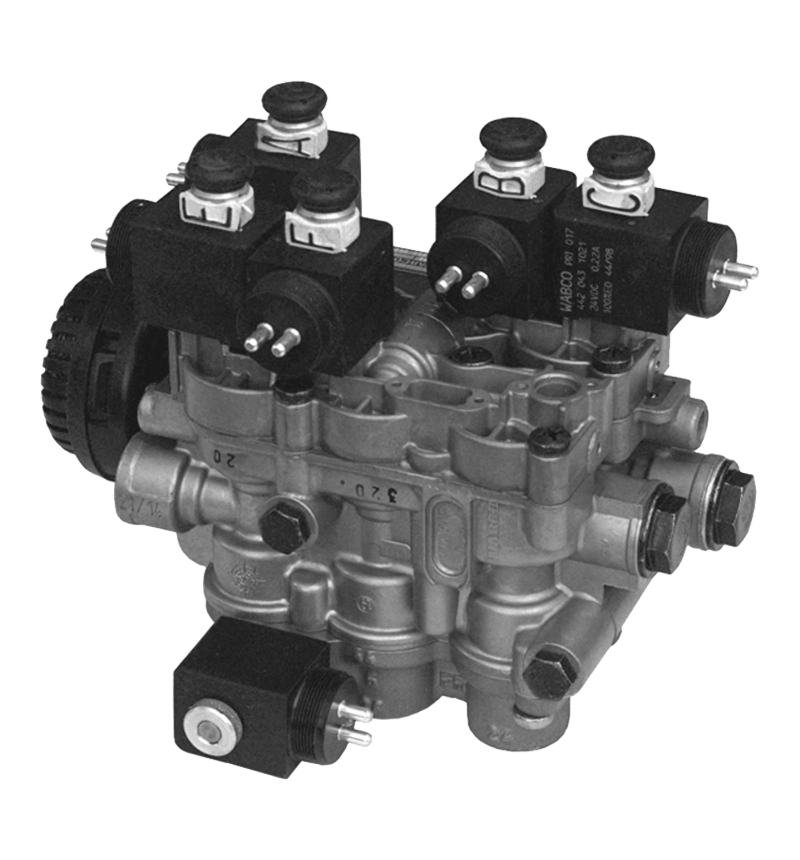
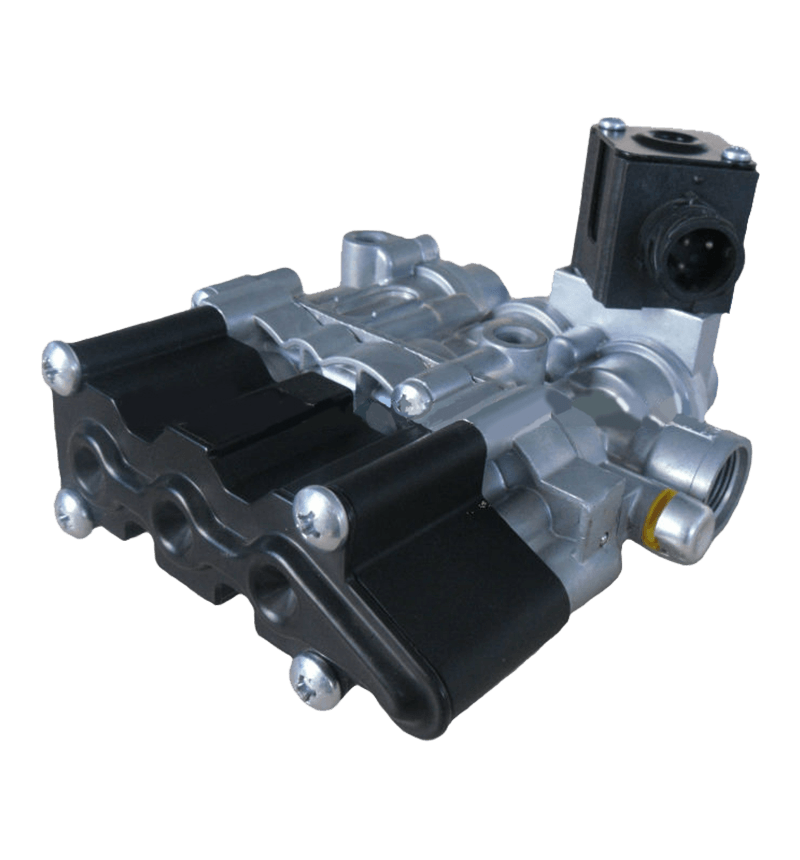
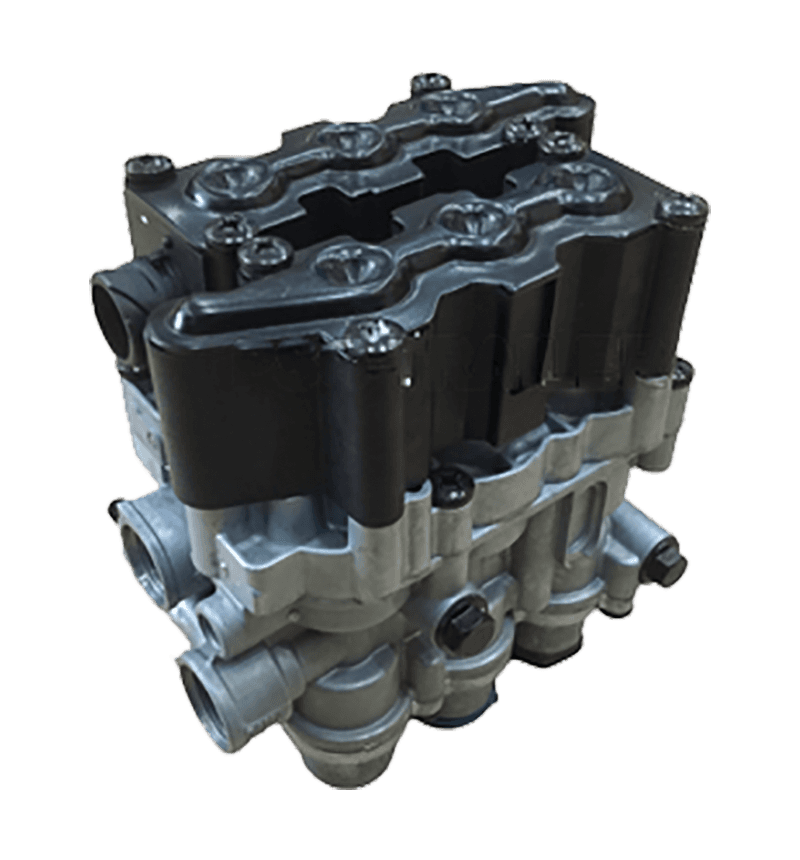
Maintaining precise chassis leveling, structural stability, and optimal aerodynamic profiles in heavy commercial transit networks depends fundamentally on the deployment of an integrated ECAS valve manifold assembly. Utilizing multi-channel ECAS solenoid valves paired with electronic height sensor networks allows the chassis pneumatic system to adjust air spring volume within a strict response window of less than 50 milliseconds. This automated air management process balances axle loads and dampens dynamic road shocks, delivering high roll stability and passenger safety for commercial trucks, trailing units, and mass transit buses.
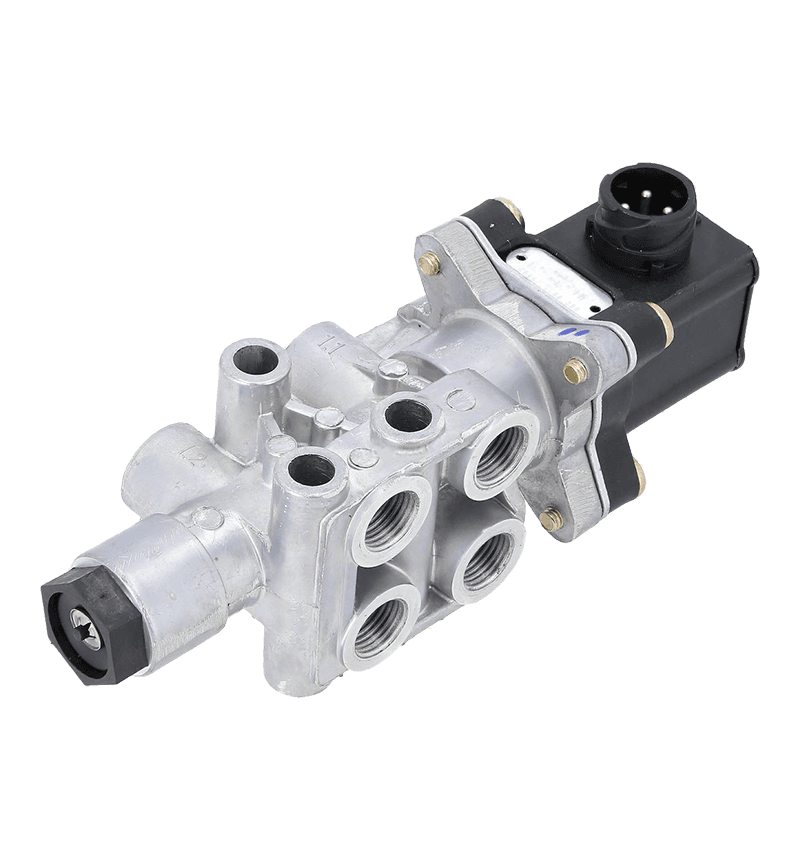
An Electronically Controlled Air Suspension (ECAS) system relies on fast, precise air movement. At the core of this system is the solenoid valve unit, which converts digital control signals from the suspension microcomputer into instantaneous pneumatic pressure adjustments.
To adjust air spring pressure without creating sudden chassis jerks, the electronic control unit (ECU) manages the internal valve plungers using Pulse-Width Modulation (PWM) signals. When a 24-Volt direct current passes through the copper wire coil winding, it creates a powerful magnetic field within the valve housing:
A critical safety challenge in air suspension engineering is preventing the air bellows from deflating completely, which can pinch and destroy the flexible rubber membranes. To eliminate this risk, the exhaust port of the solenoid manifold features an integrated, spring-loaded residual pressure retention valve.
This mechanical safety check automatically snaps shut if the localized internal bellows pressure drops below a factory safety threshold of 0.5 to 0.8 bar. Even during system leaks or structural line ruptures, the valve traps a safe minimum volume of air inside the bellows, protecting the suspension components from folding or tearing under the vehicle's weight.
Modern commercial vehicle applications use multi-valve manifolds to control several independent air suspension zones across the chassis. This setup prevents air from sloshing side-to-side during high-speed cornering, stabilizing the vehicle's center of gravity.
In a standard dual-bellows rear axle design, standard mechanical leveling valves can allow air to move between the left and right sides during hard turns, increasing the risk of chassis roll. ECAS configurations solve this issue by using dedicated 2/2-way normally closed directional solenoid blocks for each air spring channel.
When the vehicle travels straight, these cross-directional valves remain completely sealed, isolating each air chamber. If the vehicle enters a sharp turn, internal lateral accelerometers instantly trigger the specific high-pressure inflation or exhaust solenoids on one side. This rapid response adds supporting pressure to the outside air bag to counter body lean, keeping the vehicle level and stable under heavy dynamic loads.
Large mass transit buses and multi-axle freight trucks use advanced layouts to manage balance across the entire frame:
The following matrix profiles the operational limits, electrical requirements, and fluid parameters of modern ECAS control manifolds used across the heavy transportation industry.
| Engineering Parameter | Heavy Transport Bus Manifold | Freight Truck Axle Block | Auxiliary Trailing Lift Unit |
|---|---|---|---|
| Maximum Supply Input Pressure | 12.0 – 13.5 bar | 14.0 to 16.0 bar (High Density) | 11.0 bar |
| Nominal Operating DC Voltage | 24 Volts DC (Regulated Baseline) | 24 Volts DC | 12 Volts DC / 24 Volts DC |
| Pneumatic Flow Rate Capability | 1,200 Liters/Minute (Rapid Kneel) | 850 – 950 Liters/Minute | 600 Liters/Minute |
| Environmental Temperature Window | -40°C to +80°C | -40°C to +80°C | -50°C to +75°C (Arctic Optimized) |
| Coil Power Consumption Limit | 18 Watts | 22 to 26 Watts (Continuous Duty) | 15 Watts |
| Ingress Protection Rating | IP67 High Enclosure Seal | IP6K9K (High-Pressure Wash Down) | IP66 Moisture Barrier |
Operating underneath a heavy vehicle chassis exposes air components to extreme stresses, including flying road debris, salt mixtures, and freezing water vapor. Solenoid valves must use highly engineered materials to perform reliably over millions of cycles.
Traditional air suspension blocks were machined from solid aluminum billets, which added weight and suffered from oxidation when exposed to road de-icing salts. Modern high-pressure ECAS manifolds are injection-molded from specialized polyacrylamide (PARA) resins reinforced with 30% to 50% structured glass fibers.
This advanced composite material delivers high structural tensile strength that matches aluminum while reducing component weight by up to 45%. This high-performance polymer resists fatigue under constant cyclic pressure variations and remains completely immune to galvanic corrosion, keeping internal air paths smooth and clear over years of service.
Standard industrial rubbers like Nitrile harden and crack when exposed to freezing winter temperatures, leading to internal air leaks that compromise ride safety. Air suspension solenoid valve seats are manufactured using high-spec fluorosilicone (FVMQ) rubber compounds:
When an air suspension system encounters an error, the control module logs a specific diagnostic trouble code (DTC) and illuminates a warning lamp on the dashboard dashboard. Fleet technicians use clear diagnostic steps to isolate and resolve valve faults quickly.
A common field issue occurs when an air compressor passes excessive oil vapor into the system, mixing with moisture to form a sticky sludge inside the manifold. This contamination can cause internal valve plungers to stick open or remain trapped shut.
Technicians use a clear diagnostic sequence to isolate this mechanical problem:
Constant exposure to extreme temperature swings can degrade the fine insulation lacquer on the solenoid coil windings, leading to internal short circuits or open wire breaks. Technicians check the health of these internal circuits using a digital multimeter set to measure resistance.
Disconnect the electrical wiring harness from the valve block and touch the multimeter probes across the pin contacts for each coil. A healthy 24-Volt ECAS coil should show a stable resistance reading between 35 and 55 Ohms. A reading of zero Ohms reveals a short circuit within the winding, while an infinite resistance reading indicates a broken internal wire. Both conditions require replacing the coil pack to restore safe, reliable suspension leveling performance.
 NO. 132 Xingye Road,Fengqiao Town ,Zhuji City,Zhejiang
 +86-13958007768 +86-13655857582
Copyright © Zhuji Infia Auto Parts Co., Ltd. All Rights Reserved.
Wholesale Truck/Bus Brake Parts Suppliers
 English
 Español