E-mail: [email protected]
E-mail: [email protected]Address: NO. 132 Xingye Road,Fengqiao Town ,Zhuji City,Zhejiang
Whatsapp: +86-13958007768
Whatsapp: +86-13655857582




Need Help
+86-13958007768
E-mail: [email protected]
E-mail: [email protected]
Address: NO. 132 Xingye Road,Fengqiao Town ,Zhuji City,Zhejiang
Whatsapp: +86-13958007768
Whatsapp: +86-13655857582
Our team is proud to offer on time guarantee and product guarantee to customer satisfaction.
Read More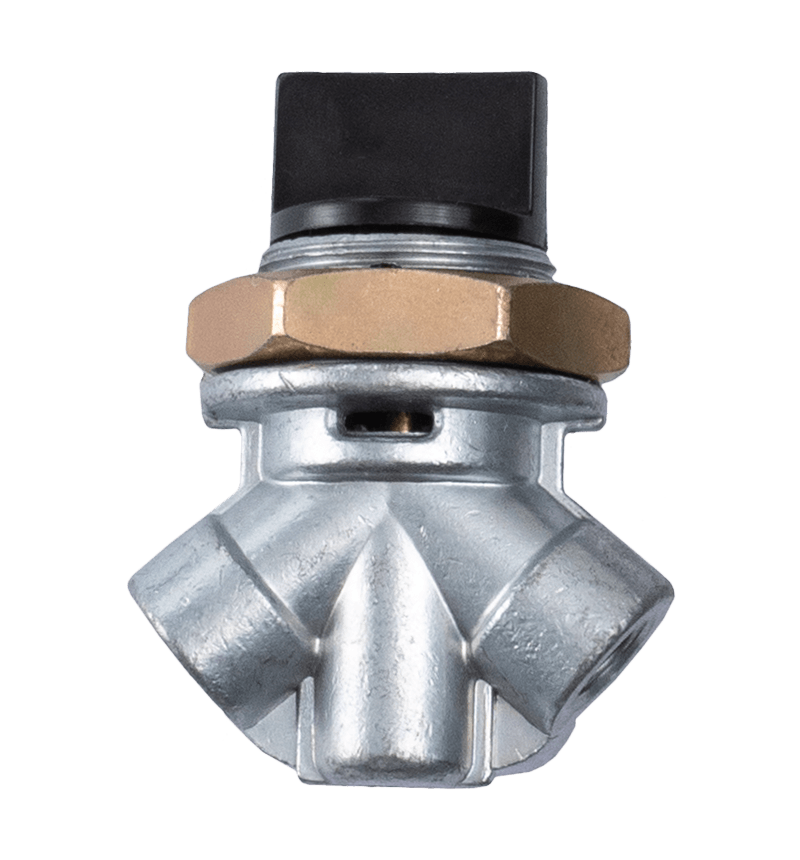
YFY No.
YFY17001
TECHNICAL DATAILS
Port 1,2=M10x1
VEHICLES
DAF,MERCEDES,MAN,IVECO,RVI
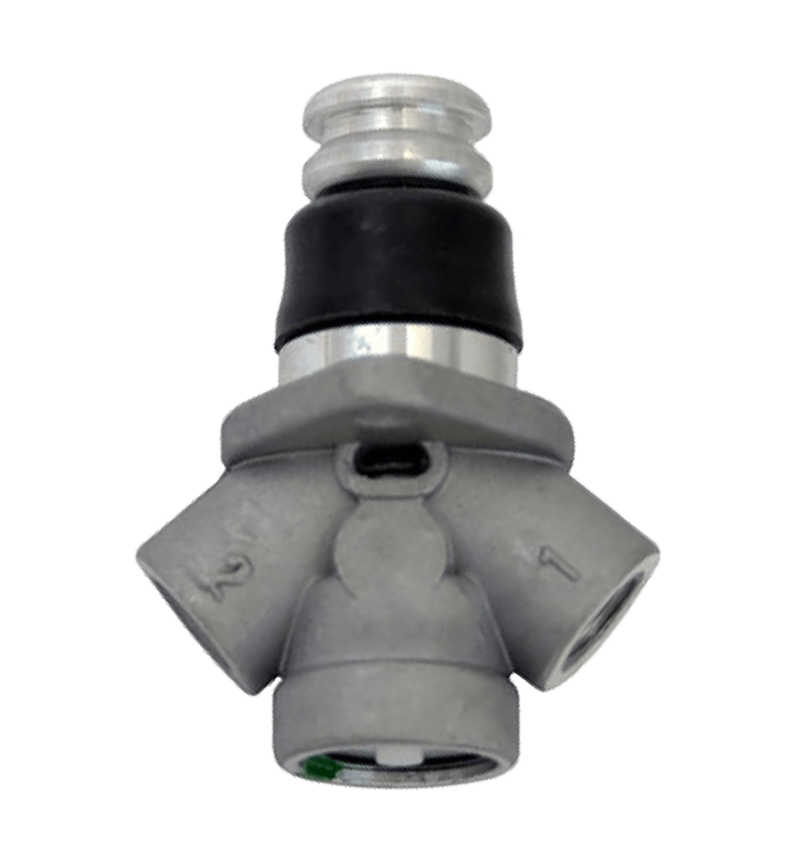
YFY No.
YFY17002
TECHNICAL DATAILS
Port 1,2=M10x1
VEHICLES
IVECO
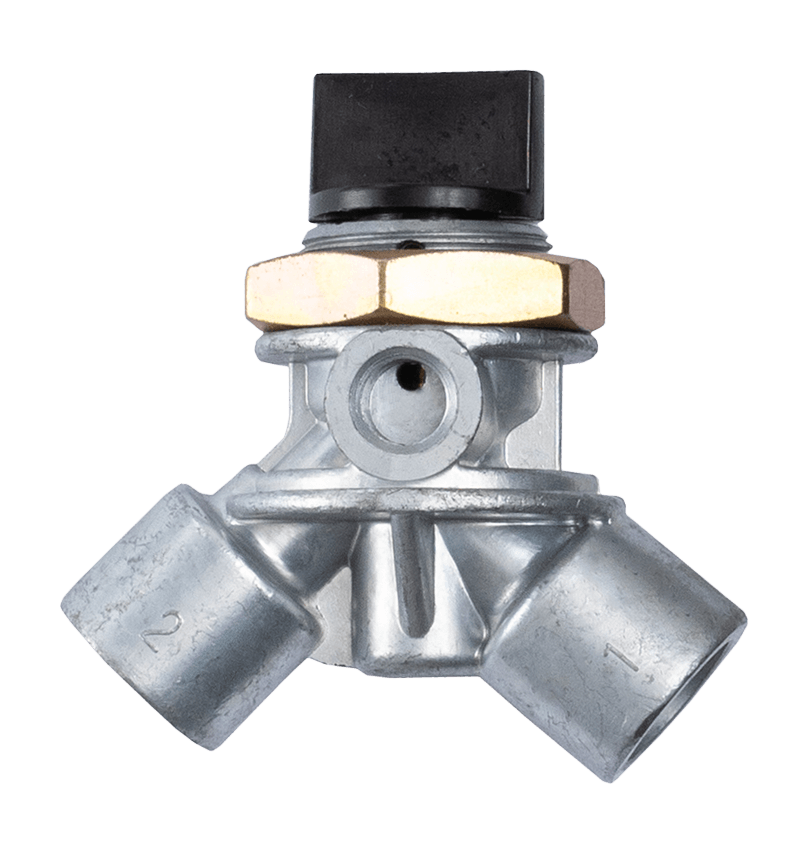
YFY No.
YFY17003
TECHNICAL DATAILS
Port 1,2=M16x1.5
Port 3=M10x1
VEHICLES
DAF,MERCEDES
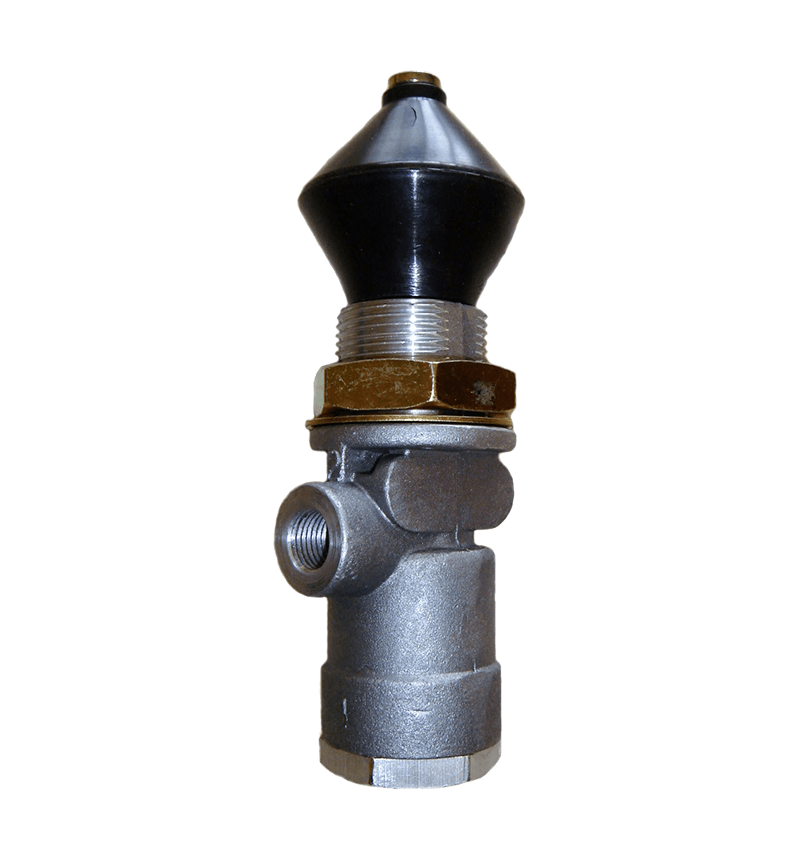
YFY No.
YFY17004
TECHNICAL DATAILS
Port 1,2=M10x1
VEHICLES
DAF,VOLVO
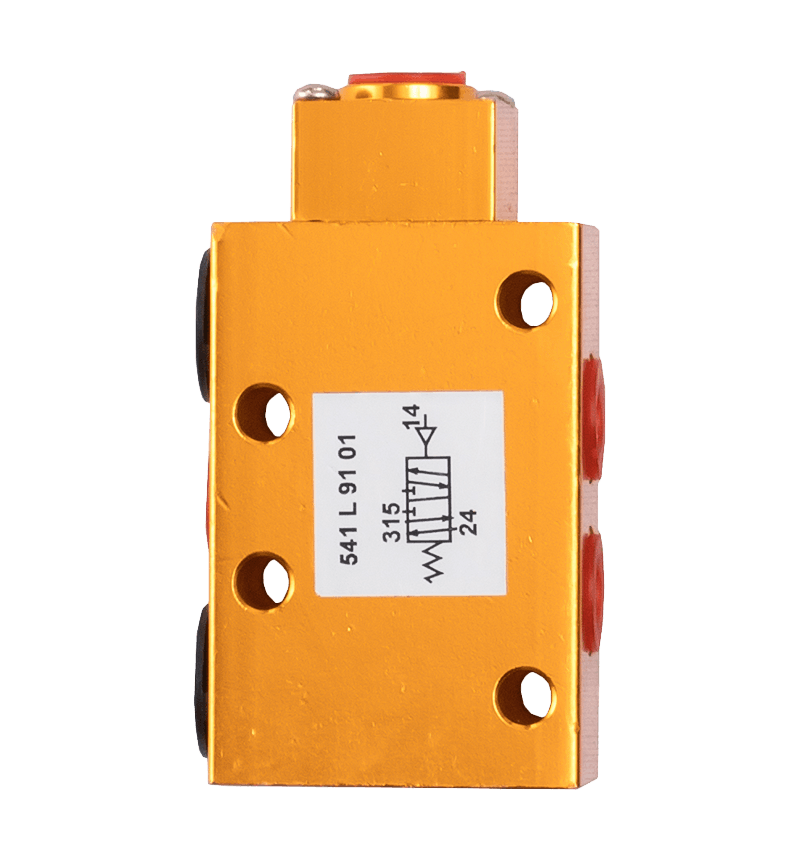
YFY No.
YFY17005
TECHNICAL DATAILS
Port 1,2,4=M10x1
VEHICLES
RVI
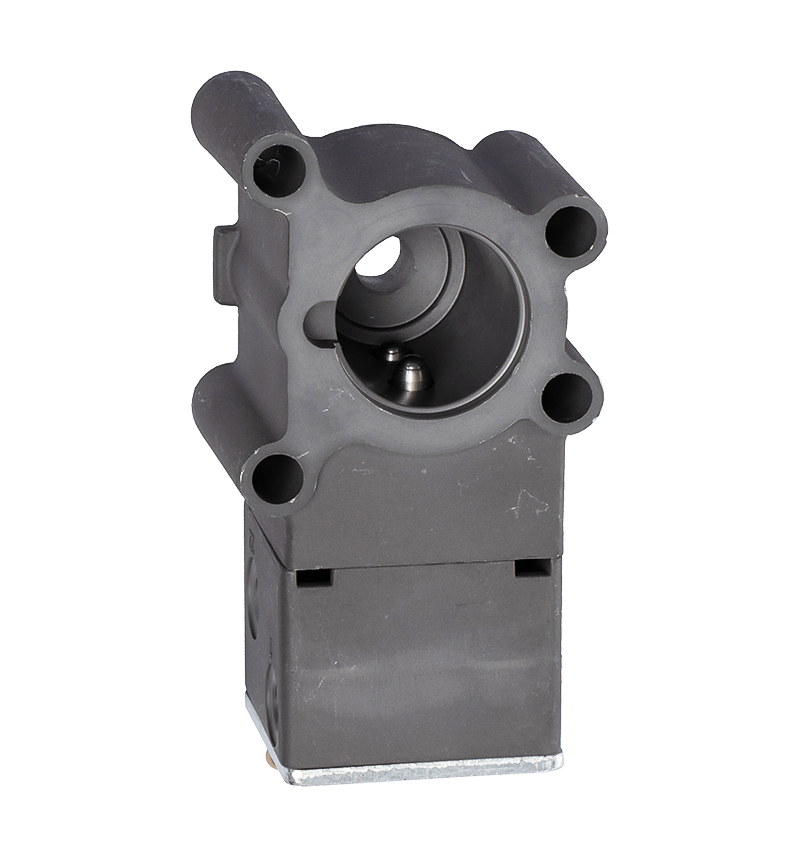
YFY No.
YFY17006
TECHNICAL DATAILS
Port 1,21,22=M10x1
VEHICLES
VOLVO
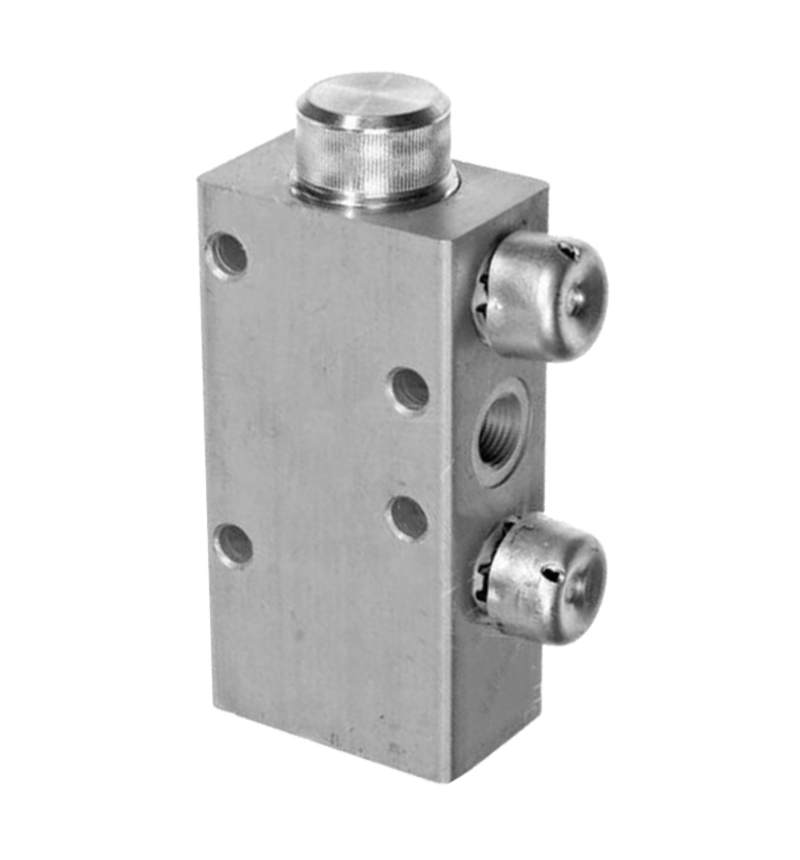
YFY No.
YFY17007
TECHNICAL DATAILS
Port 1,2,4,12=1/8"NPT
VEHICLES
MERCEDES
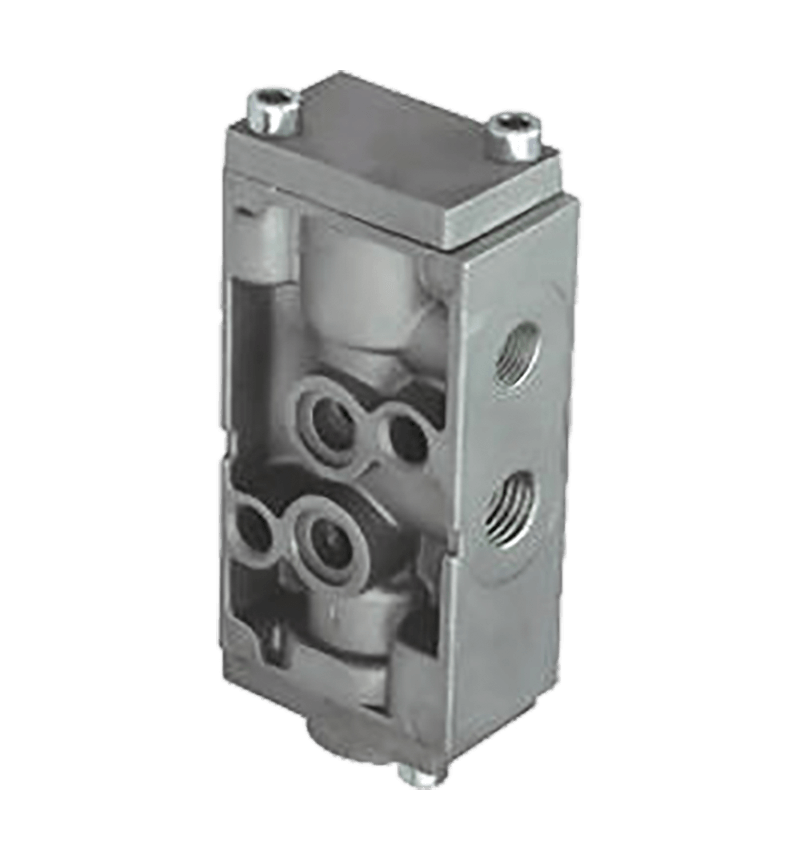
YFY No.
YFY17008
TECHNICAL DATAILS
Port 1=M12x1.5
Port 4=M10x1
Port 21,22=2-Φ12
VEHICLES
IVECO,VOLVO,DAF,MAN
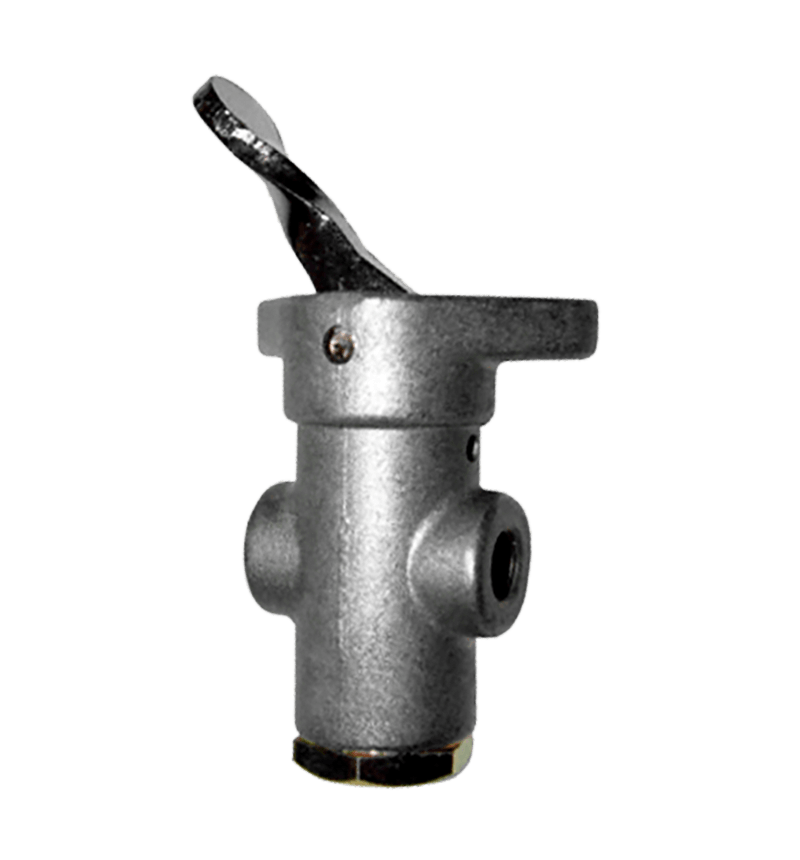
YFY No.
YFY17009
TECHNICAL DATAILS
SUP=1/8"NPT,
DEL=1/8"NPT
Installtion:2XW3/16-24
VEHICLES
TRAILER
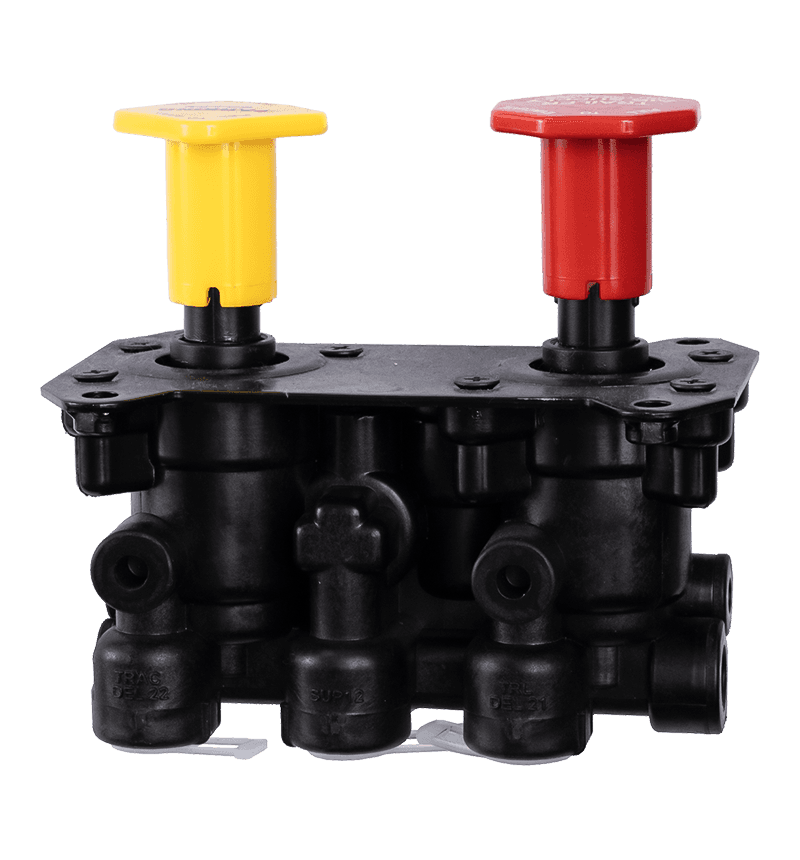
YFY No.
YFY17010
TECHNICAL DATAILS
SUP=1/4"NPT
DEL=1/4"NPT
EXH=1/4"NPT
VEHICLES
TRAILER
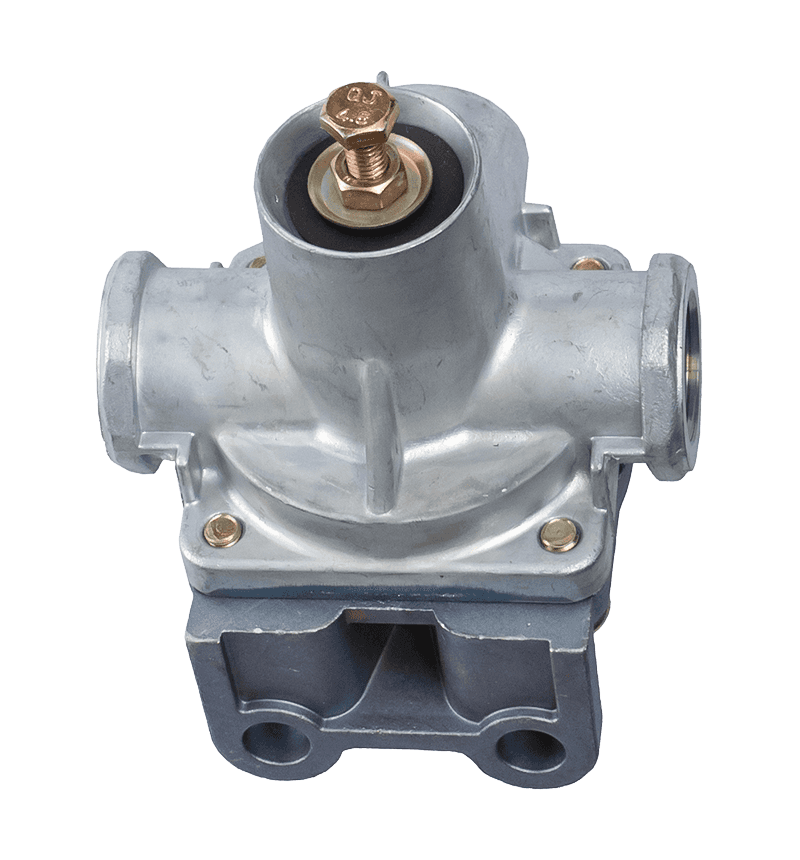
YFY No.
YFY17011
TECHNICAL DATAILS
Port 1,2=1/8"NPT
VEHICLES
HINO
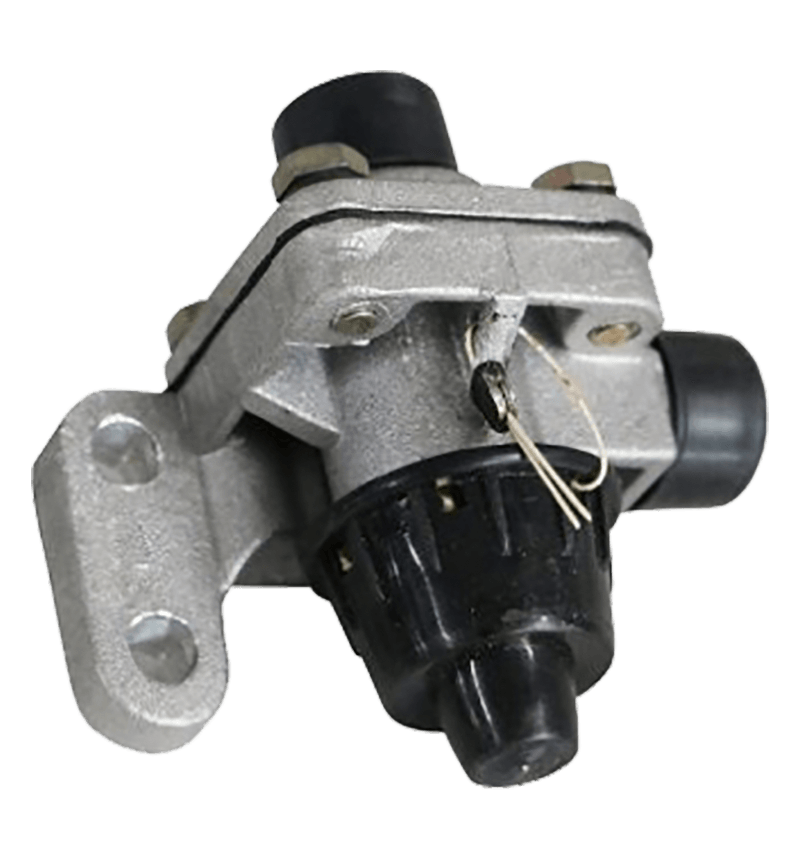
YFY No.
YFY17012
TECHNICAL DATAILS
Portts: M20x1.5
VEHICLES
MITSUBISHI
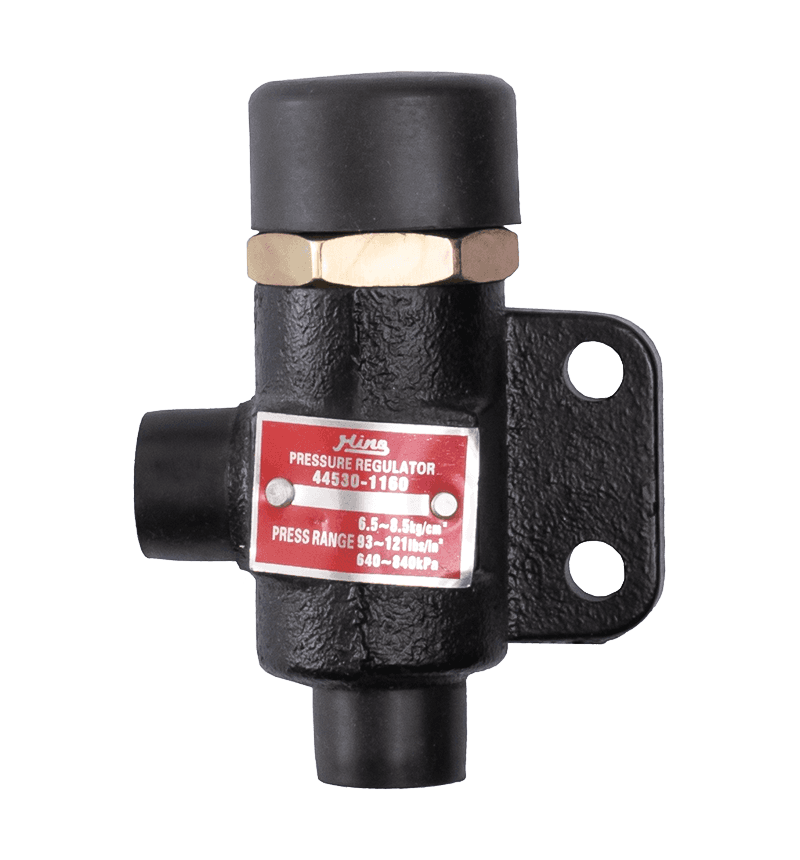
YFY No.
YFY17013
TECHNICAL DATAILS
Ports: M20x1.5
VEHICLES
HINO
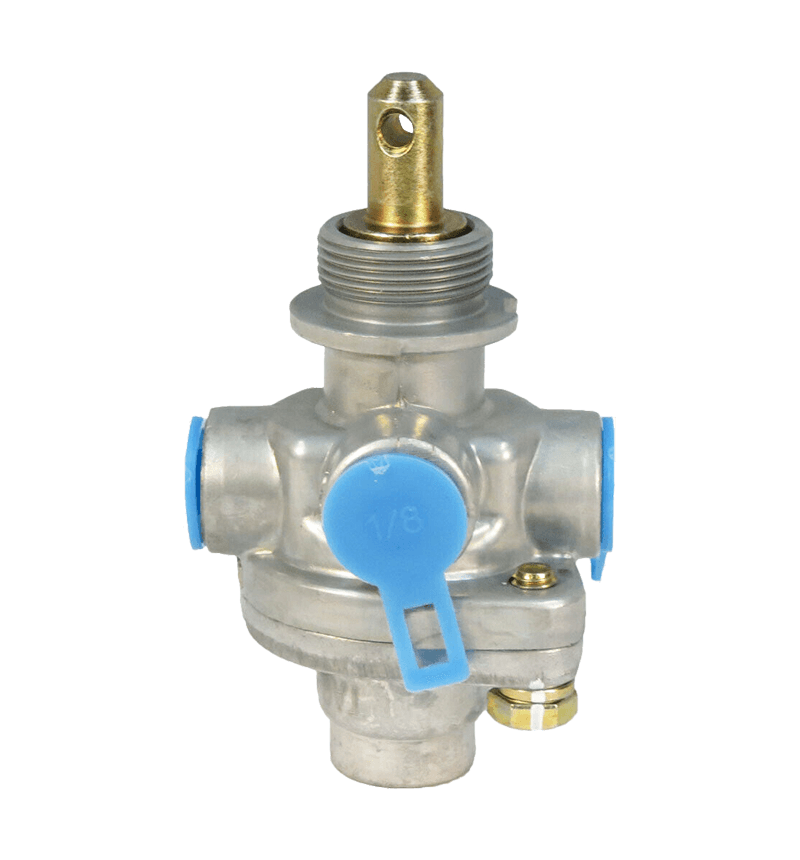
YFY No.
YFY17014
TECHNICAL DATAILS
SUP=1/8"NPT
DEL=1/8"NPT
EXH=1/8"NPT
VEHICLES
TRAILER
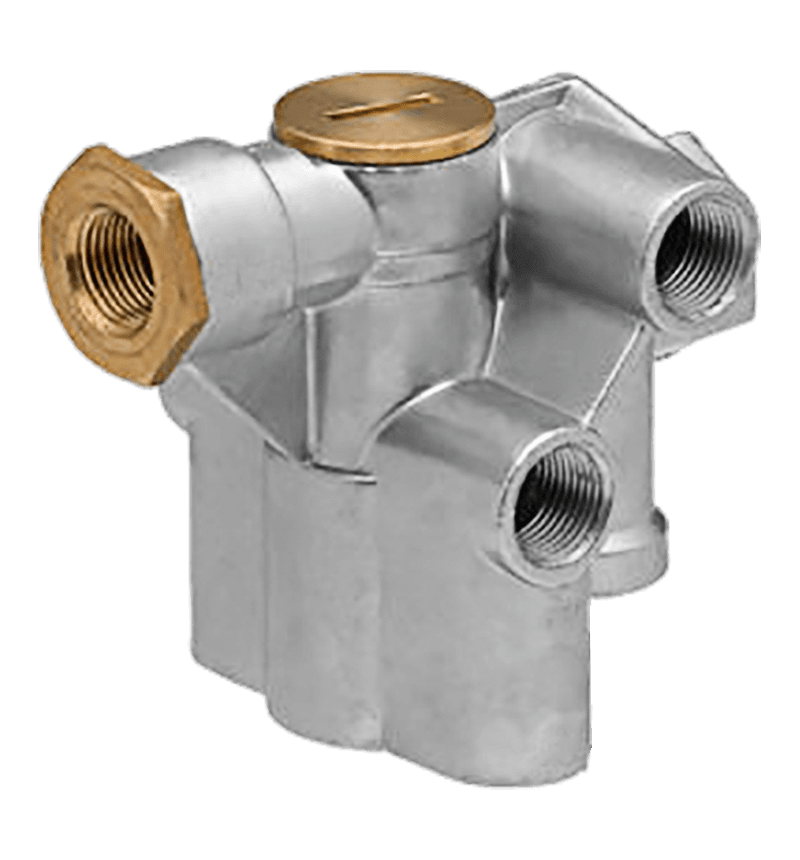
YFY No.
YFY17015
TECHNICAL DATAILS
SUP+DEL=1/4"NPT;
SER=1/4"NPT,
RES=1/4"NPT
VEHICLES
TRAILER
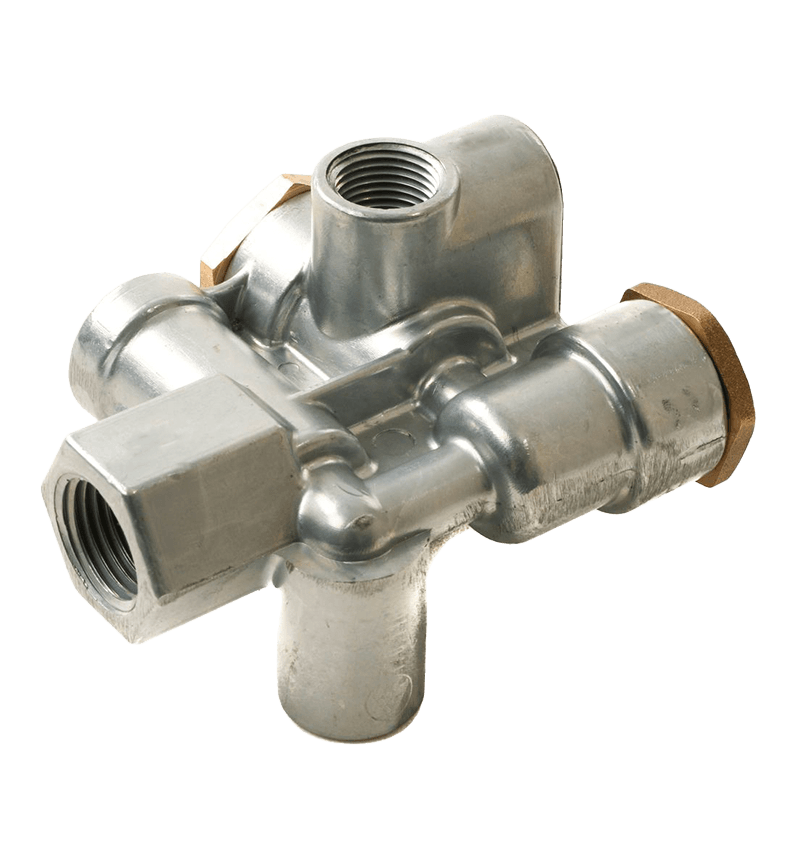
YFY No.
YFY17016
TECHNICAL DATAILS
SUP+DEL=3/8"NPT;
SER=3/8"NPT,
RES=1/2"NPT
VEHICLES
TRAILER
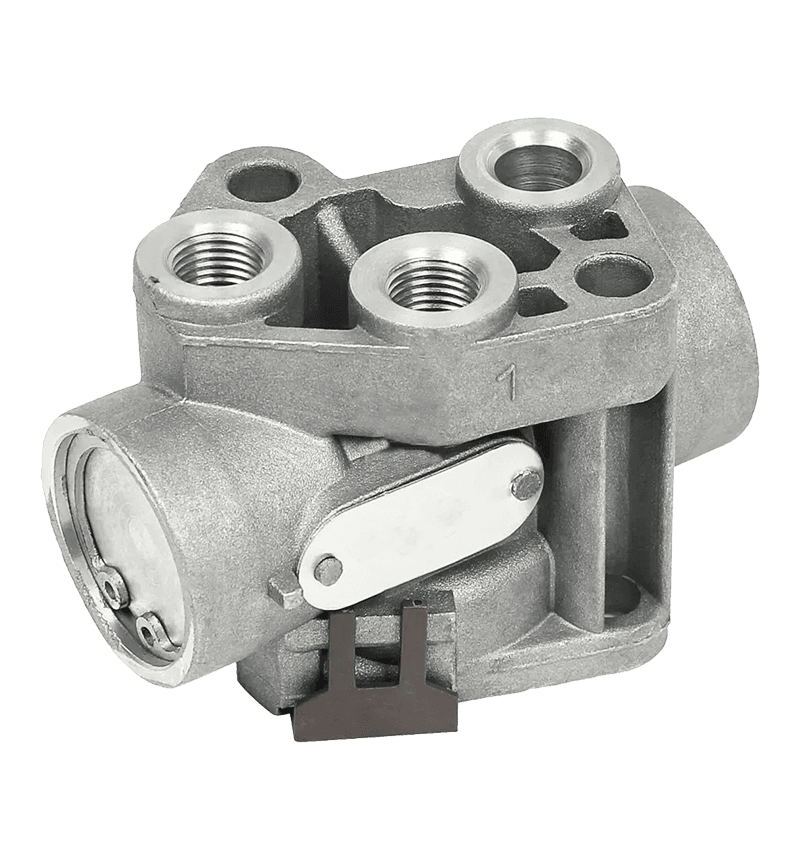
YFY No.
YFY17017
TECHNICAL DATAILS
Port 1,4=M10x1/p>
Port 21,22=Φ10.3
VEHICLES
RENAULT
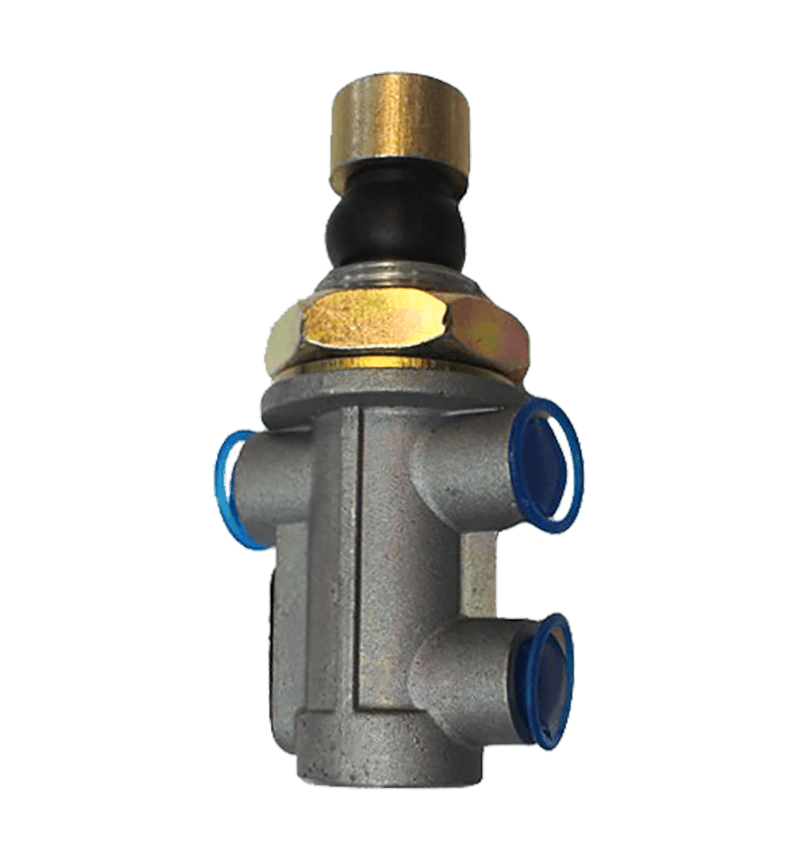
YFY No.
YFY17018
TECHNICAL DATAILS
Port 1,2,3=M12x1.5
VEHICLES
DAF,MERCEDES,IVECO
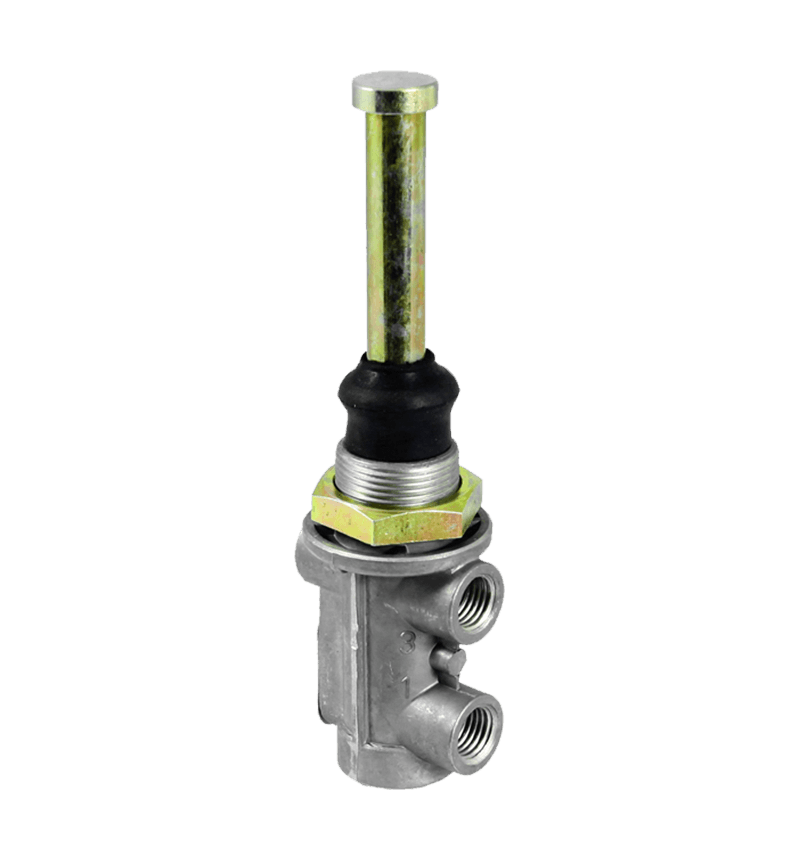
YFY No.
YFY17019
TECHNICAL DATAILS
Port 1,2,3=M12x1.5
VEHICLES
DAF,MERCEDES,VOLVO
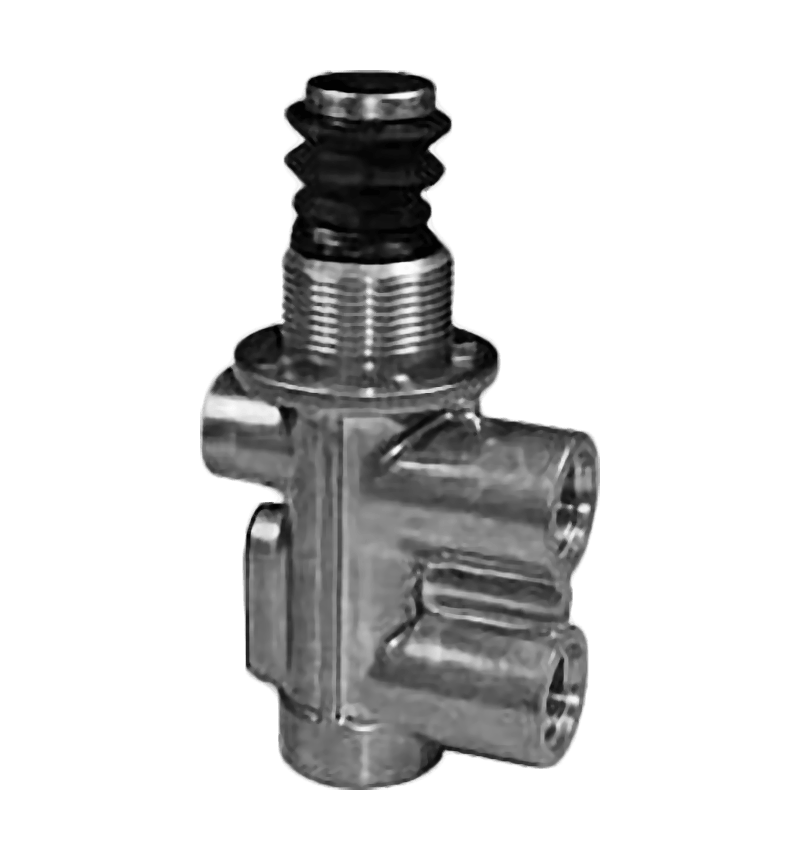
YFY No.
YFY17020
TECHNICAL DATAILS
Port 1,2=M16x1.5VOSS,
Port 3=M12x1.5
VEHICLES
DAF,MERCEDES,MAN,SCANIA
Pressure brake control valves are vital components within automotive braking systems, ensuring safe and efficient operation by regulating hydraulic pressure to the brakes. These valves possess several key features and characteristics that contribute to their functionality and reliability.Pressure regulation is a fundamental function of these valves. They manage hydraulic pressure distribution to prevent wheel lock-up or uneven braking, thereby enhancing vehicle control and stability during braking maneuvers.Pressure brake control valves often incorporate proportioning capabilities. By distributing hydraulic pressure unevenly between the front and rear brakes, they account for weight transfer during braking, favoring more pressure towards the front brakes to maintain balance and effectiveness.Adjustability is another notable feature of many pressure brake control valves. Whether through manual adjustment or electronic control, users can fine-tune pressure distribution to suit specific vehicle setups, driving conditions, or personal preferences, enhancing customization and performance optimization.Safety features are paramount in pressure brake control valves. These may include built-in pressure relief mechanisms or sensors to prevent excessive pressure buildup, mitigating the risk of brake failure or lock-up and ensuring consistent, reliable braking performance.Durability is essential for automotive components, and pressure brake control valves are no exception. Constructed from robust materials such as aluminum or steel, they withstand harsh operating conditions, including heat, vibration, and exposure to corrosive substances like brake fluid, ensuring long-term reliability and functionality.Compatibility is crucial, with pressure brake control valves tailored to specific vehicle models and braking system requirements. Various mounting configurations accommodate diverse vehicle setups and brake layouts, ensuring proper fitment and functionality.Sealing is also critical to prevent leaks and maintain braking system integrity. High-quality seals ensure leak-free operation, preserving hydraulic pressure and optimizing braking performance.
A compressed-air hiss under the cab usually means one thing: a brake valve has failed. A vehicle brake valve is not a single part, but a family of pneumatic components that control the pressure, timi...
View MoreWhen a heavy truck loses brake response at the pedal, a workshop might spend an afternoon checking slack adjusters, brake chambers and compressor output before finally removing the treadle valve from...
View MoreA truck that tilts to one side when parked, a suspension warning light that comes on after a cold morning, and an air compressor that runs almost constantly: these are signs of an ECAS valve that is ...
View MoreThe clutch pedal is stiff, the next gear is difficult to find, and a low hissing sound appears every time you push it down. If that sounds familiar, the clutch servo on your truck is probably not wor...
View MoreEvery fleet technician knows the complaint: the clutch pedal is getting harder to push, and by the end of a long shift the driver's left leg is tired. On modern commercial trucks and buses, that effo...
View MoreA city bus kneels at every stop so passengers can step aboard without strain. A highway tractor holds its deck level as the trailer load shifts. Both movements depend on a small component: the ECAS s...
View MoreExecutive Summary Optimizing electronically controlled air suspension systems relies heavily on the precise pneumatic regulation provided by ECAS solenoid valves. When choosing or troubleshooting t...
View MorePressure Limiting Valves: The Engineering Guide to System Protection and Safety Pressure limiting valves are the most critical safety components in any hydraulic or pneumatic system, preventing cat...
View MoreIn modern industrial production and daily life, energy efficiency is one of the important indicators to measure system performance and economy. As an indispensable core component in fluid control systems, CONTROL VALVES plays a vital role in improving energy efficiency with its precise and flexible flow regulation capabilities.
1. Accurate flow control to reduce energy waste
CONTROL VALVES can adjust the flow and pressure of the fluid in real time according to system requirements through a high-precision flow regulation mechanism to ensure that the efficiency of the fluid is maximized during transmission and use. In traditional systems, due to inaccurate flow control, fluids are often retained, leaked or oversupplied in the pipeline, resulting in energy waste. The precise flow control of CONTROL VALVES avoids these unnecessary energy losses and improves the overall energy efficiency of the system.
2. Optimize system operation and improve response speed
CONTROL VALVES's fast response capability allows the system to respond to load changes more flexibly. When the system load increases, CONTROL VALVES can quickly increase the fluid supply to meet demand, but when the load decreases, it can quickly reduce the supply to avoid excess. This ability to adjust immediately not only ensures the stability of the system operation, but also significantly improves the system's response speed and reduces the energy wasted due to waiting for adjustment.
3. Strong adaptability to meet the needs of different working conditions
CONTROL VALVES has a wide range of adaptability and can be applied to various fluid media and working conditions. Whether it is high temperature, high pressure or highly corrosive media, CONTROL VALVES can meet the needs by selecting appropriate materials and structural designs. This strong adaptability allows CONTROL VALVES to maintain efficient operation under various complex working conditions, further improving the energy efficiency of the system.
4. Intelligent control to achieve precise management
With the development of intelligent technology, CONTROL VALVES is gradually moving towards intelligence. Through integration with sensors, actuators and intelligent control systems, CONTROL VALVES can realize functions such as remote monitoring, automatic adjustment and fault diagnosis. This intelligent control not only improves the automation level of the system, but also enables the system to be accurately managed according to actual operating conditions, further optimizing energy efficiency.
5. Reduce maintenance costs and extend equipment life
The precise control capability and good sealing performance of CONTROL VALVES help reduce system leakage and failure, thereby reducing maintenance costs and downtime. CONTROL VALVES can be precisely adjusted according to system needs, avoiding equipment damage caused by overuse or overload, and extending the service life of the equipment, all of which help improve the overall energy efficiency and economy of the system.
1. High-precision regulation
The core feature of CONTROL VALVES is its high-precision flow regulation capability. Through precise valve core design and advanced control algorithms, these valves can achieve precise control of fluid flow, pressure, temperature and other parameters to ensure stability and consistency in the production process. Whether it is precision manufacturing that requires fine adjustment or industrial applications with large flow and high pressure, CONTROL VALVES can handle it with ease.
2. Diverse structures and materials
In order to meet the needs of different media and working conditions, CONTROL VALVES adopts a variety of structural and material designs, from simple straight-through to complex angle and three-way, from metal materials to non-metallic and corrosion-resistant alloys, etc. CONTROL VALVES has a wide variety of types to meet the use requirements under various extreme conditions. This diverse design not only improves the adaptability and reliability of the valve, but also extends the service life of the equipment.
3. Fast response and stability
CONTROL VALVES is equipped with a sensitive actuator and control system, which can achieve fast opening, closing and adjustment actions. When the system load or working conditions change, CONTROL VALVES can respond quickly and adjust the fluid flow to ensure the stable operation of the system. Its excellent sealing performance and stable flow characteristics also ensure the continuity and accuracy of fluid transmission.
4. Intelligence and integration
With the development of industrial automation and intelligence, CONTROL VALVES is gradually moving towards intelligence and integration. By integrating intelligent components such as sensors, actuators, and controllers, CONTROL VALVES can achieve remote monitoring, automatic adjustment, fault diagnosis and other functions. This intelligent control not only improves the automation level and operating efficiency of the system, but also reduces the risks and costs of manual operation.
CONTROL VALVES has the characteristics of high-precision adjustment, diversified structures and materials, fast response and stability, as well as intelligence and integration, which makes it gradually become the core component of modern industrial fluid control. Their application not only improves production efficiency and product quality, but also promotes the development of industrial automation and intelligence.
 NO. 132 Xingye Road,Fengqiao Town ,Zhuji City,Zhejiang
 +86-13958007768 +86-13655857582
Copyright © Zhuji Infia Auto Parts Co., Ltd. All Rights Reserved.
Wholesale Control Valves Manufacturers
 English
 Español
