E-mail: [email protected]
E-mail: [email protected]Address: NO. 132 Xingye Road,Fengqiao Town ,Zhuji City,Zhejiang
Whatsapp: +86-13958007768
Whatsapp: +86-13655857582




Need Help
+86-13958007768
E-mail: [email protected]
E-mail: [email protected]
Address: NO. 132 Xingye Road,Fengqiao Town ,Zhuji City,Zhejiang
Whatsapp: +86-13958007768
Whatsapp: +86-13655857582
Our team is proud to offer on time guarantee and product guarantee to customer satisfaction.
Read MoreLoad Sensing Valves Custom
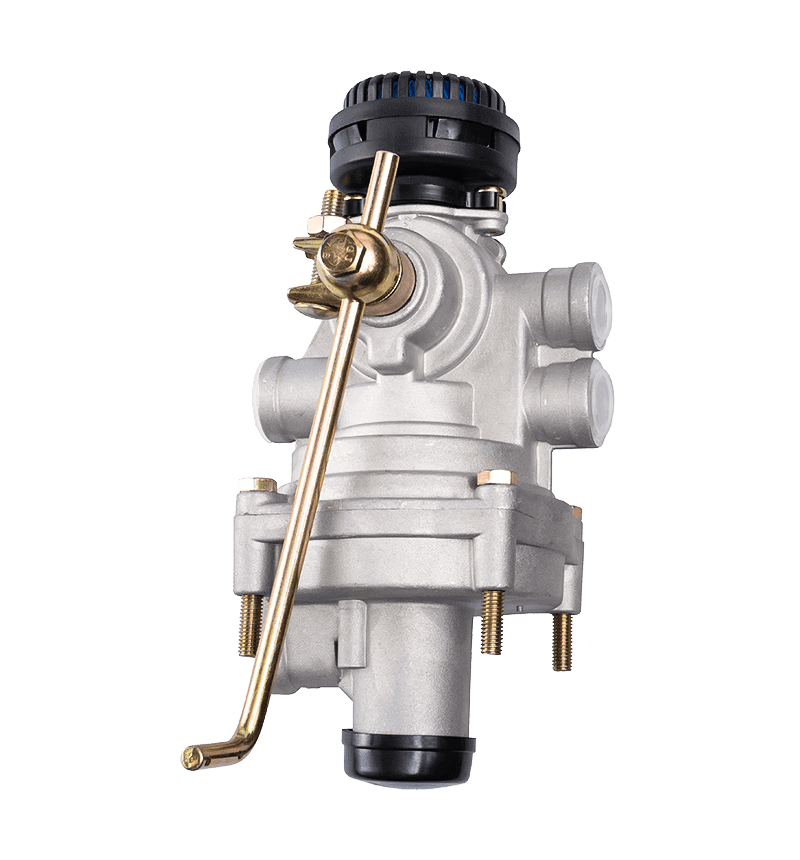
YFY No.
YFY15001
TECHNICAL DATAILS
Port 1,2,4=M16x1.5
Port 3=SNAP
VEHICLES
RVI,MERCEDES,DAF,ERF
YFY No.
YFY15002
TECHNICAL DATAILS
Port 1,2=M22x1.5VOSS
Port 4=M16x1.5VOSS
VEHICLES
MERCEDES
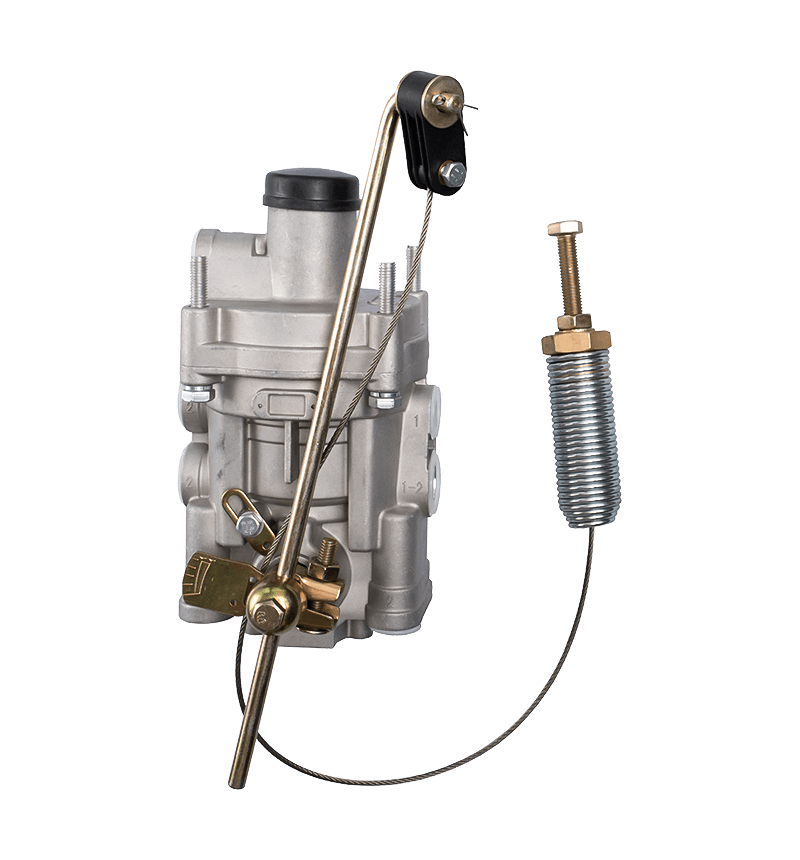
YFY No.
YFY15003
TECHNICAL DATAILS
Port 1,2,4=M16x1.5
Port 1-2,2=M22x1.5
VEHICLES
DAF
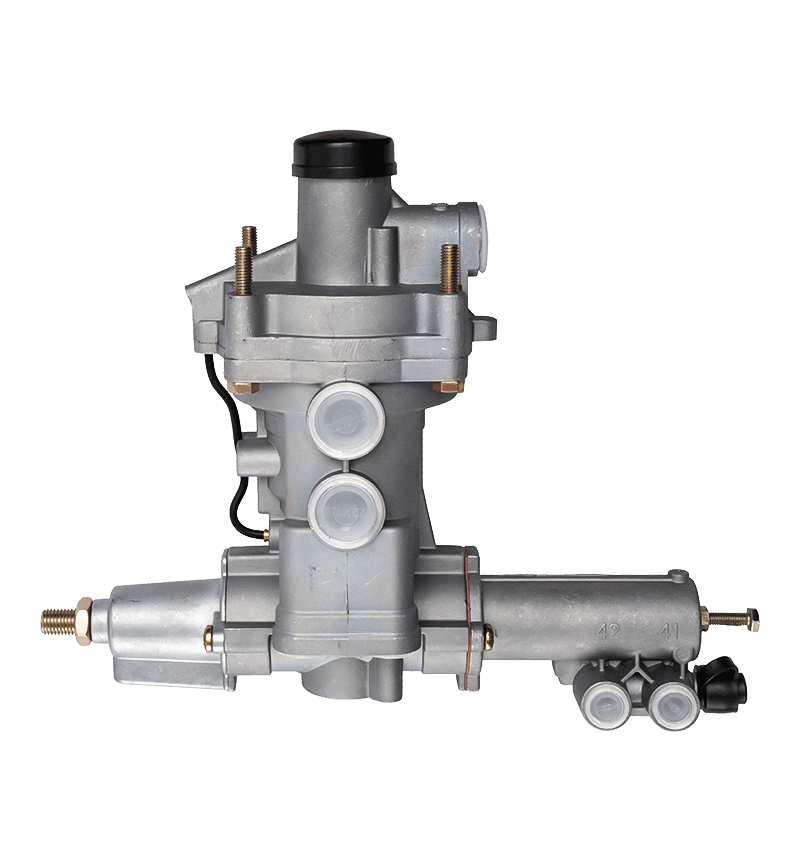
YFY No.
YFY15004
TECHNICAL DATAILS
Port 1,43=M16x1.5
Port 1-2,2,4=M22x1.5
Port 41,42=M12x1.5
VEHICLES
SCANIA,DAF,RVI
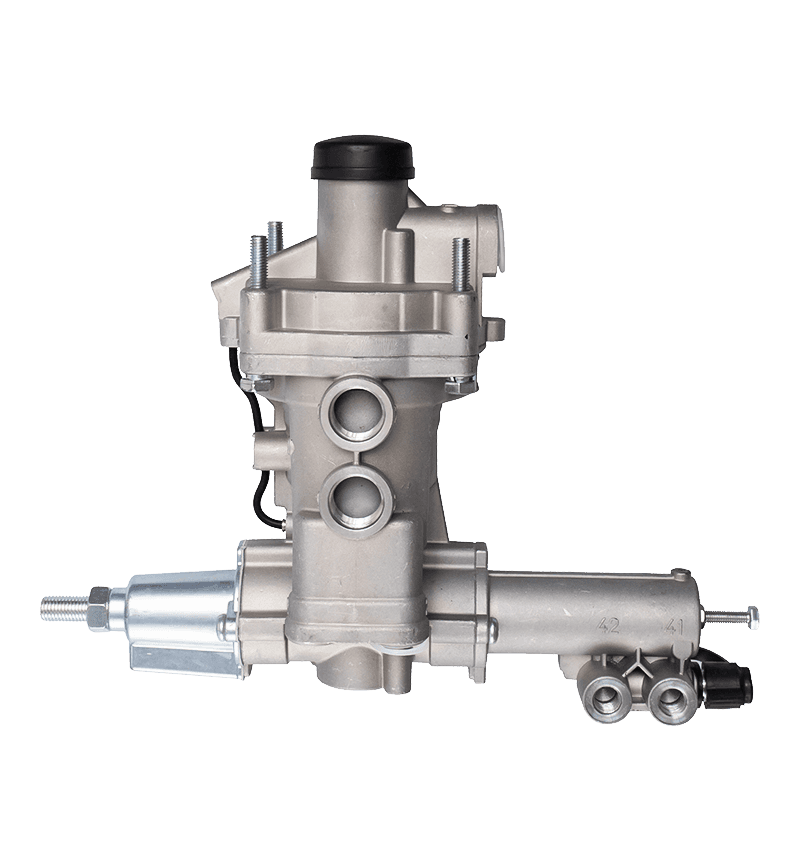
YFY No.
YFY15005
TECHNICAL DATAILS
Port 1=M22x1.5
Port 2,4,=M16x1.5
Port 41,42=M12x1.5
VEHICLES
RVI,VOLVO,DAF
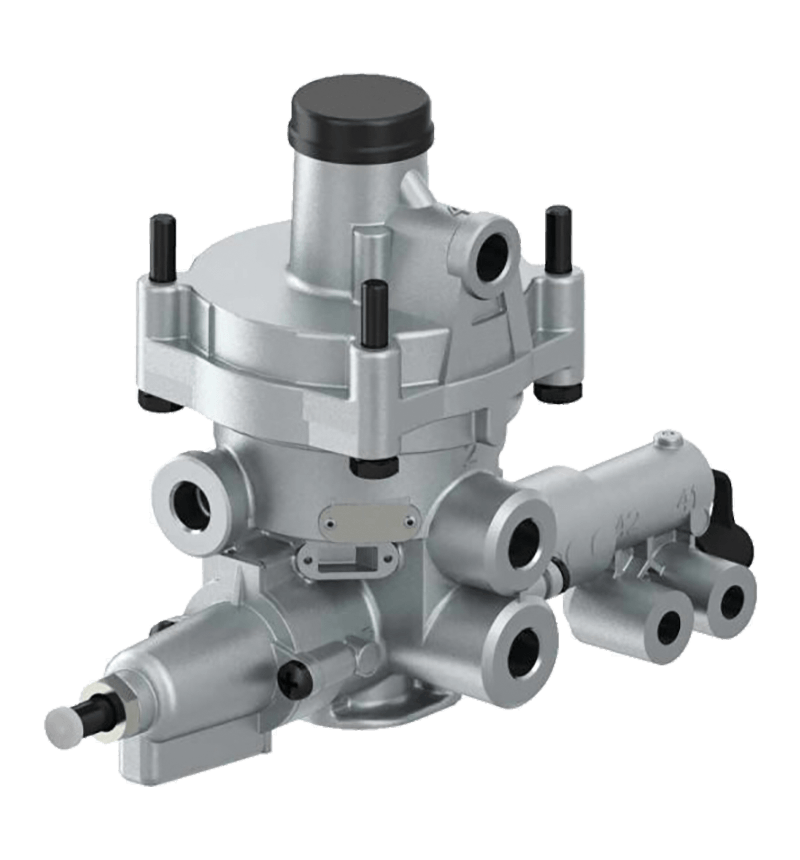
YFY No.
YFY15006
TECHNICAL DATAILS
Port 1,2=M22x1.5VOSS
Port 4,41,42=M16x1.5VOSS
Port 43=M16x1.5
VEHICLES
DAF,MERCEDES,MAN,RVI,VOLVO,IVECO
YFY No.
YFY15007
TECHNICAL DATAILS
Port 1=M22x1.5
Port 2,43=M16x1.5
Port 41,42=M12x1.5
VEHICLES
DAF,MERCEDES,IVECO,MAN,EVOBUS,NEOPLAN
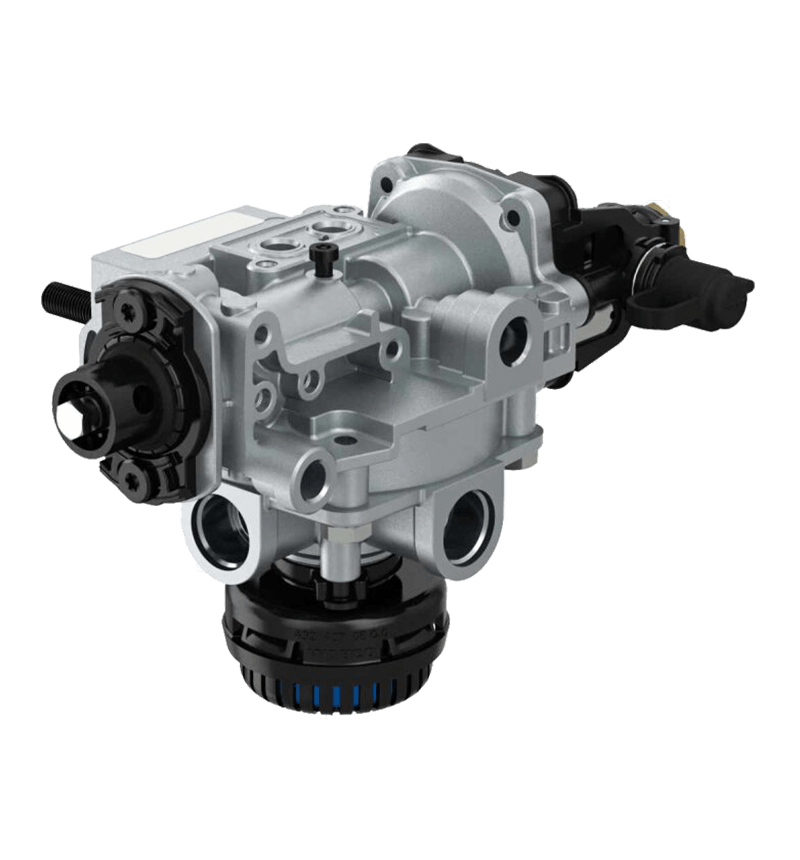
YFY No.
YFY15008
TECHNICAL DATAILS
Port 1,2=M22x1.5VOSS
Port 1/4=M16x1.5VOSS
VEHICLES
DAF,MERCEDES,IVECO,MAN,EVOBUS,NEOPLAN
DAF Load Sensing Valves are key components used in commercial vehicles to improve the performance and efficiency of the braking system. These valves sense changes in the vehicle load and dynamically adjust the braking force to ensure consistent, efficient braking performance under a variety of load conditions. One of the main features of Load Sensing Valves is the load sensing function. This means that they can sense changes in the vehicle load and adjust the operation of the braking system accordingly. In this way, they ensure that the braking force is always matched to the vehicle load, avoiding situations where the braking force is too much or too little, thereby improving braking efficiency and safety. Load Sensing Valves are able to improve the efficiency of the braking system. By adjusting the braking force according to the load situation, these valves can reduce unnecessary braking force and optimize the operation of the braking system, thereby saving fuel consumption. This is very important for commercial vehicles, as they are often used in long-distance transport, and fuel costs account for a considerable part of operating costs. Load Sensing Valves can also improve the stability and handling of the vehicle. By ensuring that the braking system responds consistently under different load conditions, these valves help to keep the vehicle moving smoothly and improve the driver's ability to control the vehicle. Some Load Sensing Valves have an adjustable function, allowing users to adjust for the braking performance based on specific application needs or vehicle load conditions. This adjustability makes these valves more flexible and adaptable to different types of commercial vehicles and work scenarios.

A compressed-air hiss under the cab usually means one thing: a brake valve has failed. A vehicle brake valve is not a single part, but a family of pneumatic components that control the pressure, timi...
View MoreWhen a heavy truck loses brake response at the pedal, a workshop might spend an afternoon checking slack adjusters, brake chambers and compressor output before finally removing the treadle valve from...
View MoreA truck that tilts to one side when parked, a suspension warning light that comes on after a cold morning, and an air compressor that runs almost constantly: these are signs of an ECAS valve that is ...
View MoreThe clutch pedal is stiff, the next gear is difficult to find, and a low hissing sound appears every time you push it down. If that sounds familiar, the clutch servo on your truck is probably not wor...
View MoreEvery fleet technician knows the complaint: the clutch pedal is getting harder to push, and by the end of a long shift the driver's left leg is tired. On modern commercial trucks and buses, that effo...
View MoreA city bus kneels at every stop so passengers can step aboard without strain. A highway tractor holds its deck level as the trailer load shifts. Both movements depend on a small component: the ECAS s...
View MoreExecutive Summary Optimizing electronically controlled air suspension systems relies heavily on the precise pneumatic regulation provided by ECAS solenoid valves. When choosing or troubleshooting t...
View MorePressure Limiting Valves: The Engineering Guide to System Protection and Safety Pressure limiting valves are the most critical safety components in any hydraulic or pneumatic system, preventing cat...
View MoreIn hydraulic systems, LOAD SENSING VALVES, as an advanced flow control element, has unique structural features and excellent performance. It has been widely used in many fields such as engineering machinery, agricultural machinery, and industrial machinery. The core design concept of LOAD SENSING VALVES is to achieve load-sensitive control of flow, automatically adjust flow distribution according to the actual load requirements of each actuator in the system, and improve the efficiency and response speed of the system.
1. LOAD SENSING VALVES mainly includes the following key parts.
Load sensing mechanism: The load sensing mechanism is the core of LOAD SENSING VALVES. It usually includes one or more pressure sensors for real-time monitoring of the load pressure of each actuator in the system. These sensors convert the detected pressure signal into an electrical signal or a mechanical signal and transmit it to the control unit.
By comparing with the preset pressure value, the control unit can accurately judge the load requirements of each actuator, and adjust the valve opening accordingly to achieve on-demand flow distribution.
Flow control valve core: The flow control valve core is a key component for adjusting flow distribution. It changes the flow area of the valve port by changing its own position according to the instructions issued by the control unit, thereby achieving precise control of the flow. The design of the flow control valve core usually takes into account the flow characteristics of the fluid and the dynamic response requirements of the system to ensure stable and efficient flow distribution under various working conditions.
Pressure compensation mechanism: In order to eliminate the pressure loss caused by pipeline resistance, leakage and other factors in the system, LOAD SENSING VALVES are usually equipped with a pressure compensation mechanism. This mechanism can automatically adjust the system pressure to compensate for the pressure drop caused by various reasons, ensuring that each actuator can still obtain a stable flow supply when the load changes.
Modular design: Modern LOAD SENSING VALVES often adopt a modular design, so that each component of the valve can be replaced or upgraded independently, which improves the convenience of maintenance and the scalability of the system. The modular design also helps to reduce production costs and improve the market competitiveness of products.
2. Advantages of structural characteristics
Improve system efficiency: By realizing load-sensitive control of flow, LOAD SENSING VALVES can ensure that the flow in the system is distributed on demand, avoiding unnecessary energy waste and heat loss, thereby improving the overall efficiency of the system.
Improve response speed: Since the system can adjust the flow distribution in real time according to the actual load demand of each actuator, LOAD SENSING VALVES can significantly shorten the system response time and improve the operational flexibility and work efficiency of the equipment.
Reduce energy consumption: In traditional hydraulic systems, uneven flow distribution and pressure loss often lead to increased system energy consumption. LOAD SENSING VALVES can effectively reduce the system's energy consumption level by accurately controlling flow distribution and compensating for pressure loss.
Enhance system stability: The modular design and pressure compensation mechanism of LOAD SENSING VALVES give the system better stability and reliability. Even under conditions with large load changes, the system can maintain a stable flow supply and pressure level.
LOAD SENSING VALVES is a hydraulic control valve that can automatically adjust flow distribution according to the system load demand. It senses the load pressure and adjusts the output flow of the pump accordingly to achieve efficient and energy-saving operation of the system. In the hydraulic system, LOAD SENSING VALVES is a key control element. Its working principle is directly related to the efficiency, stability and response speed of the system. So what is the specific working principle of LOAD SENSING VALVES?
1. Load sensing mechanism
Pressure sensing: LOAD SENSING VALVES is equipped with pressure sensors to monitor the load pressure of each actuator in the system in real time. These sensors convert the detected pressure signals into electrical signals or mechanical signals and transmit them to the control unit.
Signal transmission: After receiving the pressure signal, the control unit compares it with the preset pressure value to determine the load demand of each actuator. The control unit also considers the overall operating status and flow demand of the system to comprehensively determine the output flow of the pump.
2. Flow control mechanism
Flow distribution: According to the instructions of the control unit, LOAD SENSING VALVES changes the flow area of the valve port by adjusting the position of the flow control valve core, thereby achieving precise control of the flow. The design of the flow control valve core fully considers the flow characteristics of the fluid and the dynamic response requirements of the system to ensure stable and efficient flow distribution under various working conditions.
Pressure compensation: In order to eliminate the pressure loss caused by pipeline resistance, leakage and other factors in the system, LOAD SENSING VALVES is also equipped with a pressure compensation mechanism. This mechanism can automatically adjust the system pressure to compensate for the pressure drop caused by various reasons, ensuring that each actuator can still obtain a stable flow supply when the load changes.
3. Energy saving and efficiency improvement
On-demand oil supply: Since LOAD SENSING VALVES can automatically adjust the flow distribution according to the actual load demand of the system, it can achieve on-demand oil supply, avoiding the energy waste and heat loss caused by full displacement operation in traditional hydraulic systems. This working method significantly improves the efficiency and energy saving of the system.
Reduced system heating: In load-sensitive systems, the heat generated by excess flow is reduced because the pump output flow is closely matched to the load demand. This helps to reduce the operating temperature of the system and extend the service life of hydraulic components.
The excellent performance of LOAD SENSING VALVES plays an important role in hydraulic systems. By achieving load-sensitive control and precise distribution of flow, it can improve the efficiency and response speed of the system, significantly reduce energy consumption and enhance system stability.
 NO. 132 Xingye Road,Fengqiao Town ,Zhuji City,Zhejiang
 +86-13958007768 +86-13655857582
Copyright © Zhuji Infia Auto Parts Co., Ltd. All Rights Reserved.
Custom Load Sensing Valves Manufacturers
 English
 Español
