E-mail: [email protected]
E-mail: [email protected]Address: NO. 132 Xingye Road,Fengqiao Town ,Zhuji City,Zhejiang
Whatsapp: +86-13958007768
Whatsapp: +86-13655857582




Need Help
+86-13958007768
E-mail: [email protected]
E-mail: [email protected]
Address: NO. 132 Xingye Road,Fengqiao Town ,Zhuji City,Zhejiang
Whatsapp: +86-13958007768
Whatsapp: +86-13655857582
Our team is proud to offer on time guarantee and product guarantee to customer satisfaction.
Read MoreNews
 Home / News / Industry News / Commercial Vehicle Brake Parts: Complete Air Brake System Buyer's Guide
 2026.10.22
 Industry News
Press the brake pedal of a truck and a chain of pneumatic events begins. Compressed air moves through the air dryer, passes the multi-circuit protection valve, reaches the foot brake valve, and travels along relay lines to the brake chambers. In a commercial vehicle, every one of those steps depends on a part that can fail quietly - a worn seal, a sticky valve, a slow air leak. Fleet managers and parts buyers who understand commercial vehicle brake parts, what each valve does, how the circuit works, and what to check before purchasing, are far better positioned to avoid downtime and safety incidents. The conclusion is simple: brake system reliability is decided long before a component is installed.
Start with the conclusion: commercial vehicle brake parts are engineered for compressed-air systems, high gross weights, and continuous service, and they cannot be evaluated the same way as passenger car components. Cars and light trucks use hydraulic brakes, in which a master cylinder pushes fluid through lines to calipers. Commercial vehicles use air brakes, which store energy in reservoirs and use valves to direct that pressure to spring brake chambers. Because air is compressible, the entire architecture - air dryer, protection valves, control valves, relay valves, brake chambers - exists to manage pressure precisely. These parts must tolerate extreme temperatures, road salt, vibration, and moisture that condenses inside the air system. A thread size alone is never enough information when sourcing commercial vehicle brake parts.
An air brake system is organized in three stages: air supply and treatment, control, and actuation. Understanding which stage a part belongs to helps buyers describe their needs precisely and reduces the risk of ordering the wrong component. The table below summarizes the most important parts in a typical commercial vehicle air brake circuit.
| Stage | Part | Primary function | Typical failure symptom |
|---|---|---|---|
| Air supply | Air dryer | Removes moisture and contaminants from compressed air | Water in brake lines, frequent valve freezing |
| Air supply | Multi-circuit protection valve | Distributes air among brake circuits and isolates a failed circuit | Pressure loss in one circuit, compressor short-cycling |
| Control | Foot brake valve | Modulates service brake pressure according to pedal travel | Delayed brake response, uneven braking |
| Control | Hand brake valve | Controls parking and emergency brake pressure from the cab | Parking brake does not hold, loose lever feel |
| Control | Relay valve | Speeds up brake application by using local reservoir air | Sluggish rear brakes, slow release |
| Control | Quick release valve | Vents brake chamber air quickly when the pedal is released | Brakes drag, slow release |
| Control | ABS relay valve | Modulates pressure to prevent wheel lock during ABS events | ABS warning, unstable braking on slippery surfaces |
| Control | Load sensing valve | Reduces rear brake pressure when the vehicle is lightly loaded | Rear wheel lock, premature lining wear |
| Actuation | Spring brake chamber | Combines service brake actuation with spring-applied parking brake | Parking brake failure, continuous air leak |
| Actuation | Leveling valve (ECAS) | Maintains ride height in air-suspension systems | Uneven ride height, air suspension leaks |
Two observations stand out. First, a single braking event involves nearly every component in the table. Second, failure symptoms overlap: an air leak can come from a dryer, a valve, a hose, or a chamber. That is why a part number or a photo is rarely enough to diagnose a problem; the part must be understood in the context of the whole system.
Conclusion first: the most expensive mistake in brake parts sourcing is matching a thread while ignoring the function. A valve that looks identical but has a different pressure characteristic, port depth, or electrical connector will not perform the same in service. Check these four things before you order.
Confirm the thread type and size first. Air systems commonly use metric threads such as M22 x 1.5, NPT tapered threads, or BSP fittings. A mismatched port is the fastest route to a leak at the fitting. Also check whether the part is supplied with fittings or requires separate adapters, and note the port orientation relative to the mounting bracket.
Every valve is calibrated for a pressure range. A relay valve must match the reservoir pressure and the brake chamber volume of the vehicle; a pressure-limiting valve with the wrong set point changes the braking balance between axle groups. Ask for the pressure characteristic - opening pressure, regulated output, and response time - before you commit to a part number.
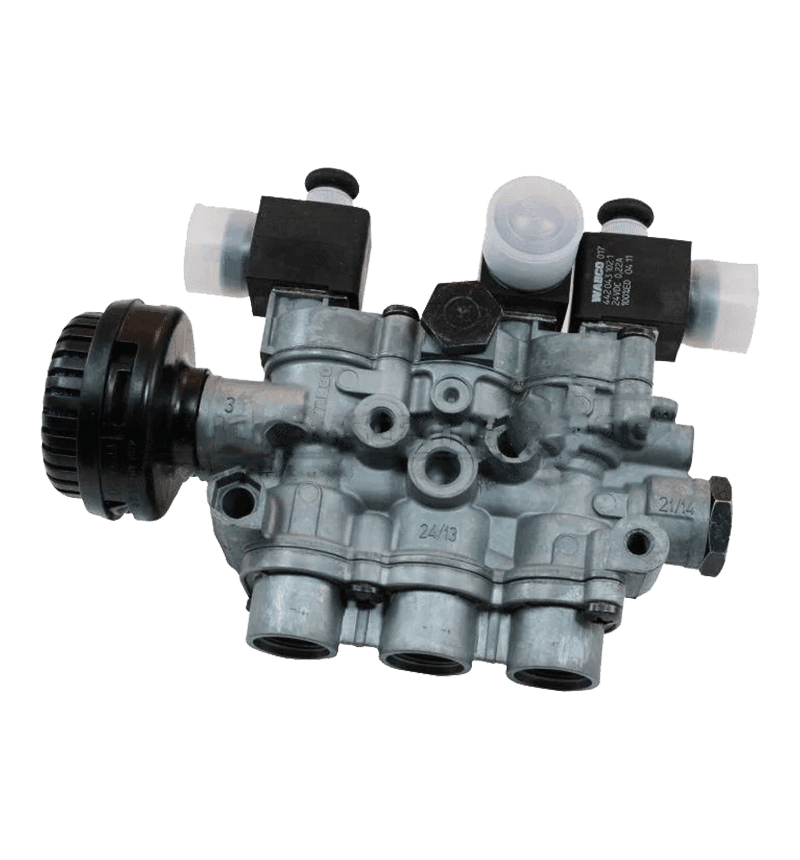
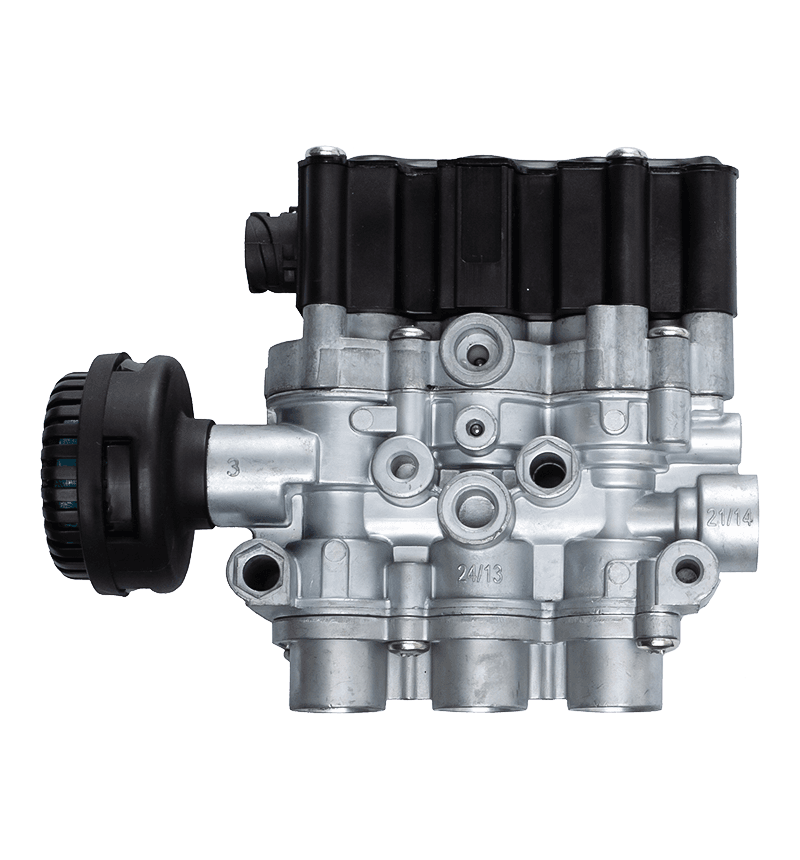
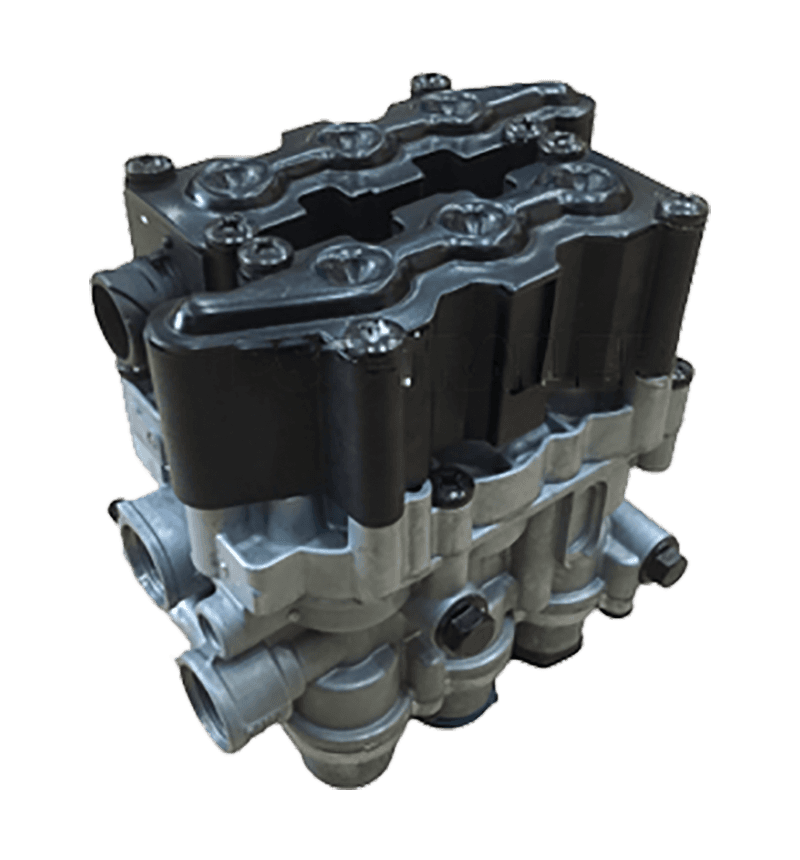
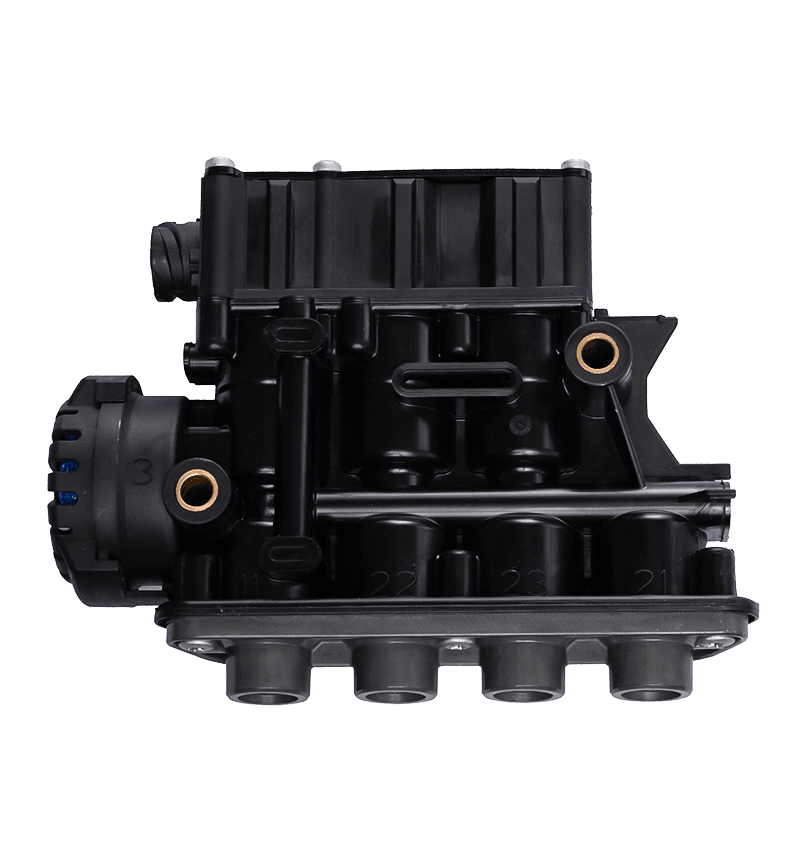
Commercial vehicles expose brake parts to salt, water, temperature swings, and constant vibration. Housing material (aluminum, steel, composite) and seal material (NBR, EPDM, silicone) determine service life. For solenoid valves such as ECAS or ABS valves, check coil voltage and connector form, because parts that look interchangeable often are not.
Many commercial vehicle brake parts are ordered by original reference number or vehicle application. A reputable supplier should be able to state exactly which vehicles, systems, or original references a part corresponds to. If the answer is vague, the part is likely vague too.
Brake system reliability is decided at the sourcing stage. A single faulty relay valve can stop a truck on the road, and the cost of the breakdown far exceeds the price of the part. That is why working with a manufacturer that specializes in commercial vehicle brake parts - specifically, a specialist in brake system valves - reduces risk in ways that a general parts reseller cannot.
A specialist manufacturer designs and produces valves as its core activity, not as a side category. Zhuji Infia Auto Parts Co., Ltd., for example, positions itself as a professional manufacturer of valves for vehicle brake systems. Its production covers several families of commercial vehicle brake parts, including:
Because the product range is built around pneumatic control, the engineering knowledge, tooling, and quality checks all align with the demands of air braking. Buyers can consolidate multiple references from one source and discuss technical details with people who understand the circuit, not just the catalog.
Another practical advantage is custom development. If you maintain legacy vehicles, if an original replacement has become slow or expensive, or if you need a valve with a different port arrangement, a specialist manufacturer can develop the part from your drawing or sample. This kind of flexibility is rarely available from a distributor that only moves stock.
| Supplier requirement | Why it matters | Warning sign |
|---|---|---|
| Clear product identification | Ensures the part matches the specified application | Vague references or "fits all" claims |
| Pressure and functional data | Allows correct integration into the air circuit | No specifications available |
| Custom development from drawings or samples | Supports legacy vehicles and special configurations | Only standard products are offered |
| On-time delivery commitment | A small valve can idle an entire vehicle | Unclear lead times, no delivery guarantee |
| Consistent batch quality | Parts must behave identically in service | Frequent design changes without notice |
Use this checklist to reduce ordering errors and speed up the entire purchasing process.
Commercial vehicle brake parts are most reliable when they are chosen with the entire air system in mind. The more precisely you define the function, the pressure, the ports, and the application, the fewer problems you will meet in the workshop. That is exactly what a specialized brake valve manufacturer can help you do - and why choosing the right partner is as important as choosing the right part.
 NO. 132 Xingye Road,Fengqiao Town ,Zhuji City,Zhejiang
 +86-13958007768 +86-13655857582
Copyright © Zhuji Infia Auto Parts Co., Ltd. All Rights Reserved.
Wholesale Truck/Bus Brake Parts Suppliers
 English
 Español