E-mail: [email protected]
E-mail: [email protected]Address: NO. 132 Xingye Road,Fengqiao Town ,Zhuji City,Zhejiang
Whatsapp: +86-13958007768
Whatsapp: +86-13655857582




Need Help
+86-13958007768
E-mail: [email protected]
E-mail: [email protected]
Address: NO. 132 Xingye Road,Fengqiao Town ,Zhuji City,Zhejiang
Whatsapp: +86-13958007768
Whatsapp: +86-13655857582
Our team is proud to offer on time guarantee and product guarantee to customer satisfaction.
Read MoreNews
 Home / News / Industry News / Air Brake Parts: A Complete Guide to Components, Selection, and Maintenance
  2026.10.08
 Industry News
Replacing a foot brake valve on a 2018 Freightliner Cascadia should take two hours. But if the replacement part has a 0.5 mm difference in port depth, the pedal feels spongy, and the truck stays in the shop for three days. That is the reality of air brake parts: small dimensional errors create big safety and downtime problems.
The conclusion is simple: buy air brake parts from a manufacturer who understands the whole system, not just a catalog number. This guide explains how the main components work together, what to check before ordering, and how to avoid the most common procurement mistakes.
A heavy-duty air brake system is a network of supply, control, and actuation parts. Each part must match the system's pressure range, flow characteristics, and mounting interface. The following tree diagram shows the typical layout.
Now look at what each part does and how it typically fails. The table below summarizes the core components.
| Part | Function | Common failure mode |
|---|---|---|
| Foot brake valve | Modulates air pressure to the relay valve based on pedal travel. | Internal seal wear causing air leakage or delayed release. |
| Relay valve | Amplifies and speeds up air delivery to the brake chambers. | Diaphragm rupture or contamination sticking the piston. |
| Quick release valve | Exhausts air quickly from the brake chambers to release brakes. | Clogged exhaust port or degraded rubber seat. |
| Hand brake valve | Controls parking brake application and release. | Detent wear causing partial application or leakage. |
| Air dryer | Removes moisture and oil from compressed air. | Saturated desiccant or failed purge valve. |
Valves are the most critical air brake parts because they control pressure and timing. A foot brake valve, for example, must deliver a linear pressure curve. If the valve has a 10% hysteresis, the driver feels a delay, and stopping distance increases. That is why tolerances matter more than price.
Relay valves are another high-wear item. They take a low-pressure signal from the foot valve and send a high-volume charge to the brake chambers. A relay valve with a 0.2 bar crack pressure difference can cause uneven braking across the axle.
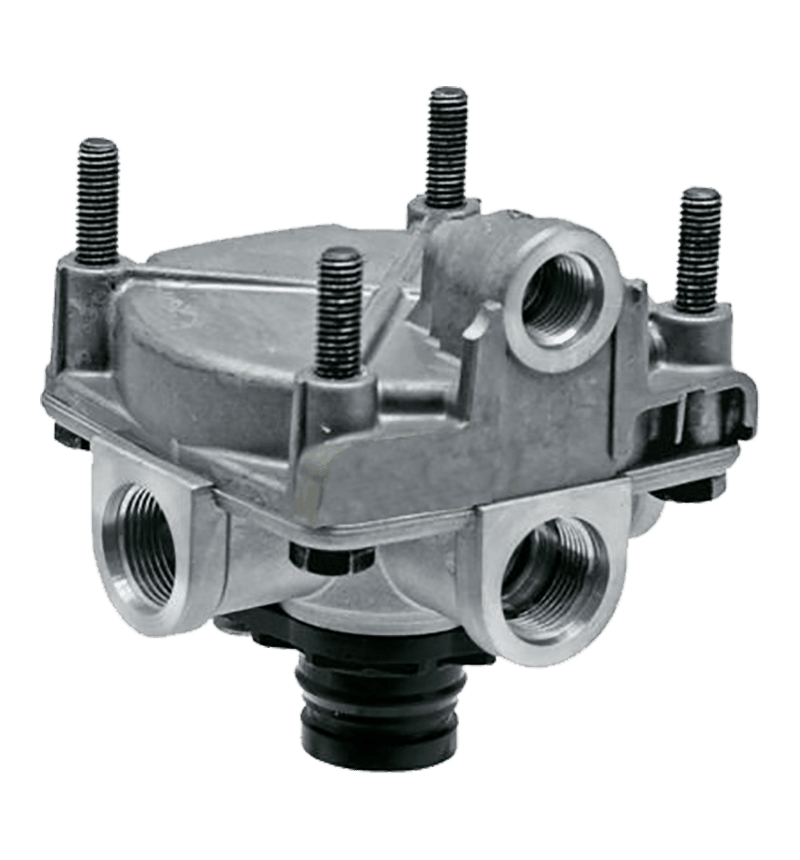 Commercial Vehicle Relay Valves for Trailer and Spring Brake SystemsFor high-wear relay valve replacement, this wholesale range includes YFY11001-YFY11024 and OEM references with M22x1.5 or M16x1.5 ports for major truck makes.View Product →
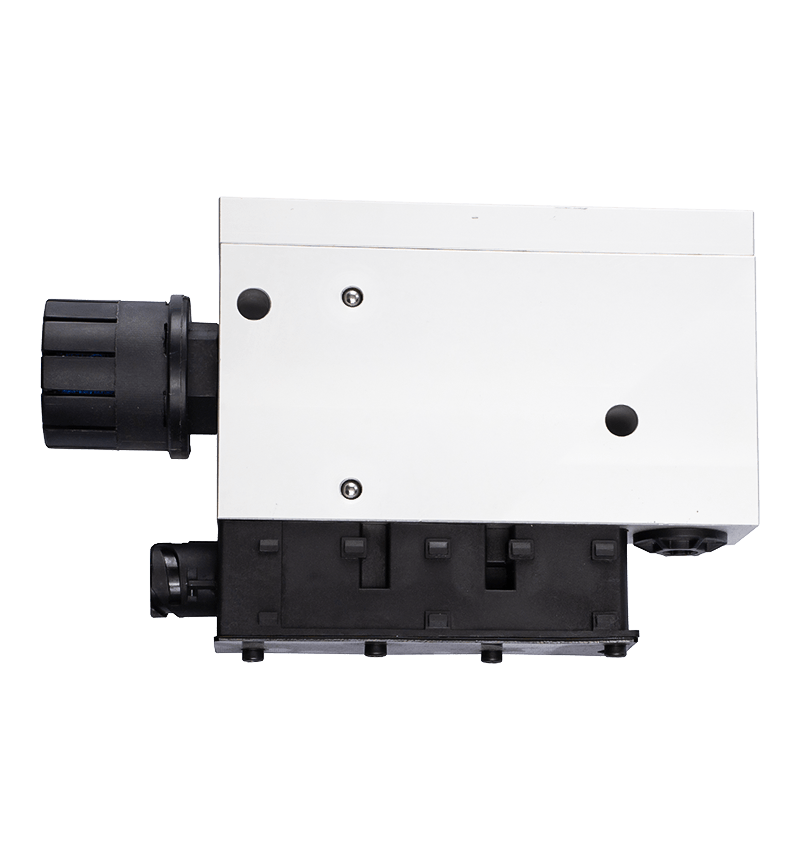
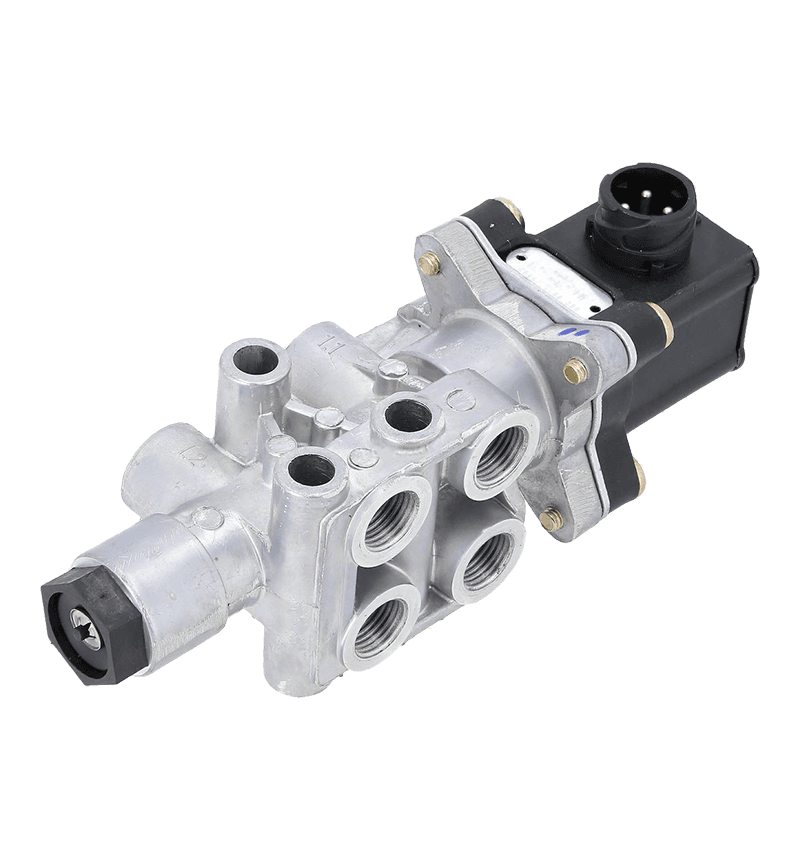
Hand brake valves must hold a parking brake at 6 bar for hours without leaking. A leak rate above 10 cc/min fails most fleet inspections. You can read more about valve classifications in this article on vehicle brake valve classifications.
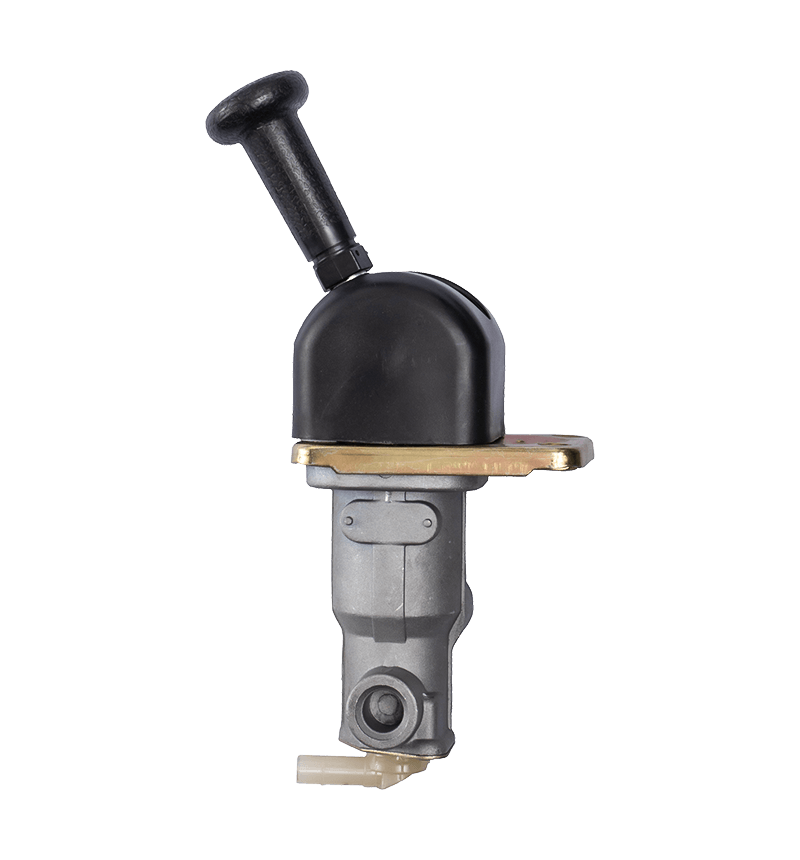 Hand Brake Valves for Truck Bus and Van Parking Brake ControlFor parking brake control, this wholesale range offers YFY04001-YFY04024 with Wabco-style references, M14x1.5 or M16x1.5 VOSS ports, and fitments for major commercial vehicles.View Product →
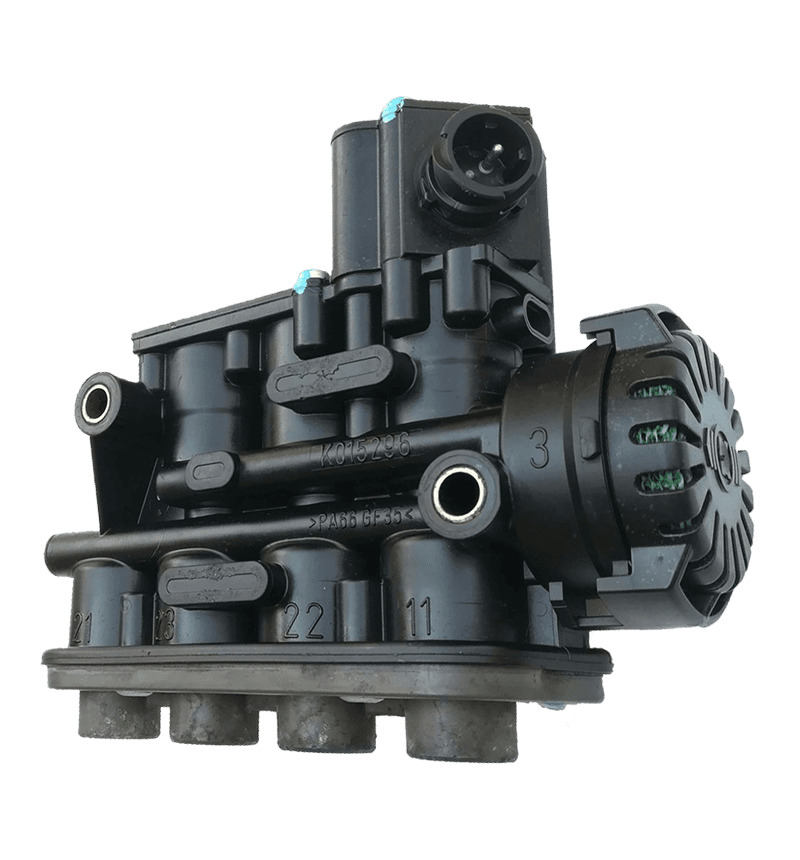
Foot brake valves are the driver's direct interface. A worn foot valve can cause a soft pedal or a sticking brake. For heavy-duty applications, look for a valve with a forged aluminum body and a Teflon-coated bore.
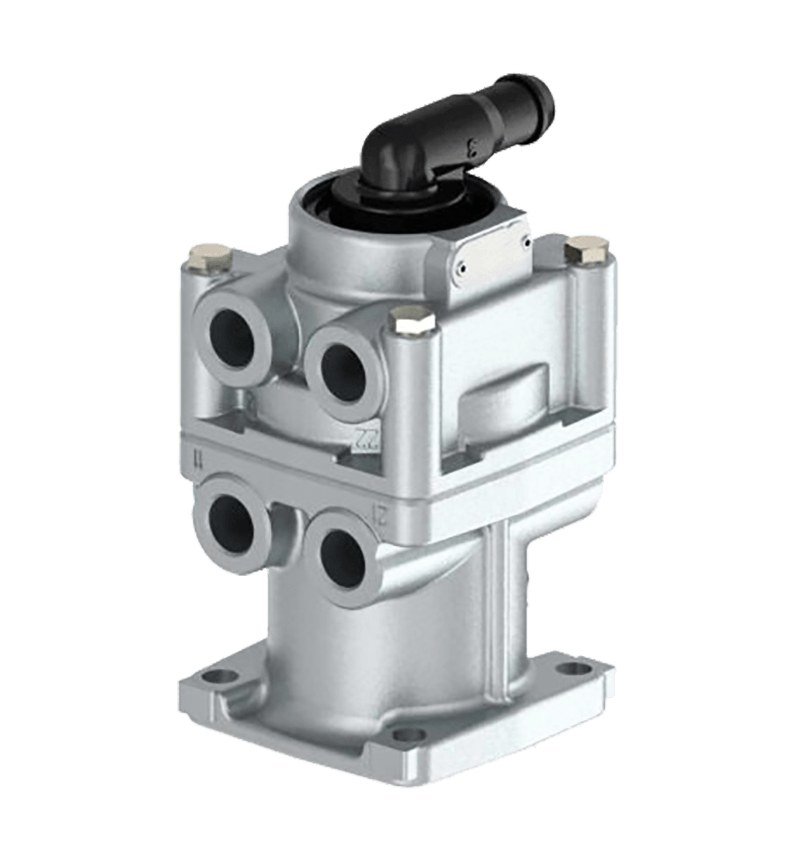 Foot Brake Valves for Commercial Vehicle and Heavy-Duty Braking SystemsPedal-operated foot brake valves with YFY13001-YFY13024 and OEM references, using port threads from M12x1.5 to M22x1.5 for DAF, Mercedes, MAN, IVECO, Volvo, Renault and Scania.View Product →
Quality in air brake parts is not about appearance. It is about measurable performance. Ask for these three things before you approve a supplier.
The table below shows typical tolerance ranges for common air brake parts. If a supplier cannot meet these, the part will fail prematurely.
| Part | Pressure range | Leak rate (max) | Operating temp |
|---|---|---|---|
| Foot brake valve | 0–10 bar | 5 cc/min at 6 bar | -40°C to +80°C |
| Relay valve | 0–12 bar | 8 cc/min at 6 bar | -40°C to +100°C |
| Hand brake valve | 0–10 bar | 3 cc/min at 6 bar | -40°C to +80°C |
| Quick release valve | 0–10 bar | 10 cc/min at 6 bar | -40°C to +90°C |
Before you place an order for air brake parts, run through this checklist. It prevents the most expensive mistakes: wrong fit, wrong pressure, and no traceability.
Most air brake part failures come from three sources: moisture, contamination, and heat. Moisture corrodes valve bores and freezes in winter. Contamination from a failing compressor coats seals with oil. Heat degrades rubber seals and weakens springs.
Use this maintenance schedule to extend the life of your air brake parts.
| Interval | Action | Parts to check |
|---|---|---|
| Every 25,000 km | Drain air tanks and check for moisture. | Reservoirs, drain valves |
| Every 50,000 km | Inspect air dryer cartridge and purge valve. | Air dryer, unloader valve |
| Every 100,000 km | Test foot brake valve for leak rate and pedal feel. | Foot brake valve, relay valve |
| Every 200,000 km | Replace hand brake valve seals and check detent. | Hand brake valve |
Standard catalog parts cover most repairs. But when you need a valve for a vintage truck, a specialized trailer, or a new electric bus, you need a manufacturer that can develop from drawings and samples. This is where a partner like Zhuji Infia Auto Parts Co., Ltd. comes in. They have been producing brake valves since 2007, including relay valves, foot brake valves, hand brake valves, and air dryers.
When you send a drawing or a sample, ask for a first article inspection report. It should include dimensional measurements, leak test results, and a material certificate. A good manufacturer will also recommend improvements, such as a different seal material for high-temperature routes or a larger exhaust port for faster release.
Custom air brake parts are not about copying a shape. They are about matching the flow curve, the crack pressure, and the temperature range. That is how you avoid callbacks and warranty claims.
Air brake parts are safety-critical components. The difference between a good part and a cheap part is not visible in a photo. It shows up in leak rates, cycle life, and stopping distance. Use the tables and checklists in this guide to evaluate suppliers, and always test a sample before you commit to a full order.
 NO. 132 Xingye Road,Fengqiao Town ,Zhuji City,Zhejiang
 +86-13958007768 +86-13655857582
Copyright © Zhuji Infia Auto Parts Co., Ltd. All Rights Reserved.
Wholesale Truck/Bus Brake Parts Suppliers
 English
 Español