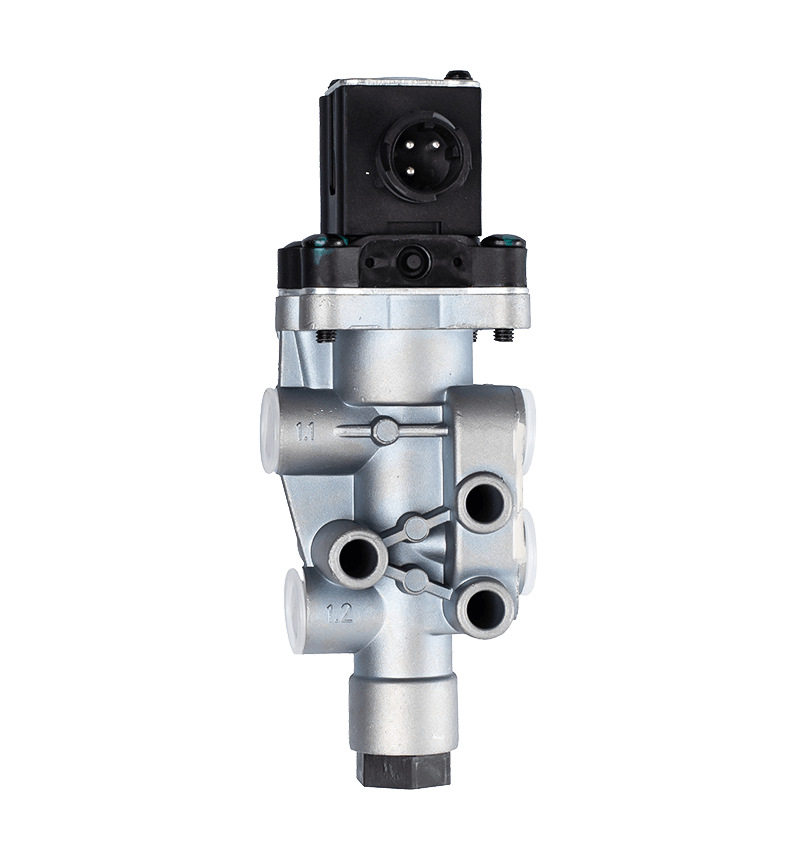
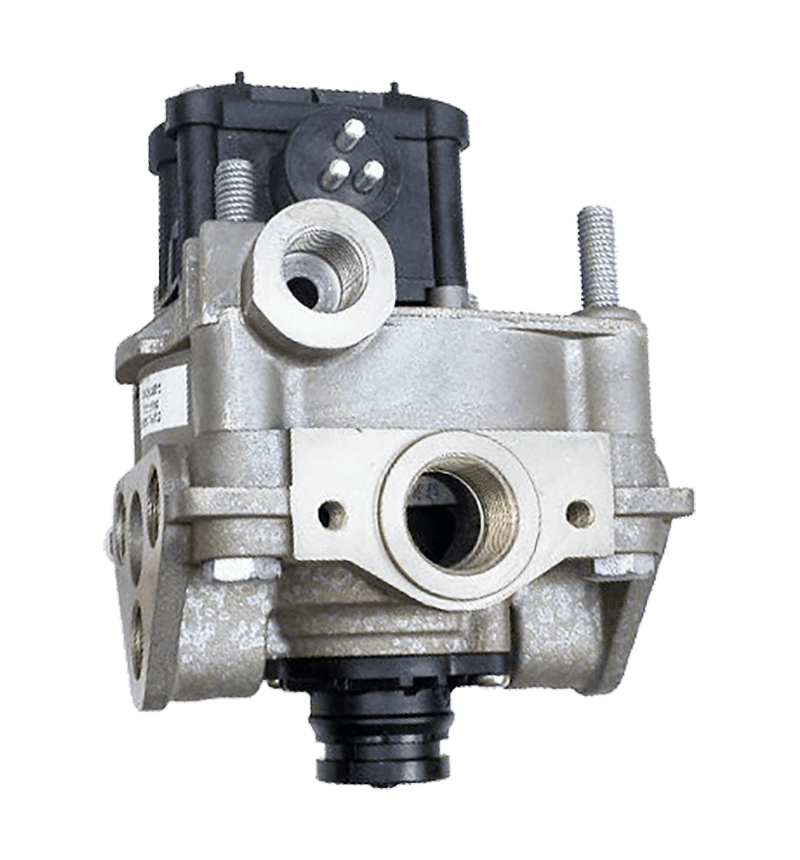
E-mail: [email protected]
E-mail: [email protected]Address: NO. 132 Xingye Road,Fengqiao Town ,Zhuji City,Zhejiang
Whatsapp: +86-13958007768
Whatsapp: +86-13655857582




Need Help
+86-13958007768
E-mail: [email protected]
E-mail: [email protected]
Address: NO. 132 Xingye Road,Fengqiao Town ,Zhuji City,Zhejiang
Whatsapp: +86-13958007768
Whatsapp: +86-13655857582
Our team is proud to offer on time guarantee and product guarantee to customer satisfaction.
Read MoreNews
 Home / News / Industry News / ECAS Valve Guide: Working Principle, Common Faults, and Selection Tips
  2026.09.17
 Industry News
A truck pulls into the workshop with the cab tilted noticeably toward the left rear. The driver says the air compressor has been cycling more often than usual for about a week. A quick check confirms that the air springs are intact, the reservoir pressure is normal, and there is no kinked air line. The fault is smaller than a failed spring: the ECAS valve is holding the left bellows circuit at the wrong pressure.
ECAS valves are frequently misdiagnosed because their symptoms look like suspension or compressor problems. If you maintain trucks, buses, or trailers with air ride suspension, knowing what this valve does, why it fails, and how to select the right replacement will reduce diagnostic time and prevent repeat repairs.
ECAS stands for Electronically Controlled Air Suspension. Instead of a mechanical leveling valve that uses a rod and lever to sense chassis height, an ECAS system relies on an electronic control unit (ECU), height sensors, and a block of solenoid valves to adjust the air pressure in the suspension bellows.
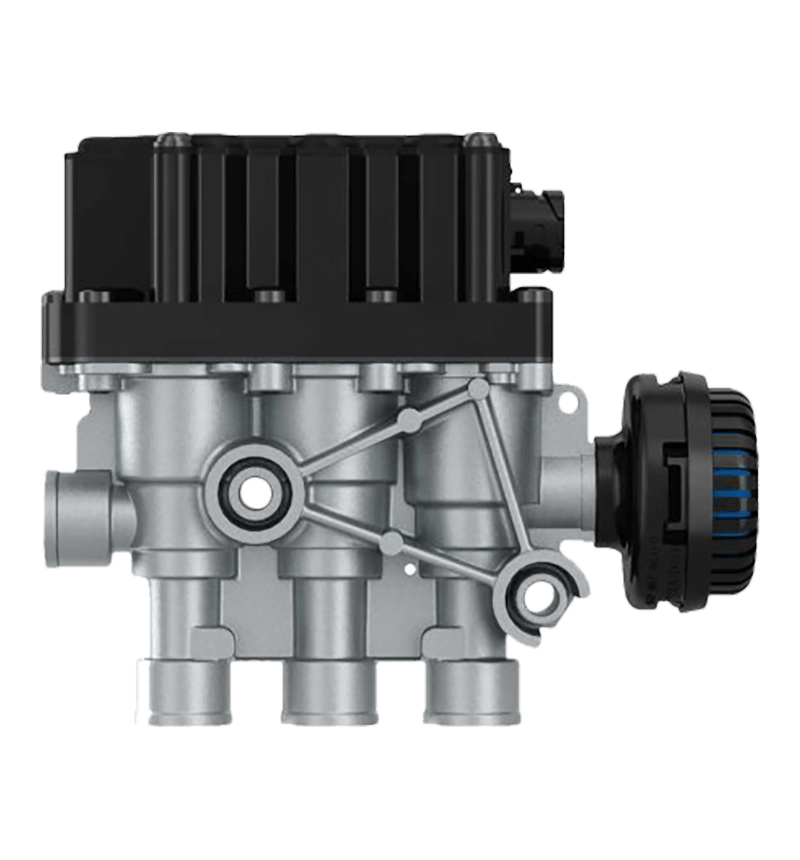
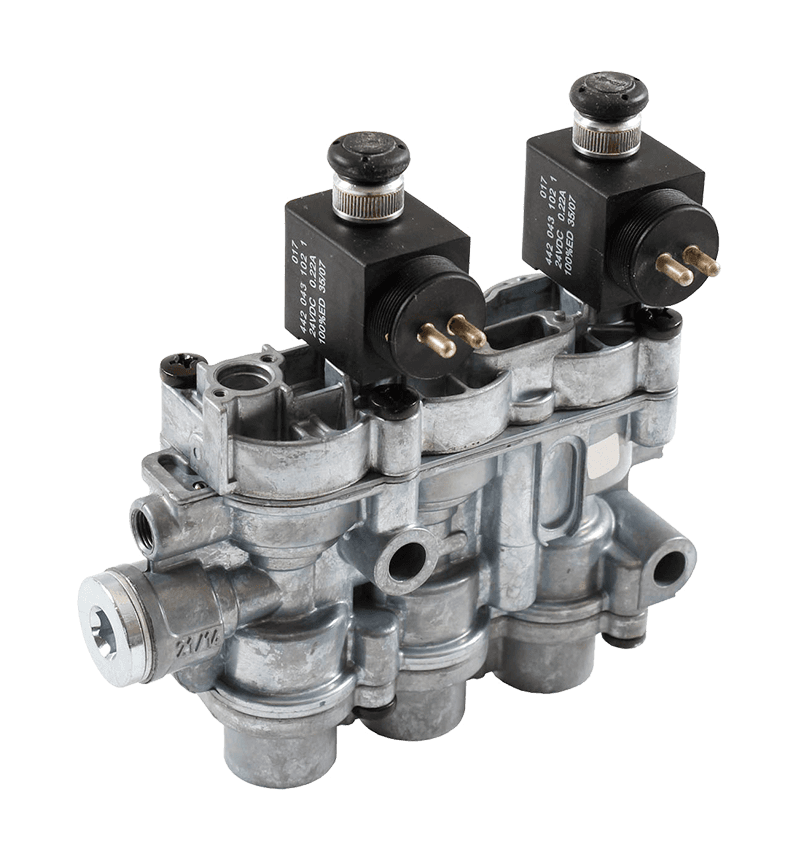
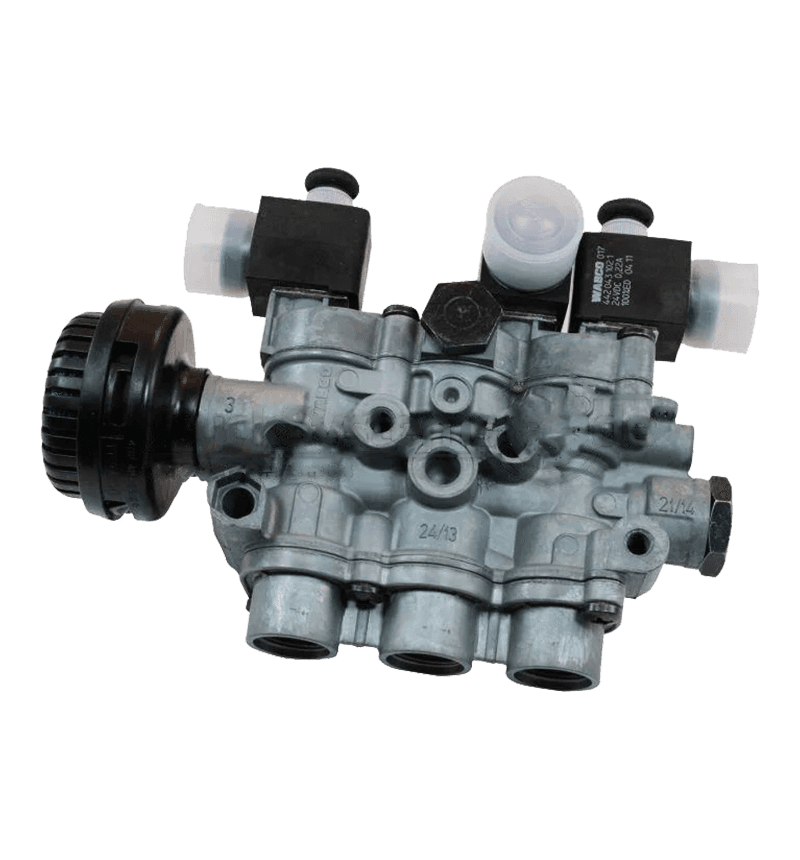
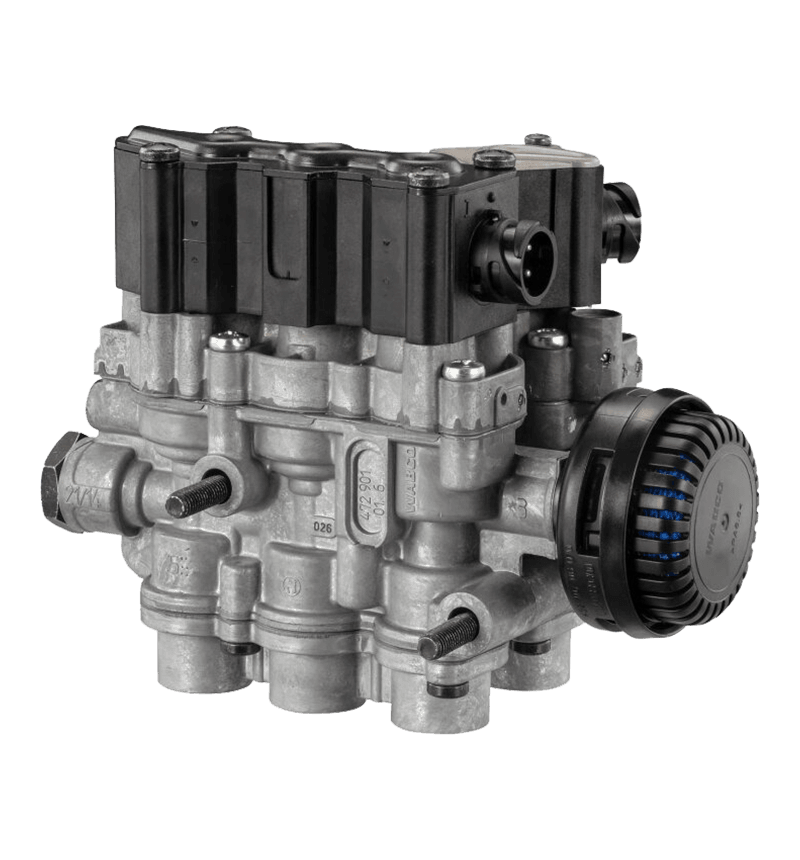
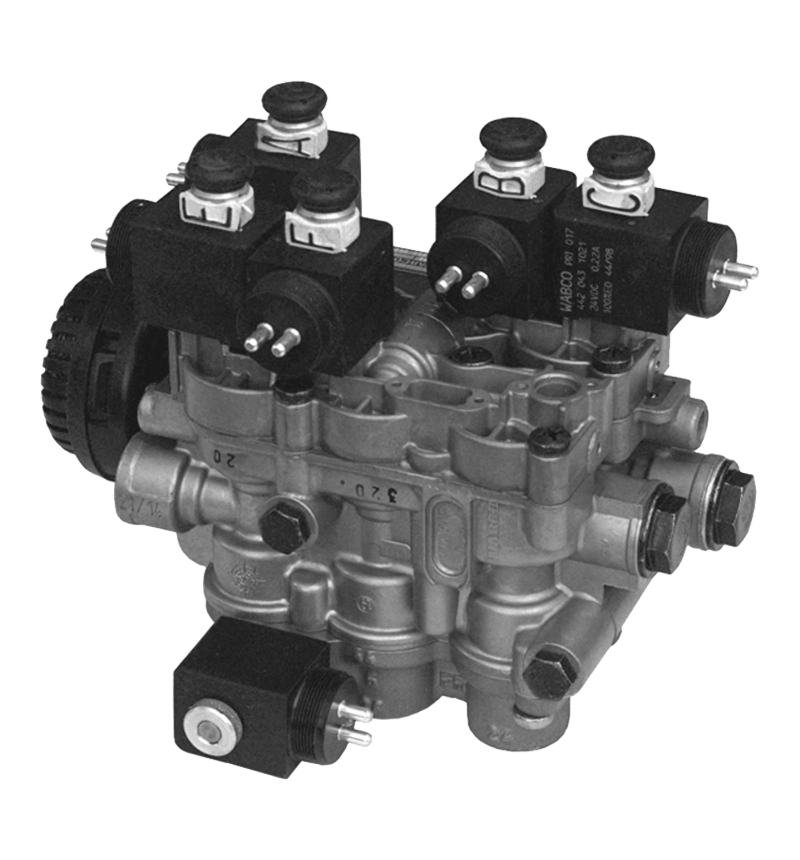
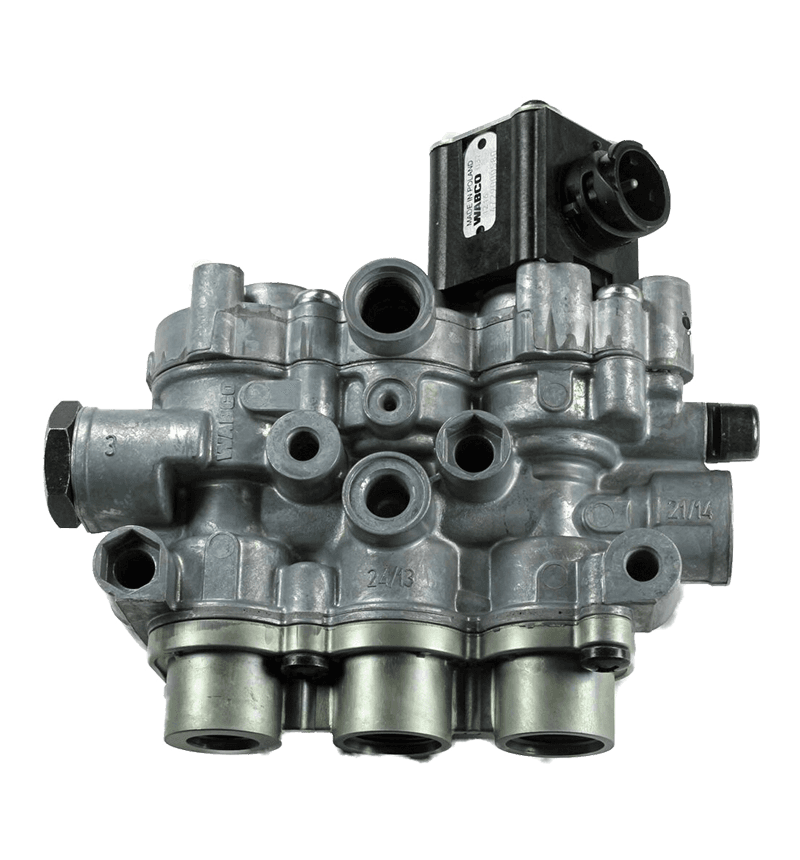
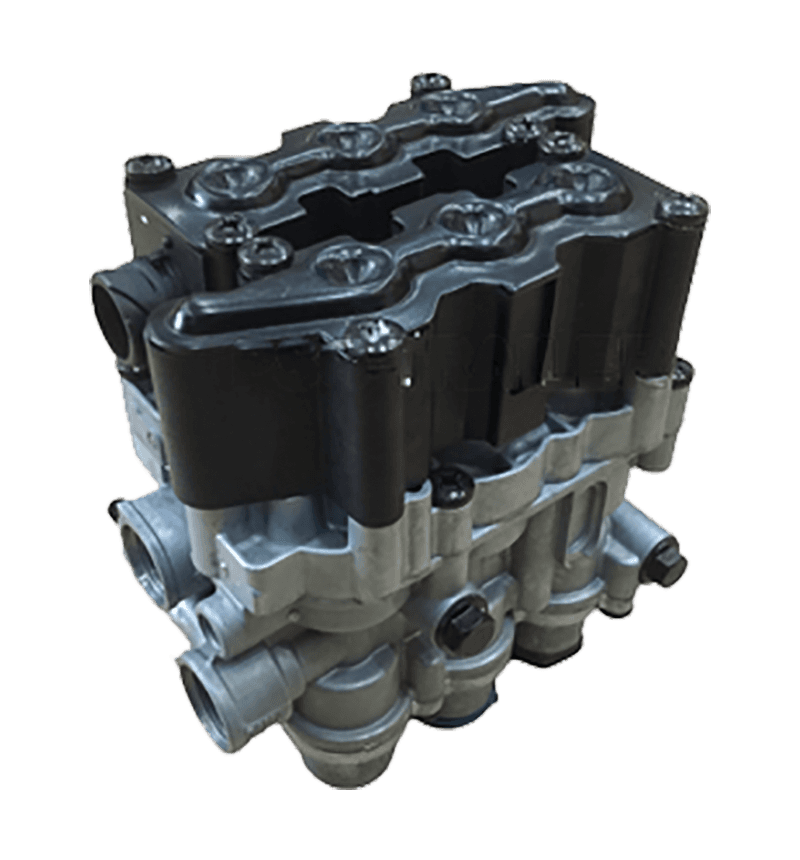
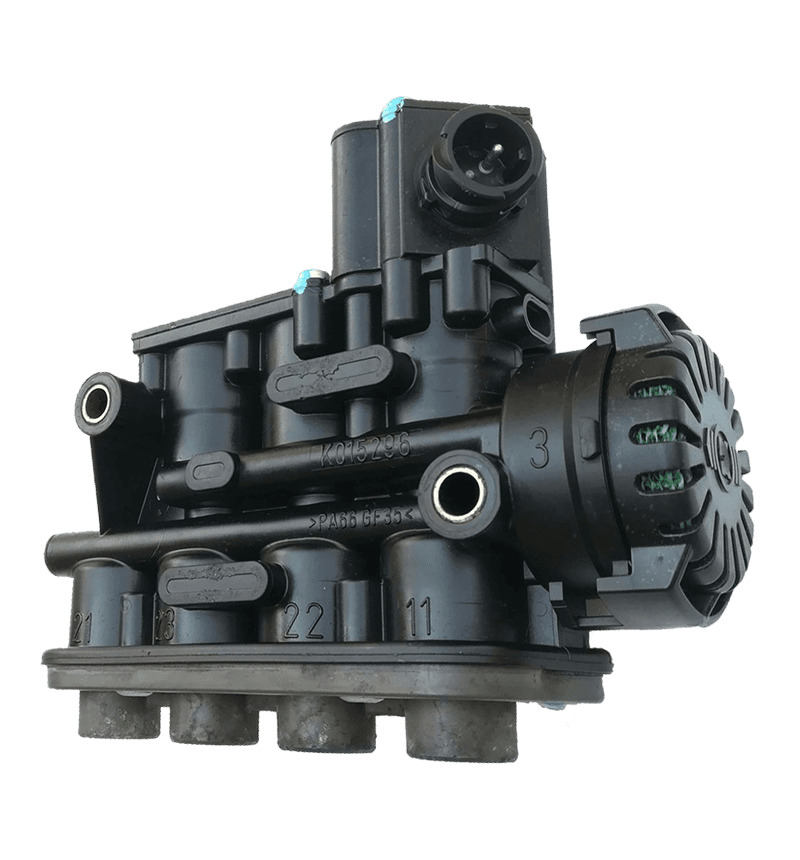
The ECAS valve block is the physical control point of that system. It moves compressed air into the air springs to raise the chassis, releases air to lower it, and holds pressure steady once the target height is reached. On many vehicles, a single valve block serves several bellows circuits, so each solenoid within the block controls a specific inlet or exhaust path.
From a manufacturing standpoint, ECAS solenoid valves belong to the same pneumatic control family as leveling valves, hand brake valves, and protection valves. A specialist in vehicle brake system pneumatics, such as Zhuji Infia Auto Parts Co., Ltd., applies the same sealing, coil, and port quality standards to the ECAS block as to every other valve it produces.
The working principle of an ECAS valve comes down to three states: fill, exhaust, and hold. Each bellows circuit has solenoid valves that open or close when the ECU sends a current to the coil.
To raise the chassis, the ECU opens the inlet solenoid so reservoir air flows into the bellows. To lower the chassis, it opens the exhaust solenoid so bellows air vents out. When both solenoids remain closed, the pressure is trapped, and the vehicle maintains its ride height.
Height sensors send a continuous voltage signal to the ECU. The ECU compares that signal with the stored target value and energizes the appropriate coil in short pulses until the difference is corrected. This is a closed-loop control process that runs continuously while the vehicle is moving, which is why response speed and sealing reliability are the two most important valve qualities.
Compared with a traditional mechanical valve, the electronic version reacts faster and accepts additional inputs. A driver can command a lower ride height for highway driving, a higher setting for rough terrain, or a kneel function for bus boarding. These functions would be difficult or impossible to achieve with a purely mechanical leveling valve. For a more detailed review of the pneumatic and electrical process, see our article on the working principle and performance characteristics of ECAS valves.
In trucks and buses, the ECAS valve is more than a ride comfort device. It directly affects loading procedures, vehicle stability, and body protection:
Because the same valve block often supports multiple circuits, a single leaking seat or faulty coil can produce symptoms that point toward an air spring leak or a failing compressor. A systematic check of the valve block, its connector, and the air lines in each circuit is the fastest way to avoid replacing expensive parts that were never broken.
Most ECAS valve failures are electrical, internal leakage, or contamination related. The table below lists typical symptoms, likely causes, and the first checks to run without specialized diagnostic equipment.
| Symptom | Likely cause | First check |
|---|---|---|
| Vehicle leans to one side after being parked | Internal seat leakage in the affected bellows circuit | Listen for air escaping near the valve; use soapy water on the exhaust port |
| Compressor runs much more often than normal | Valve seat leak or a stuck pilot valve | Monitor the dryer purge cycle; compare compressor on-time against the vehicle specification |
| No height change when lifting or lowering is commanded | Faulty coil, blocked orifice, or wiring issue | Measure coil resistance; check the connector for damaged pins or corrosion |
| Vehicle drops slowly after reaching target height | Exhaust valve not fully sealing | Check the exhaust port for a continuous leak |
| Warning lamp or fault code for suspension system | Pressure discrepancy between bellows circuits or ECU-communication error | Read the stored fault codes and verify pressures in each circuit with a gauge |
Contamination is the most common root cause of internal wear. Moisture, oil mist, and fine particles abrade the sealing surfaces and prevent the valve seat from closing fully. This connection between air quality and valve life is why the air dryer is not an optional extra; it is the main protection for the ECAS block and every other pneumatic component on the vehicle.
An ECAS valve is a sealed, low-wear component when the air supply stays clean and the electrical connector remains dry. Most maintenance work is about protecting the valve and checking the parts around it.
If the vehicle has suffered a compressor failure, debris and carbon dust can travel through the air lines and damage the valve block rapidly. In that case, flush the lines and inspect the ECAS valve earlier than the regular service interval.
Keeping the air system clean is easier with a properly working dryer. The air dryer removes moisture and oil before they enter the valve block, so its condition has a direct effect on ECAS valve service life.
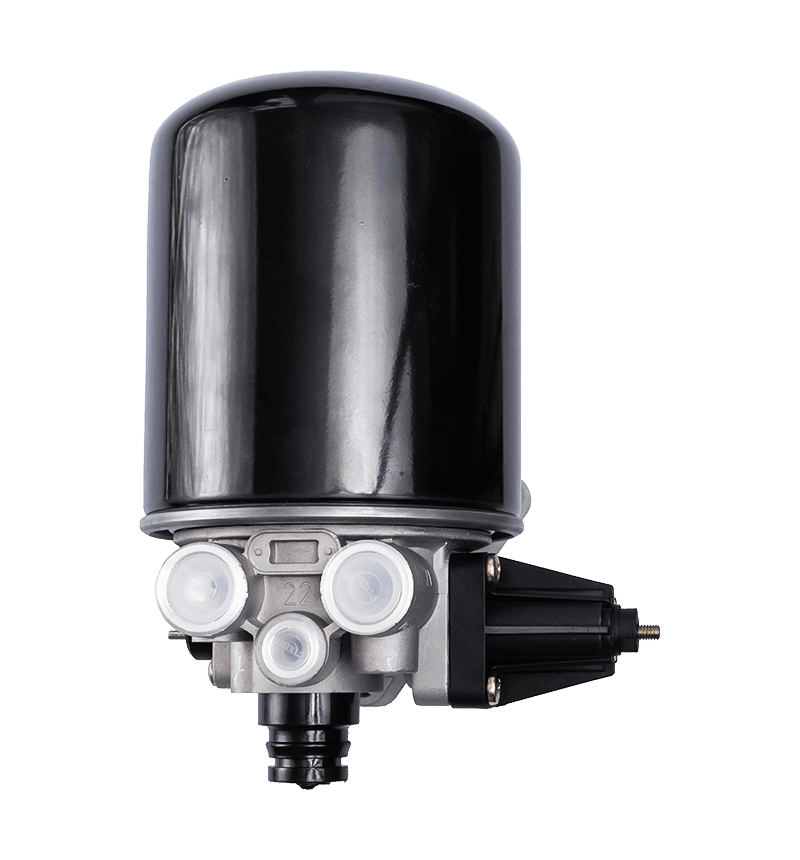 Air Dryers for Commercial Vehicle Air SystemsThese air dryers remove moisture and oil from the air supply before they reach the valve block, extending ECAS valve service life. Available with multiple port thread sizes for DAF, Mercedes, Iveco, and Evobus.View Product →
When you need to purchase a replacement ECAS valve, compatibility comes before price. A valve block that matches the vehicle electrical and pneumatic architecture will function correctly from the first installation, while a mismatch will produce the same fault you tried to repair.
Sourcing from a professional manufacturer that builds valves as its core business gives you better control over quality. A manufacturer with a dedicated valve production line can match sealing materials and coil ratings to the application, and can often work from your sample or drawing when the original part is no longer listed.
A direct ECAS solenoid valve product page with clear specifications helps confirm the configuration before ordering.
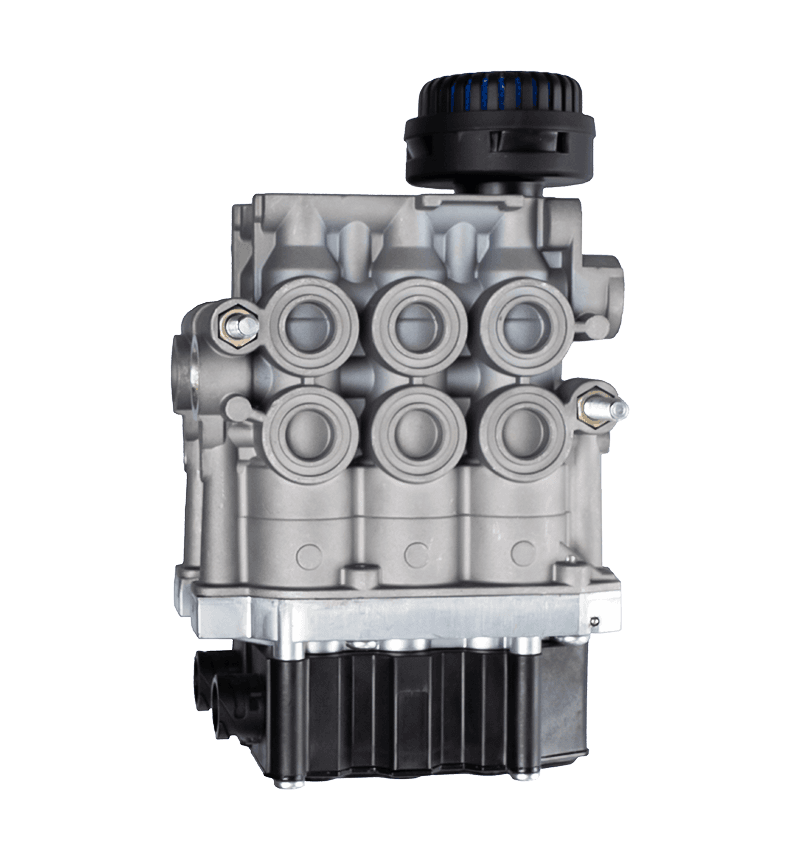 ECAS Solenoid Valves for Truck SuspensionThese ECAS solenoid valves are built to respond quickly and seal completely under vibration and dirt. Port configurations match Renault, DAF, Iveco, MAN, Volvo, and Krone, helping confirm compatibility before ordering.View Product →
The ECAS valve is the part between the ECU decision and the air spring movement. It must respond quickly, seal completely, and tolerate the water, dirt, and vibration that exist under a truck. The most durable ECAS valves fail only when the air system fails around them, so maintenance attention and careful selection are the two best ways to keep replacement costs low.
 NO. 132 Xingye Road,Fengqiao Town ,Zhuji City,Zhejiang
 +86-13958007768 +86-13655857582
Copyright © Zhuji Infia Auto Parts Co., Ltd. All Rights Reserved.
Wholesale Truck/Bus Brake Parts Suppliers
 English
 Español