E-mail: [email protected]
E-mail: [email protected]Address: NO. 132 Xingye Road,Fengqiao Town ,Zhuji City,Zhejiang
Whatsapp: +86-13958007768
Whatsapp: +86-13655857582




Need Help
+86-13958007768
E-mail: [email protected]
E-mail: [email protected]
Address: NO. 132 Xingye Road,Fengqiao Town ,Zhuji City,Zhejiang
Whatsapp: +86-13958007768
Whatsapp: +86-13655857582
Our team is proud to offer on time guarantee and product guarantee to customer satisfaction.
Read MoreNews
 Home / News / Industry News / Pressure Limiting Valves: Advanced Design, Applications, and Industrial Performance
  2026.03.19
 Industry News
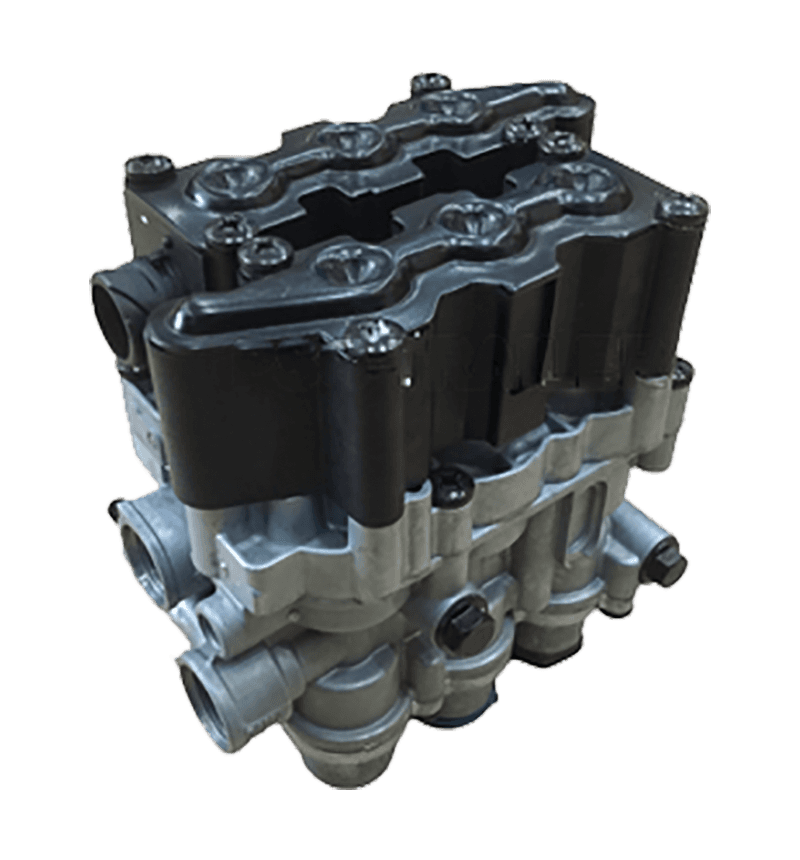
Pressure limiting valves (PLVs) are critical components for controlling fluid systems by maintaining safe pressure levels. They protect pipelines, equipment, and personnel from excessive pressure that can cause damage or operational hazards. These valves are widely used in hydraulic, pneumatic, and industrial fluid applications.
Modern pressure limiting valves provide precise pressure control, quick response times, and durability in demanding environments, making them essential for high-performance industrial systems.
A typical pressure limiting valve consists of a spring-loaded poppet or piston, a pressure adjustment screw, and a valve body. The spring tension determines the maximum allowable pressure. Once system pressure exceeds the set threshold, the valve opens, diverting fluid to a return line or tank.
PLVs operate on the principle of force equilibrium: system pressure against spring force. When pressure exceeds the spring force, the valve opens to release excess fluid. High-precision PLVs can respond within milliseconds, minimizing pressure spikes and protecting sensitive equipment.
Direct-acting valves open immediately when system pressure exceeds the set point. They are simple, compact, and ideal for low-flow systems. However, they can generate higher noise and have less precise pressure control in large-scale applications.
Pilot-operated PLVs use a small control valve (pilot) to manage the main valve. This configuration provides higher flow capacity, better stability, and more accurate pressure regulation. They are commonly used in industrial hydraulic systems and high-pressure pipelines.
Pressure limiting valves are indispensable in industries such as oil & gas, chemical processing, water treatment, and manufacturing. They ensure operational safety by preventing overpressure that could cause leaks, equipment failure, or hazardous incidents.
For example, in hydraulic presses, a pilot-operated PLV maintains maximum pressure at 250 bar, protecting both the press and tooling from damage while allowing smooth operation under varying load conditions.
| Industry | Valve Type | Typical Pressure Range |
|---|---|---|
| Hydraulic Presses | Pilot-Operated | 50–400 bar |
| Water Treatment | Direct-Acting | 5–50 bar |
| Chemical Plants | Pilot-Operated | 10–300 bar |
Routine inspection of spring tension, seal integrity, and valve movement ensures reliable performance. Wear-resistant materials like stainless steel and high-grade elastomers extend service life. Preventive maintenance reduces downtime and avoids catastrophic system failures.
Calibration of the valve is crucial. Regularly verifying set pressure against system requirements ensures the valve operates correctly, maintaining safety and performance under variable operational conditions.
Modern pressure limiting valves incorporate smart sensors and digital controls for monitoring and remote adjustment. IoT-enabled PLVs allow real-time pressure tracking, predictive maintenance, and automatic adjustments based on load variations.
Some valves also include corrosion-resistant coatings and high-temperature materials for chemical or high-pressure environments, enhancing durability and operational safety.
Proper placement within pipelines and hydraulic circuits ensures maximum efficiency. Positioning the valve close to the pump or critical components minimizes pressure spikes and response time delays. Threaded or flanged connections must match system specifications to prevent leaks and ensure mechanical integrity.
Engineers also consider flow characteristics and pressure drop when integrating PLVs into complex systems. Computational simulations can optimize valve location and selection for specific industrial applications.
Ongoing developments focus on enhanced precision, reduced size, higher flow rates, and intelligent control systems. Additive manufacturing is enabling complex internal geometries that reduce turbulence and improve response time.
The integration of AI-driven monitoring systems and predictive analytics allows for automated adjustment of set points, ensuring system safety and optimal performance while minimizing maintenance needs.
Environmentally friendly materials and energy-efficient actuation mechanisms are becoming priorities in valve design, aligning industrial performance with sustainability requirements.
 NO. 132 Xingye Road,Fengqiao Town ,Zhuji City,Zhejiang
 +86-13958007768 +86-13655857582
Copyright © Zhuji Infia Auto Parts Co., Ltd. All Rights Reserved.
Wholesale Truck/Bus Brake Parts Suppliers
 English
 Español