E-mail: [email protected]
E-mail: [email protected]Address: NO. 132 Xingye Road,Fengqiao Town ,Zhuji City,Zhejiang
Whatsapp: +86-13958007768
Whatsapp: +86-13655857582




Need Help
+86-13958007768
E-mail: [email protected]
E-mail: [email protected]
Address: NO. 132 Xingye Road,Fengqiao Town ,Zhuji City,Zhejiang
Whatsapp: +86-13958007768
Whatsapp: +86-13655857582
Our team is proud to offer on time guarantee and product guarantee to customer satisfaction.
Read MoreNews
 Home / News / Industry News / The Pneumatic Precision Standard: Optimizing Heavy-Duty Ride Stability via Electronically Controlled Air Suspension (ECAS) Valves
  2026.06.25
 Industry News
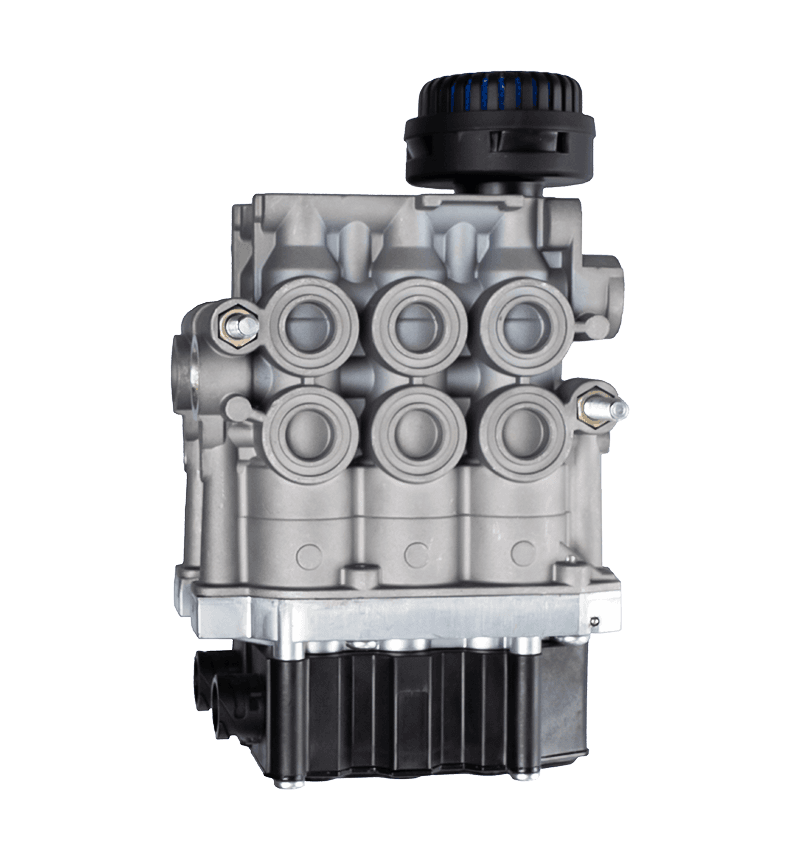
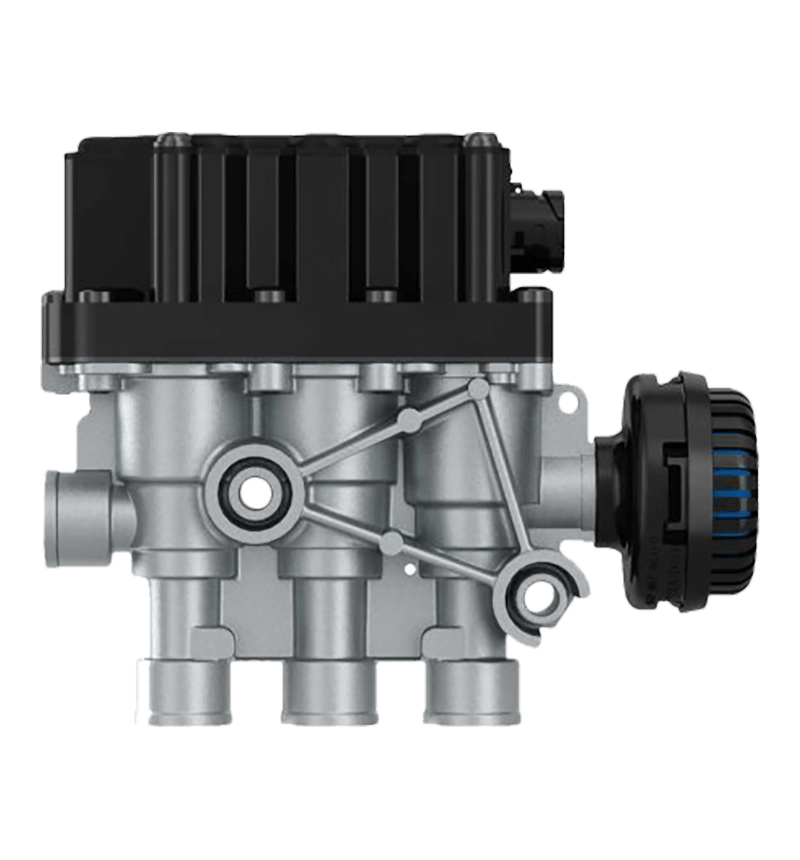
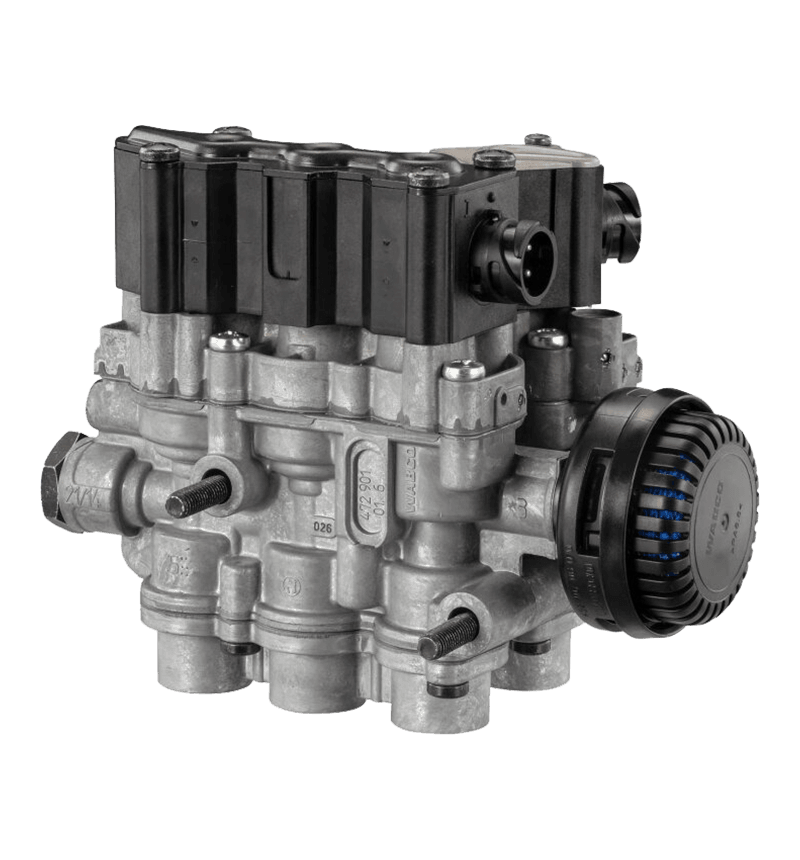
Implementing an integrated ECAS valve (Electronically Controlled Air Suspension) assembly provides commercial transportation platforms, transit buses, and heavy-duty logistics fleets with a rapid, micro-processor-driven pneumatic switching network that dynamically stabilizes chassis height relative to changing axle loads. By replacing slow, mechanical linkage leveling systems with high-speed, multi-channel solenoid manifolds, this electronic air architecture adjusts bellow pressure instantly based on input from digital displacement sensors. This automated pneumatic distribution system establishes a highly optimized chassis profile that reduces air consumption by up to 35% and maintains a level frame to within plus or minus 1.0mm, directly lowering vehicle fuel overhead, preventing uneven tire wear, and eliminating dangerous body roll under offset freight conditions.
In the demanding theater of commercial transport, managing structural balance requires a system that isolates air bellows from constant, minor road surface vibrations. Traditional mechanical valves feature continuous air bleeding designs that waste compressed air reservoirs during minor axle bouncing, forcing vehicle air compressors to cycle constantly. Transitioning to a high-speed ECAS solenoid setup solves these pressure losses by locking air volume inside the suspension bellows until a sustained weight change is recorded. This pneumatic stabilization isolates critical electronics, frame rails, and cargo components from high-frequency road vibrations, ensuring predictable handling and vehicle longevity.
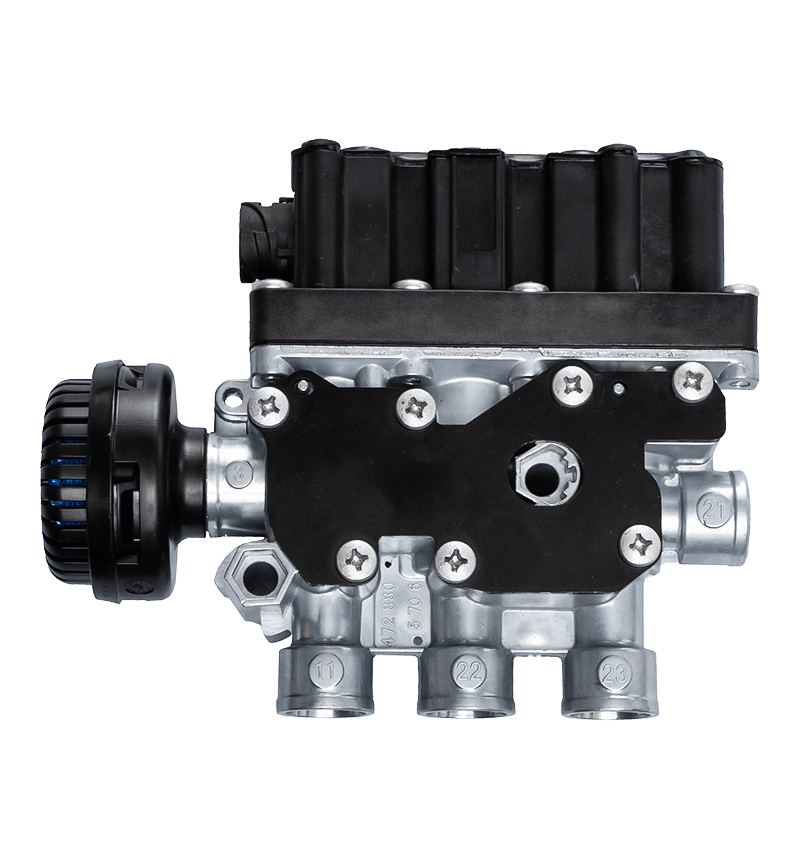
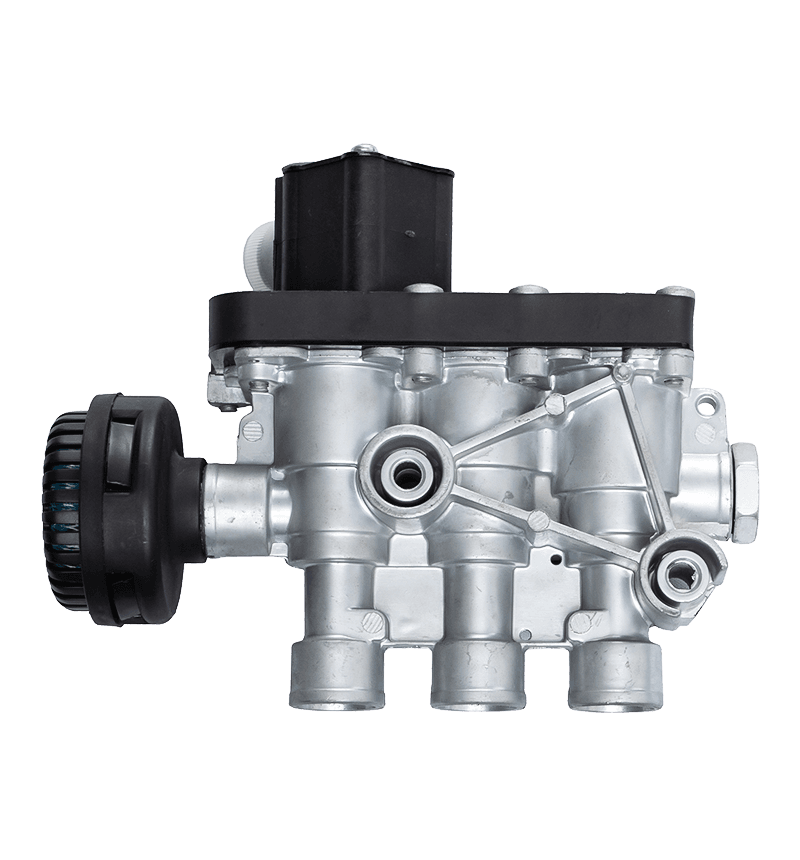
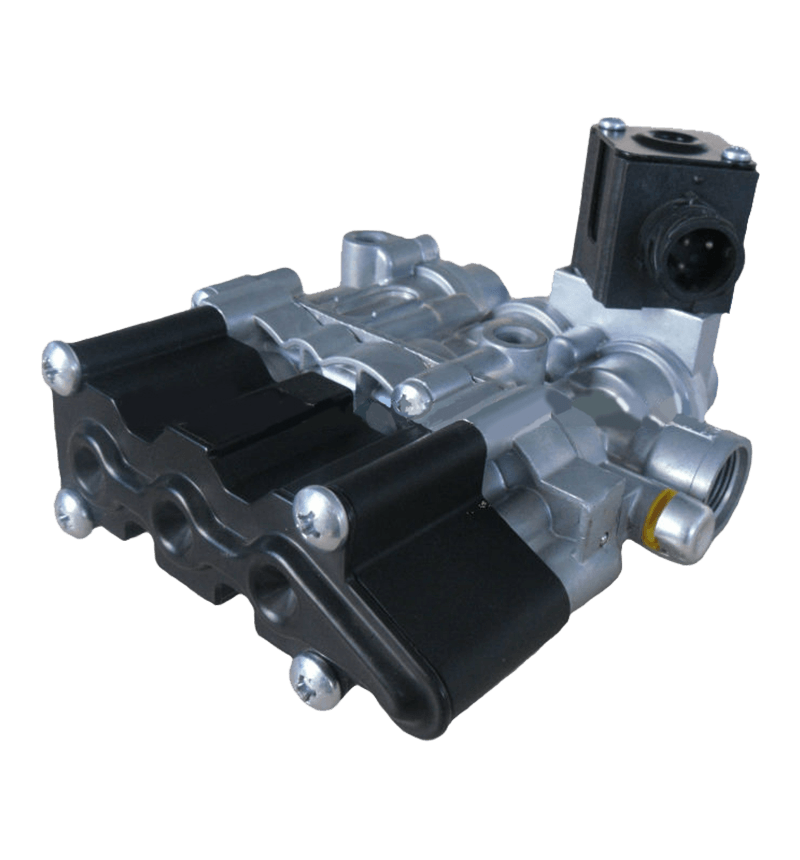
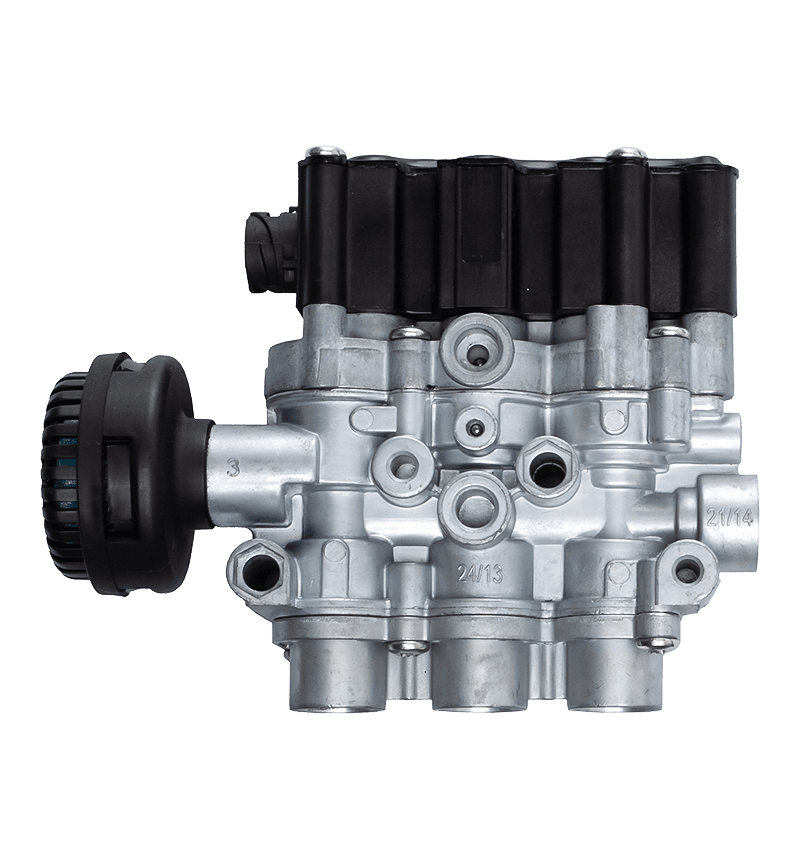
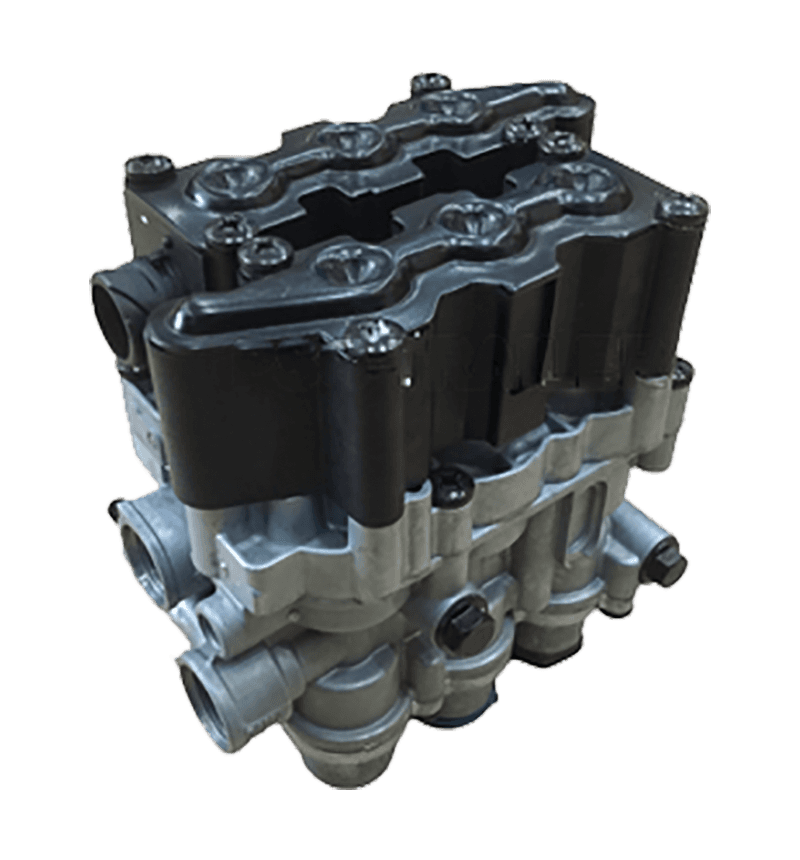
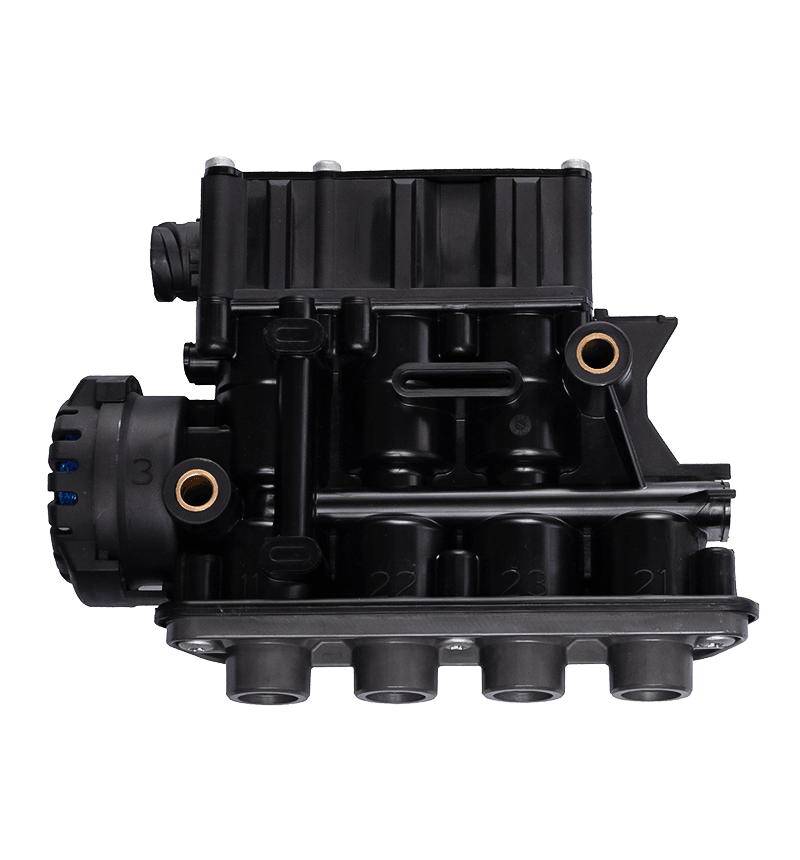
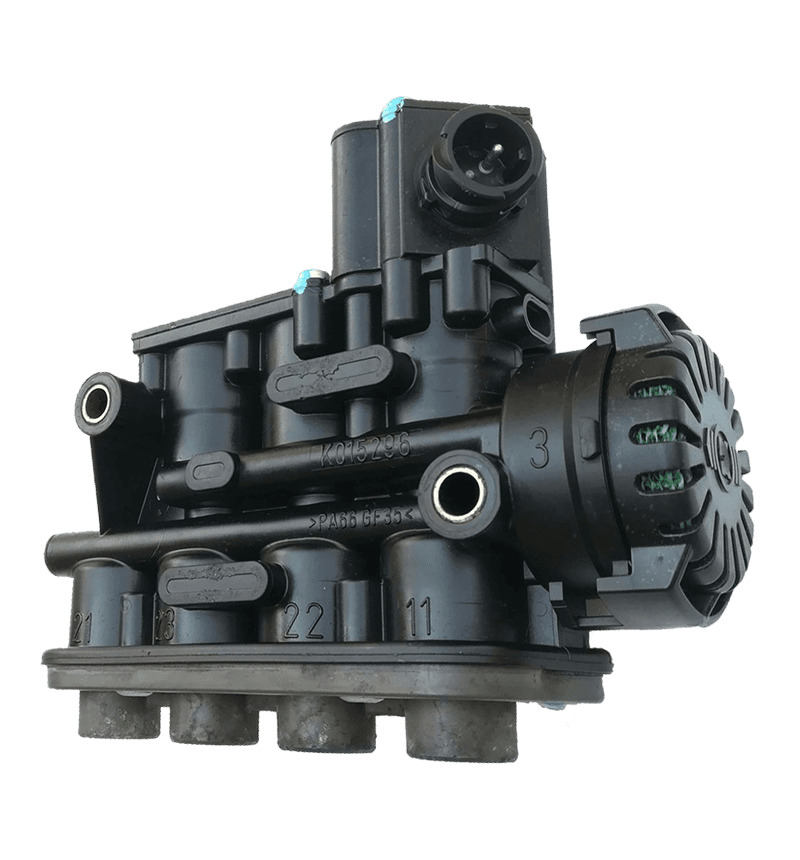
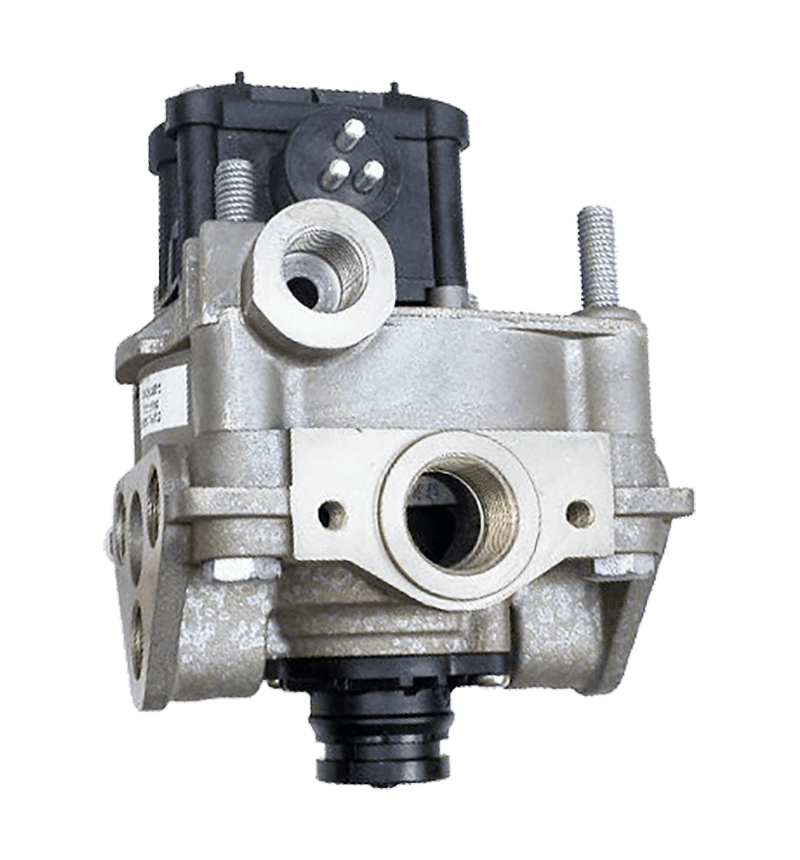
The internal efficiency of an ECAS valve unit relies on a multi-port solenoid manifold managed by an external Electronic Control Unit (ECU). The mechanical layout uses a shared supply port alongside dedicated delivery and exhaust pathways.
An ECAS valve body features a cluster of high-speed solenoids that control air flow to individual air bellows on an axle. When the vehicle ECU commands a height adjustment, it applies a 24-volt direct current pulse to the target coil. This current generates a magnetic field that pulls an internal armature away from its sealing seat against an integrated return spring. This mechanical shift connects the compressed air reservoir directly to the air springs to lift the vehicle, or routes air through an integrated silencer exhaust port to lower the frame safely.
To prevent chassis twisting when cornering or traversing unlevel loading docks, modern ECAS manifolds incorporate a dedicated cross-vent solenoid. This configuration links the left and right air bellows together during straight-line highway cruising, allowing air to move freely between the springs to equalize internal pressure. When onboard yaw sensors detect cornering forces, the ECU shuts the cross-vent valve within 10 milliseconds. This action isolates each bellow pocket, stabilizing the suspension to counter centrifugal force and limit dangerous body lean.
Selecting the correct air suspension infrastructure requires comparing operational parameters like air consumption rates, leveling reaction times, and structural maintenance loads. The comparative table below outlines the mechanical and operational differences between electronic and mechanical leveling architectures.
| Pneumatic Quality Parameter | Electronic ECAS Valve Platform | Mechanical Linkage Leveling Valve |
|---|---|---|
| Leveling Precision Limit | High (±1.0 mm Deadband Threshold) | Low (±10.0 mm to ±15.0 mm Displacement Slop) |
| System Air Consumption Index | Optimized (Zero Air Loss During Minor Oscillations) | High (Continuous Vents Due to Constant Axle Motion) |
| Adjustment Delay Tuning | Programmed (Smart Delay Ignores Road Bumps) | Fixed Mechanical Dasphpot Restrictor (Slow Response) |
| Kneeling and Lift Functionality | Fully Programmable (Enables Multi-Station Lowering) | None (Requires Separate Over-ride Air Circuits) |
| Mechanical Linkage Wear Risk | Minimal (Eliminates External Moving Rods) | High (External Metal Linkages Bend and Rust) |
The performance metrics show why modern commercial fleets are standardizing on ECAS components. Mechanical leveling configurations suffer from continuous air waste because the control arm reacts to every dip and bump in the road, forcing the system to pump and vent air endlessly. ECAS valves filter out these short-duration movements using programmed digital dampening. The valve coils remain closed until a sustained load change occurs—such as passenger boarding or cargo unloading—protecting system pressure and reducing vehicle compressor runtimes.
Because ECAS valves are bolted directly to vehicle frame rails, they face constant exposure to road salt, pressurized water sprays, and sub-zero winter temperatures. Maintaining operational life requires high-spec materials.
Because an ECAS failure can lock a vehicle's suspension at an incorrect height, maintenance technicians use a structured troubleshooting sequence to isolate pneumatic blocks from electrical issues.
While high-grade ECAS valve blocks are engineered for million-cycle lifetimes, exposure to oil droplets and moisture within the air lines can degrade internal components over time.
When a vehicle engine air compressor experiences piston ring wear, it can pump micro-droplets of hot oil into the discharge lines. This oil aerosol mixes with atmospheric moisture, creating an acidic sludge that travels down to the ECAS valve block. The oil causes the internal rubber seals to swell and soften, which can jam the armature and block the valve from closing completely. Fleets prevent this failure mechanism by servicing their inline air dryer cartridges every 100,000 kilometers to trap oil droplets before they contaminate downstream valves.
If a fleet's air drying system fails during sub-zero winter weather, free water droplets can pool inside the ECAS valve chambers. When the vehicle is parked overnight, this water freezes into ice crystals that can lock the armature pins in place, triggering suspension fault codes when the vehicle is started. Maintaining clean, functioning automatic purge valves on the primary air reservoirs helps drain accumulated moisture out of the system, keeping the downstream air lines dry and clear of ice blocks.
 NO. 132 Xingye Road,Fengqiao Town ,Zhuji City,Zhejiang
 +86-13958007768 +86-13655857582
Copyright © Zhuji Infia Auto Parts Co., Ltd. All Rights Reserved.
Wholesale Truck/Bus Brake Parts Suppliers
 English
 Español