E-mail: [email protected]
E-mail: [email protected]Address: NO. 132 Xingye Road,Fengqiao Town ,Zhuji City,Zhejiang
Whatsapp: +86-13958007768
Whatsapp: +86-13655857582




Need Help
+86-13958007768
E-mail: [email protected]
E-mail: [email protected]
Address: NO. 132 Xingye Road,Fengqiao Town ,Zhuji City,Zhejiang
Whatsapp: +86-13958007768
Whatsapp: +86-13655857582
Our team is proud to offer on time guarantee and product guarantee to customer satisfaction.
Read MoreNews
 Home / News / Industry News / Foot Brake Valves for Commercial Vehicles: Selection & Maintenance Guidance
  2026.09.03
 Industry News
When a heavy truck loses brake response at the pedal, a workshop might spend an afternoon checking slack adjusters, brake chambers and compressor output before finally removing the treadle valve from the cab floor. That sequence is common because the foot brake valve, although it is the component the driver touches most often, receives less attention than the chambers or the compressor it controls.
The foot brake valve is the driver's primary control point in a commercial vehicle air brake system. It converts pedal travel into a proportional air pressure signal that moves the foundation brakes. Selecting the right valve, understanding how it behaves in the braking circuit, and maintaining it on schedule are practical concerns for fleet operators, workshop managers and parts buyers.
A foot brake valve, also called a treadle valve or foot valve, is a pressure-modulating device mounted inside the cab. When the driver presses the pedal, the valve opens and delivers compressed air from the service reservoir to the brake circuit. Releasing the pedal exhausts that air through the valve's exhaust port and releases the brakes.
The valve provides a graduated response. A light pedal application sends a low pressure to the brakes, while pressing further increases delivery pressure. This proportional behavior allows the driver to slow the vehicle smoothly or make an emergency stop without locking the wheels. The treadle spring creates pedal feel, and an internal balance piston or diaphragm holds the output pressure steady as long as the pedal position stays constant.
In most two-axle trucks and buses, the service brake circuit is split. A dual-circuit foot brake valve has two independent delivery outlets, so if one circuit develops a leak, the other still provides braking. On long-wheelbase vehicles and tractor-semitrailer combinations, the foot brake valve controls relay valves mounted near the rear axles. The relay valves speed up brake application by using air stored in local reservoirs rather than waiting for a pressure wave to travel from the cab. The foot brake valve therefore has a direct influence on both brake timing and brake balance across the vehicle.
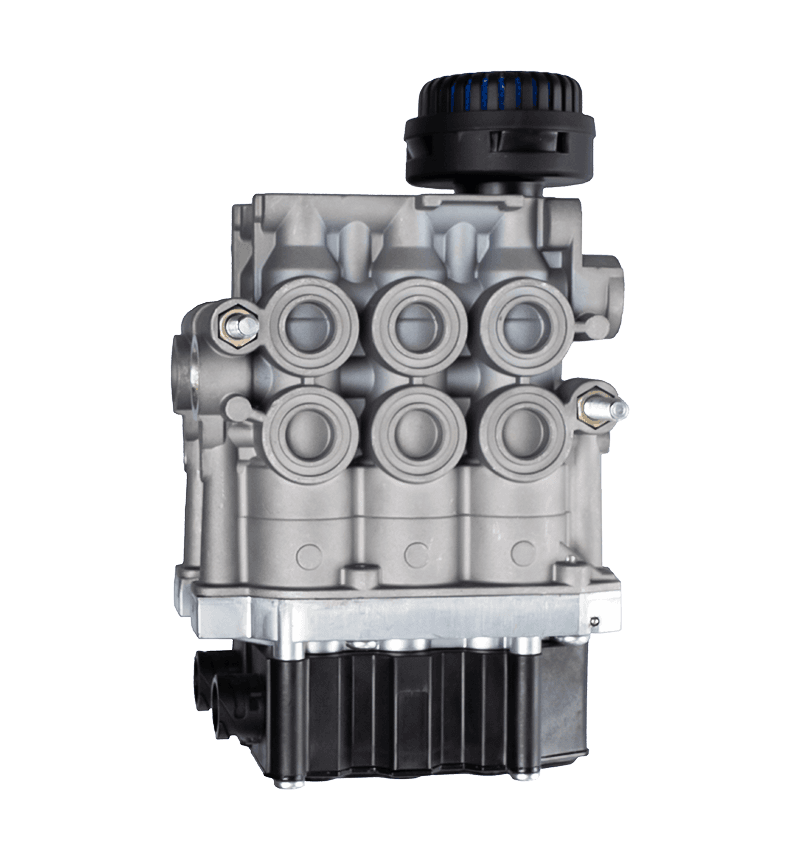
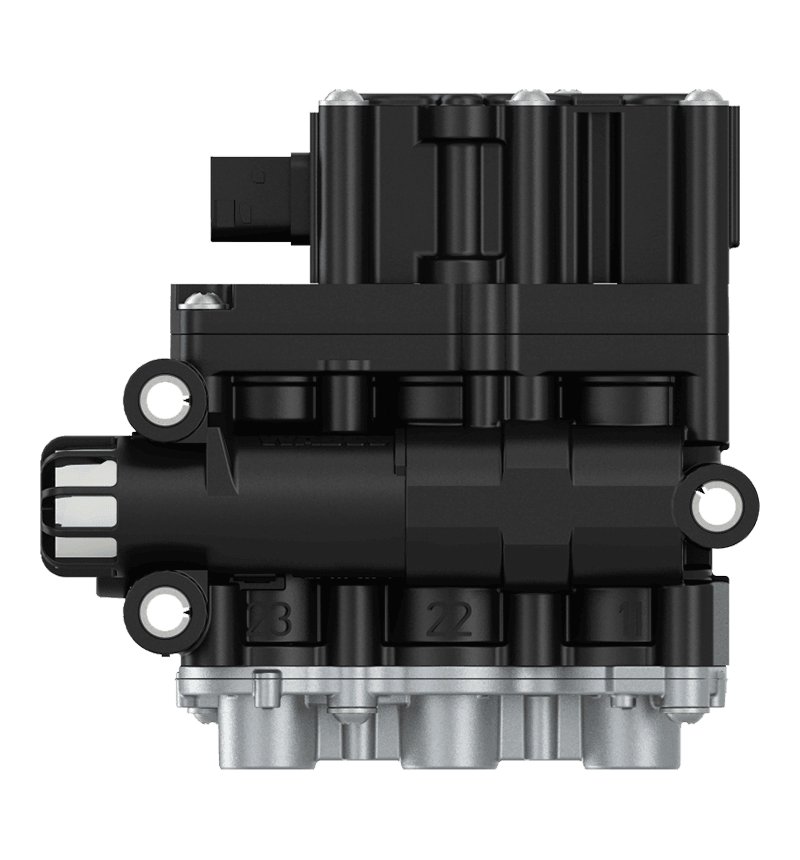
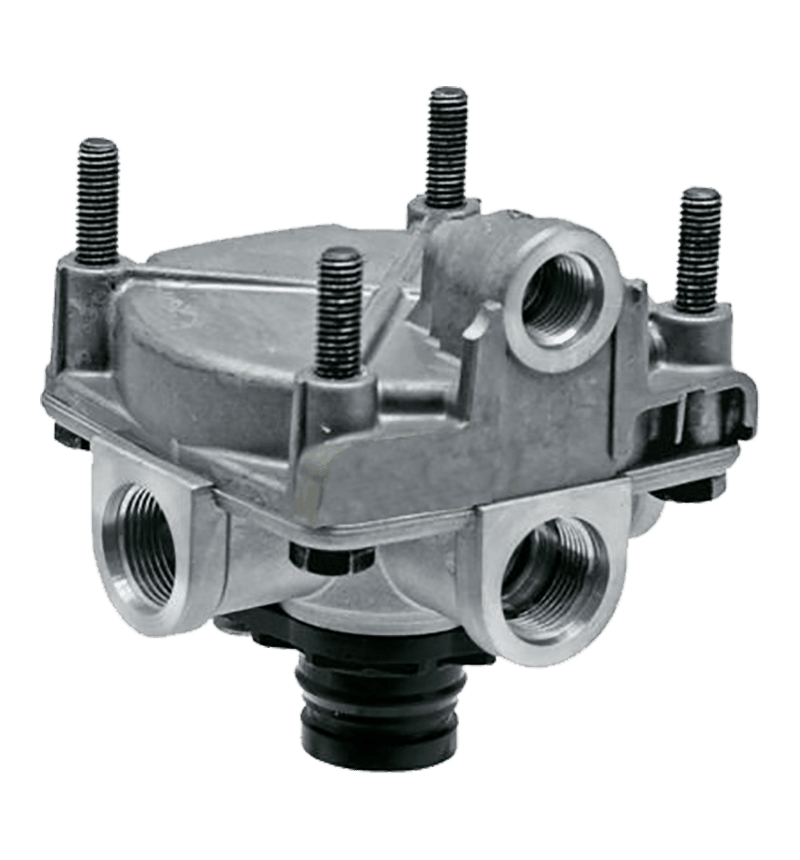 Wholesale Relay Valves Manufacturers, Suppliers, FactoryZhuji Infia Auto Parts Co., Ltd. is China Relay Valves manufacturers and Relay Valves suppliers, our factory wholesale Relay Valves.View Product →
Foot brake valves are available in several mounting configurations. The layout of the cab, the vehicle type and the original brake system design determine which one is correct for a specific application.
| Type | Typical Mounting | Common Applications | Pedal Motion |
|---|---|---|---|
| Overhead valve with hanging pedal | Valve mounted under the dash, pedal hangs down | Older cab-over trucks, some bus models | Pedal pushed forward and downward |
| Floor-mounted treadle valve | Valve below the cab floor, treadle pedal above | Conventional heavy trucks, tractors | Heel pivots, toe presses down |
| Suspended pedal assembly | Pedal suspended from a floor bracket, valve integrated | Modern trucks and coaches | Vertical swing motion |
Each configuration changes the pedal geometry and the force the driver must apply. A floor-mounted treadle valve gives a natural pivoting motion for a seated driver, which is why it remains the most common layout in conventional heavy trucks.
When replacing a foot brake valve, matching only the thread size is not enough. The valve must suit the number of brake circuits, the delivery pressure ratio, the port configuration and the vehicle's overall air brake layout.
Fleet buyers who specify replacement valves across multiple truck models will also want to check how many part numbers are needed to cover their vehicle mix. A valve line that includes multiple mounting styles and pressure ratios reduces the number of stock-keeping units. For a closer look at the specification details that matter on heavy-duty vehicles, see our article on the key features to look for when selecting a foot brake valve.
Worn or contaminated foot brake valves do not always fail completely. More often, they degrade gradually, and the driver notices the change in pedal behavior first.
Because the foot brake valve also interacts with the quick-acting components downstream, a failing valve can be mistaken for a fault in another part. If the brake response is slow on a long-wheelbase truck, check both the foot brake valve and the condition of the quick release valves near the axles before replacing major components.
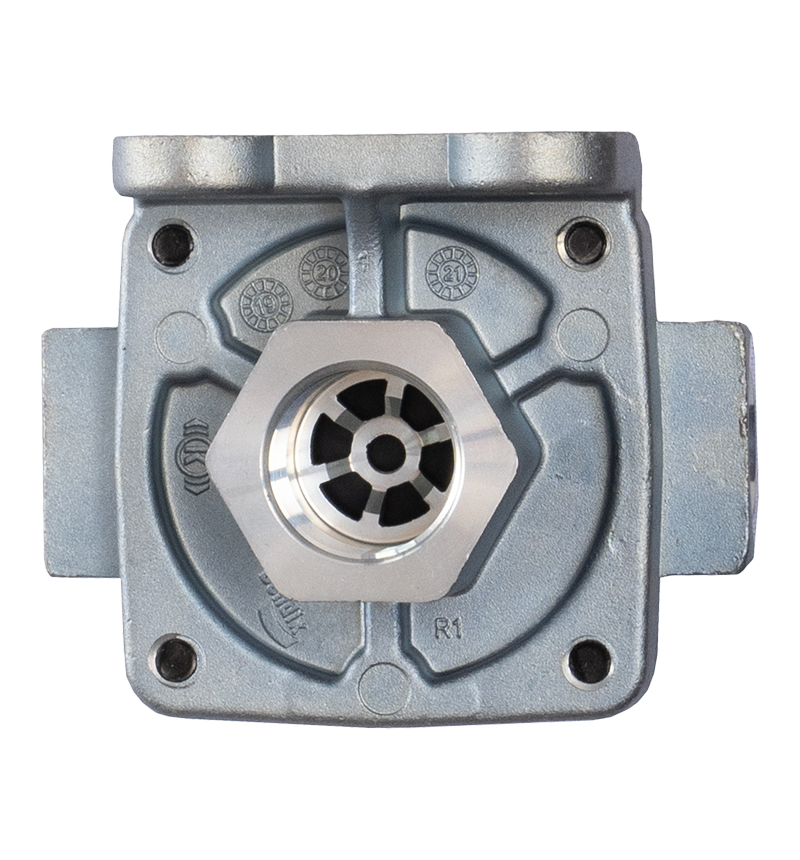 Custom Quick Release Valves Manufacturers, Suppliers, FactoryZhuji Infia Auto Parts Co., Ltd. is China Quick Release Valves manufacturers and Quick Release Valves suppliers, our factory offer custom...View Product →
Most vehicle manufacturers recommend inspecting the foot brake valve at least once a year, and more often in high-moisture or cold climates. Practical inspection steps include:
If the vehicle's air dryer is poorly maintained, the foot brake valve is usually the first component to suffer. Water and oil in the air supply attack the valve's seals and internal surfaces, so regular air dryer service is part of protecting the foot valve. Rebuilding a foot brake valve in the field is possible with a genuine seal kit, but in practice most fleets replace complete valves because the labor cost of disassembly and the risk of an incomplete repair usually outweigh the price difference.
The foot brake valve is a safety-critical component, so sourcing decisions should not rest on price alone. Casting quality, sealing material durability, functional testing and consistency from batch to batch all determine whether a valve is safe and dependable over years of service.
A manufacturer that specializes in brake system valves can offer a complete range of foot brake valves covering different mounting styles and port configurations, which simplifies part number consolidation for distributors and fleet workshops. In-house development and production also means the supplier can adjust ports, brackets or delivery characteristics when a customer works from drawings or samples.
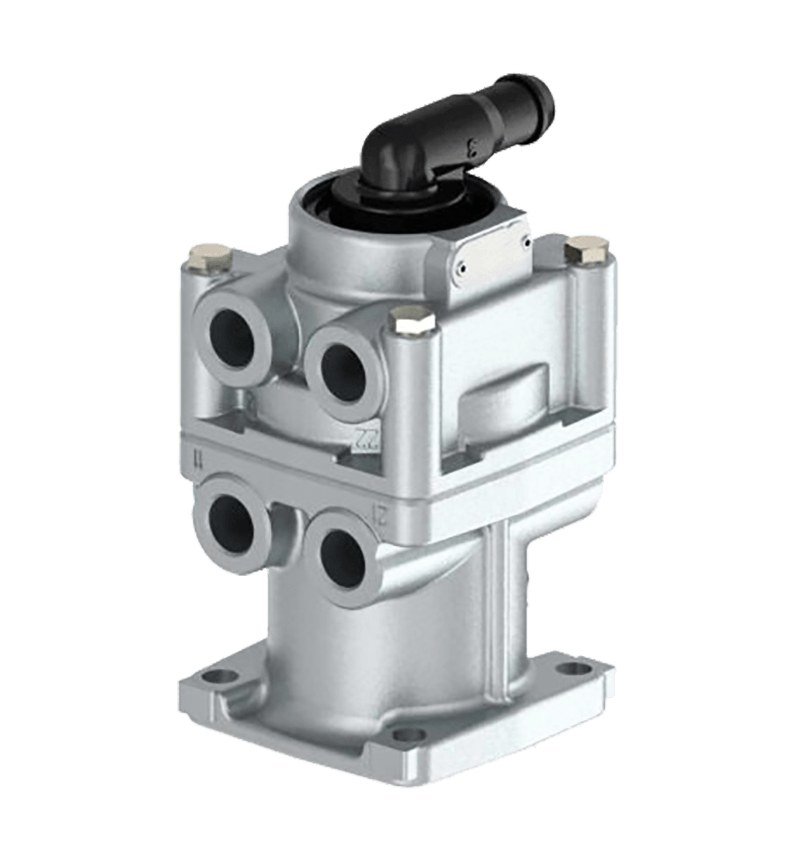 Wholesale Foot Brake Valves Manufacturers, Suppliers, FactoryZhuji Infia Auto Parts Co., Ltd. is China Foot Brake Valves manufacturers and Foot Brake Valves suppliers, our factory wholesale Foot Bra...View Product →
For buyers who manage the entire brake control circuit, sourcing from one valve manufacturer brings a practical advantage: the foot brake valve, relay valves, quick release valves, hand brake valves and pressure protection valves are designed as a system, so replacement parts match the original pneumatic performance instead of being matched by trial and error.
Confirm the supplier's testing procedure before placing an order. A professional manufacturer should be able to document leakage testing, pressure response and cycle performance for each valve. Ask whether the valve has been verified against the original equipment specification or only against a drawing. This is the basic due diligence that separates a competent source from a component vendor that merely resells castings.
 NO. 132 Xingye Road,Fengqiao Town ,Zhuji City,Zhejiang
 +86-13958007768 +86-13655857582
Copyright © Zhuji Infia Auto Parts Co., Ltd. All Rights Reserved.
Wholesale Truck/Bus Brake Parts Suppliers
 English
 Español