E-mail: [email protected]
E-mail: [email protected]Address: NO. 132 Xingye Road,Fengqiao Town ,Zhuji City,Zhejiang
Whatsapp: +86-13958007768
Whatsapp: +86-13655857582




Need Help
+86-13958007768
E-mail: [email protected]
E-mail: [email protected]
Address: NO. 132 Xingye Road,Fengqiao Town ,Zhuji City,Zhejiang
Whatsapp: +86-13958007768
Whatsapp: +86-13655857582
Our team is proud to offer on time guarantee and product guarantee to customer satisfaction.
Read MoreNews
 2026.08.06
 Industry News
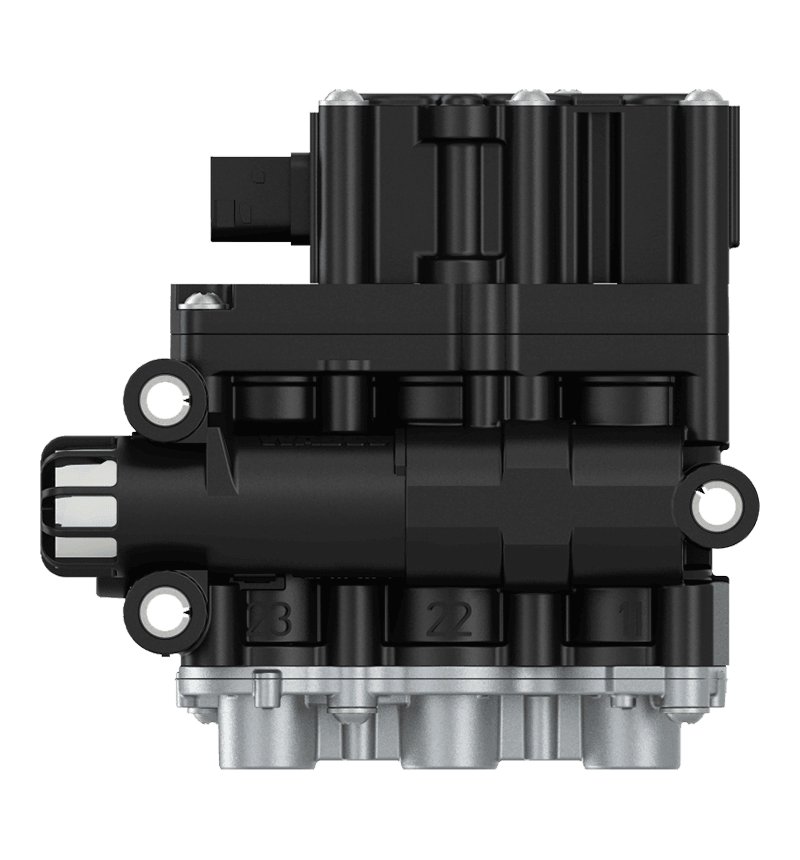
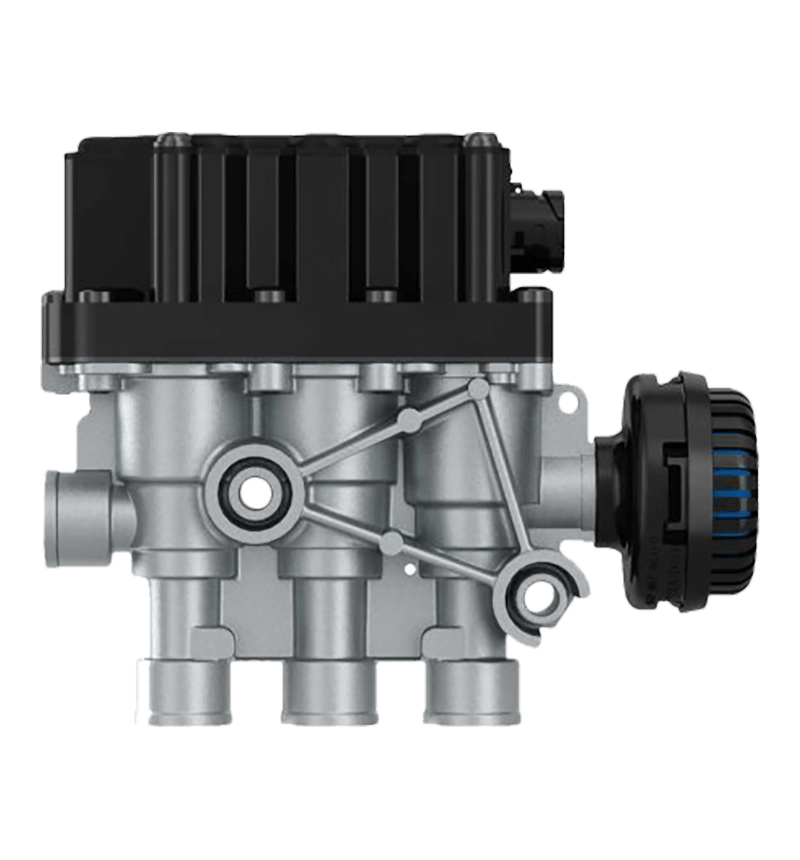
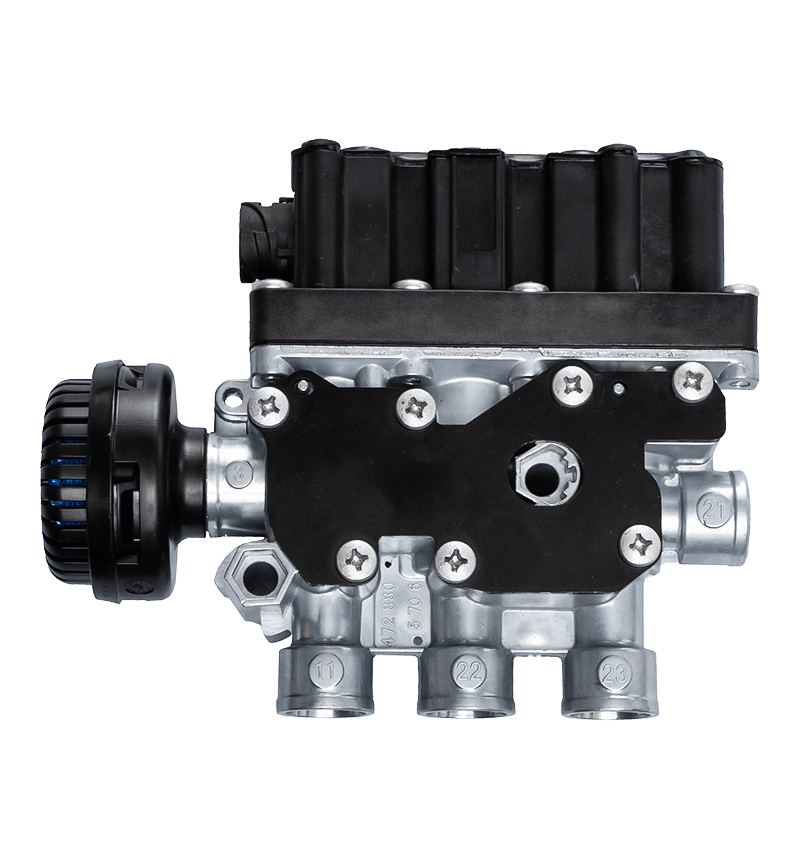
A city bus kneels at every stop so passengers can step aboard without strain. A highway tractor holds its deck level as the trailer load shifts. Both movements depend on a small component: the ECAS solenoid valve. Electronically controlled air suspension has become standard equipment on modern commercial vehicles, and the solenoid valve is the element that converts an electrical command into precise air pressure changes inside the suspension bellows. This guide explains how ECAS solenoid valves work, how they differ from mechanical leveling valves, what to check when selecting them, and how to keep them reliable in service.
An ECAS system operates as a closed control loop with three components. Height sensors measure the distance between axle and chassis. The electronic control unit (ECU) compares that reading with the target height. The solenoid valve block then adjusts air pressure in the suspension bellows to bring the chassis to the programmed level.
The valve block is the actuating element of the loop. Each valve opens an inlet passage to raise the vehicle by admitting compressed air, or an exhaust passage to lower it by releasing air. When the height sensor confirms the target is reached, the ECU closes the valve. The system's speed and accuracy depend on how quickly and precisely the valve responds.
Because the valve is electrically controlled, the system can perform functions that mechanical leveling valves cannot: hold the chassis level regardless of load changes, lower the vehicle at highway speed to reduce drag, raise ground clearance on rough roads, and adjust ride height at loading docks. These capabilities explain the industry-wide shift toward ECAS.
For a deeper technical explanation, refer to our article on the working principle and performance characteristics of ECAS valves.
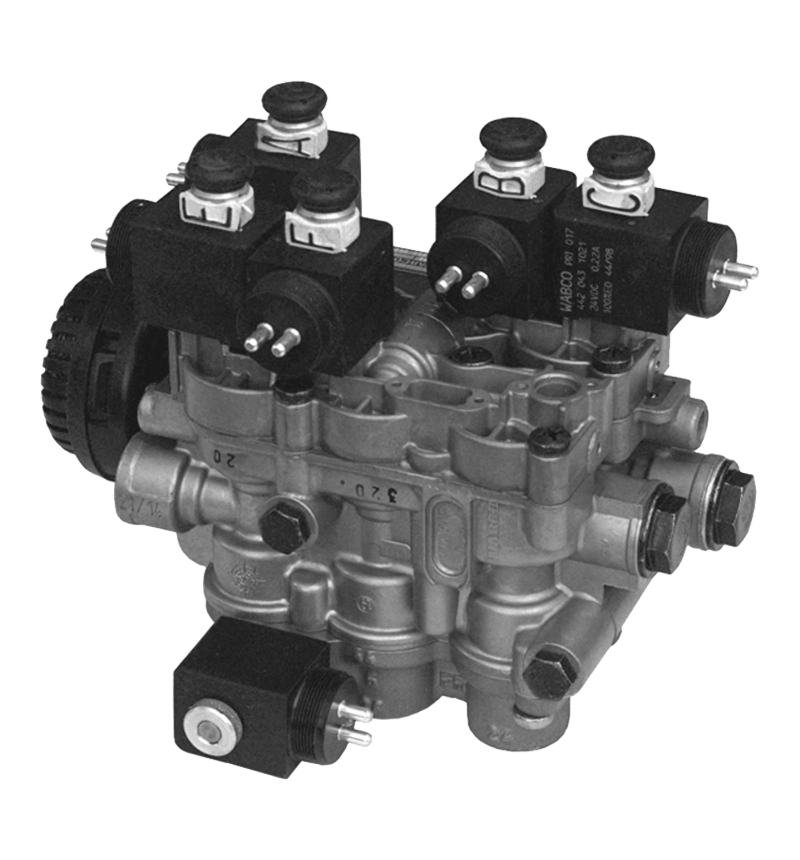
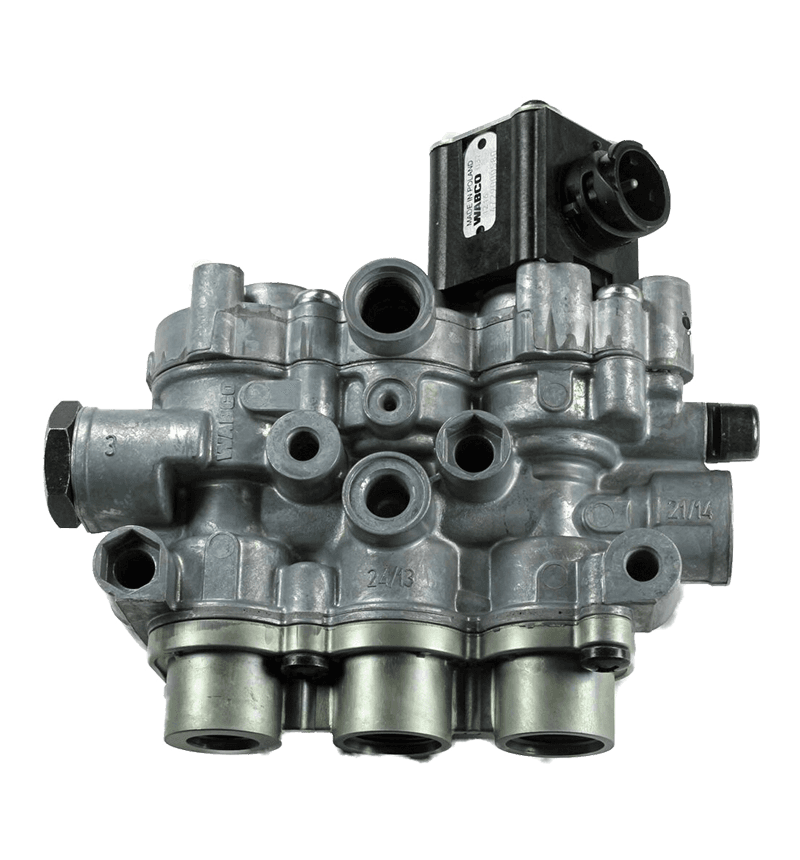
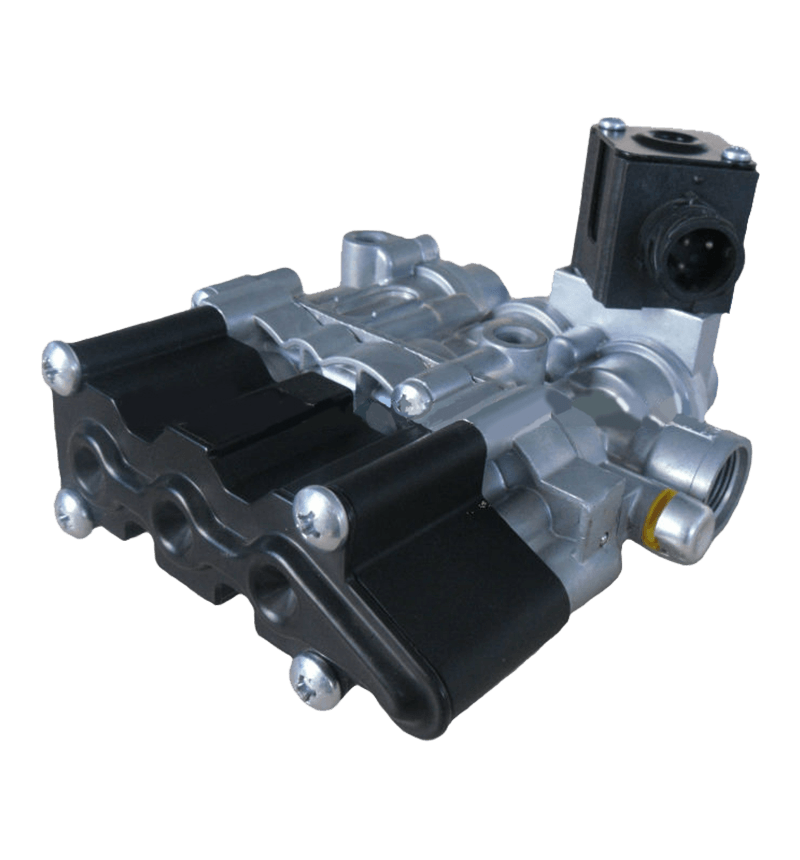
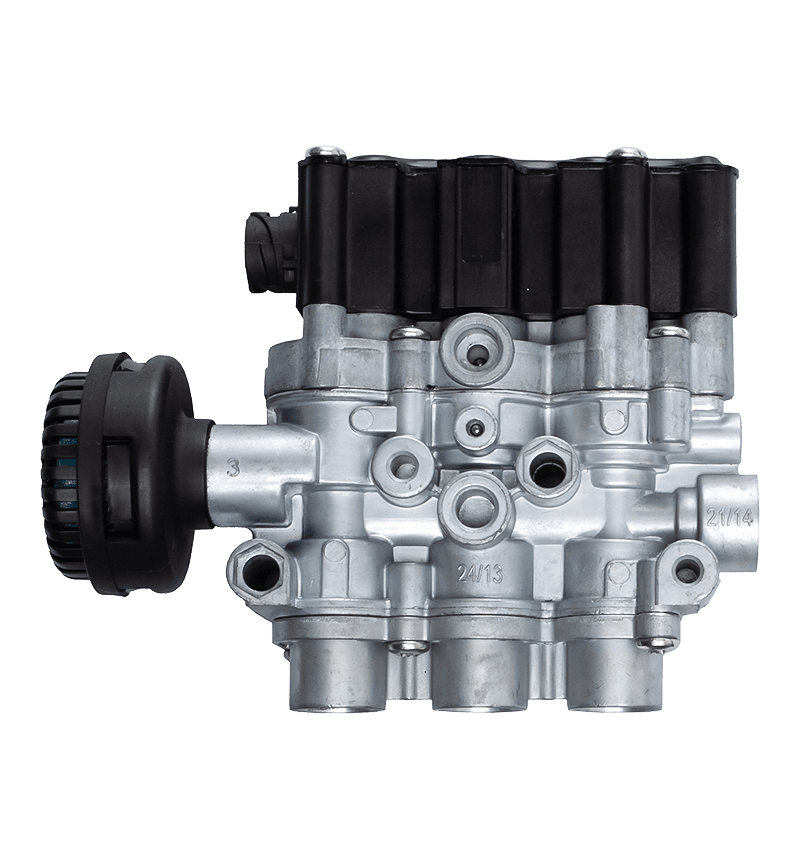
The main parts of an ECAS solenoid valve are the solenoid coil, the spool, the inlet and exhaust ports, and the sealing elements. When the ECU sends current through the coil, it creates a magnetic field that shifts the spool. That movement opens or closes the air passages inside the valve body.
The control sequence is straightforward. The ECU receives a height reading that differs from the target, energizes the coil, the spool opens the supply passage, compressed air flows into the bellow, the chassis rises, the sensor reports the new position, and the ECU closes the valve once the target is reached. Lowering follows the same sequence through the exhaust passage.
Two design characteristics determine valve performance. The first is the fit between the spool and the valve bore: a tighter clearance means less internal leakage and more consistent response, but it demands precise machining. The second is the sealing system, which must hold pressure without excessive friction or wear. Together they define precision, service life, and reliability.
There is also a difference between on-off valves and proportional valves. On-off valves simply open or close a passage. Proportional valves modulate the opening area and control the flow rate continuously, giving the ECU finer control over the smoothness of height changes. The right choice depends on the vehicle platform and the comfort level the manufacturer targets.
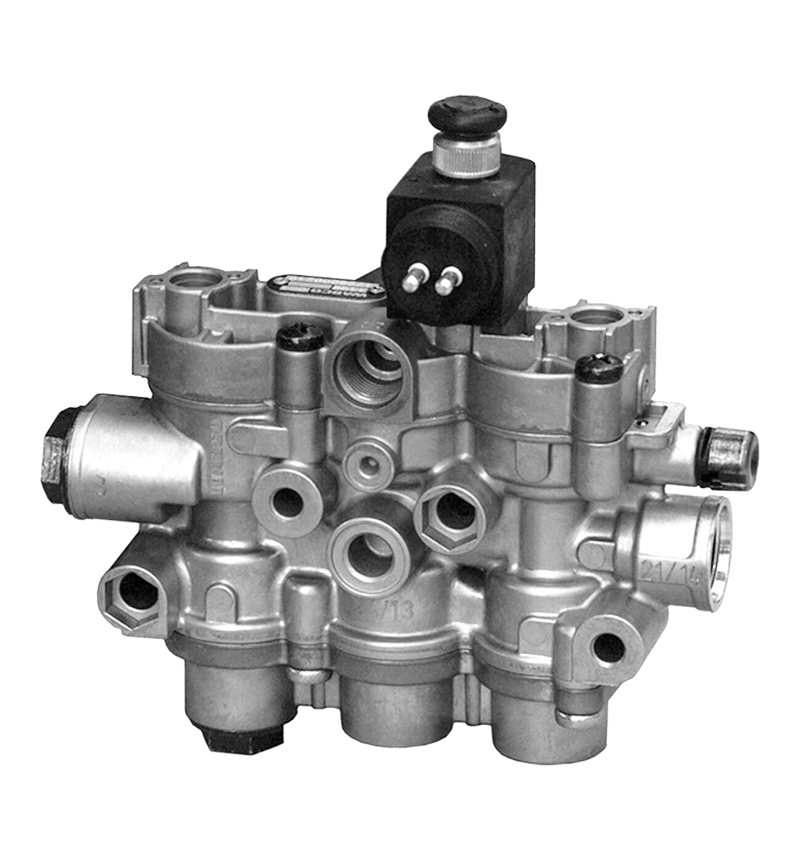
Mechanical leveling valves have served air suspension for decades, and they still fit simpler applications. However, the operational difference between them and ECAS solenoid valves is substantial.
| Operating dimension | ECAS solenoid valve | Mechanical leveling valve |
|---|---|---|
| Control signal | Electrical command from the ECU | Mechanical movement of a linkage |
| Height control | Multiple programmable presets | One fixed mechanical setting |
| Load compensation | Automatic via height sensors | Limited or none |
| Fault feedback | Fault codes recorded by the ECU | Visual inspection required |
Three differences matter most in practice. First, precision. A mechanical valve holds the vehicle at a height set by linkage geometry. If the load changes, the height changes too, unless the linkage physically moves. An ECAS valve works with the height sensors to hold the programmed level whether the vehicle is empty or fully loaded.
Second, diagnostics. The ECU monitors each valve and records a fault code when a valve fails to respond. A technician can identify the faulty circuit in minutes. A mechanical valve gives no feedback at all; a problem appears only as a visible height error or a slow leak.
Third, functionality. City buses use kneeling to lower the entry step. Coaches reduce ride height at speed to save fuel. Trailers use load-sensing leveling to keep the coupling height stable. None of these features are possible with a mechanical valve alone. For programs that still operate conventional air suspension, we also offer mechanical leveling valves alongside our ECAS product line.
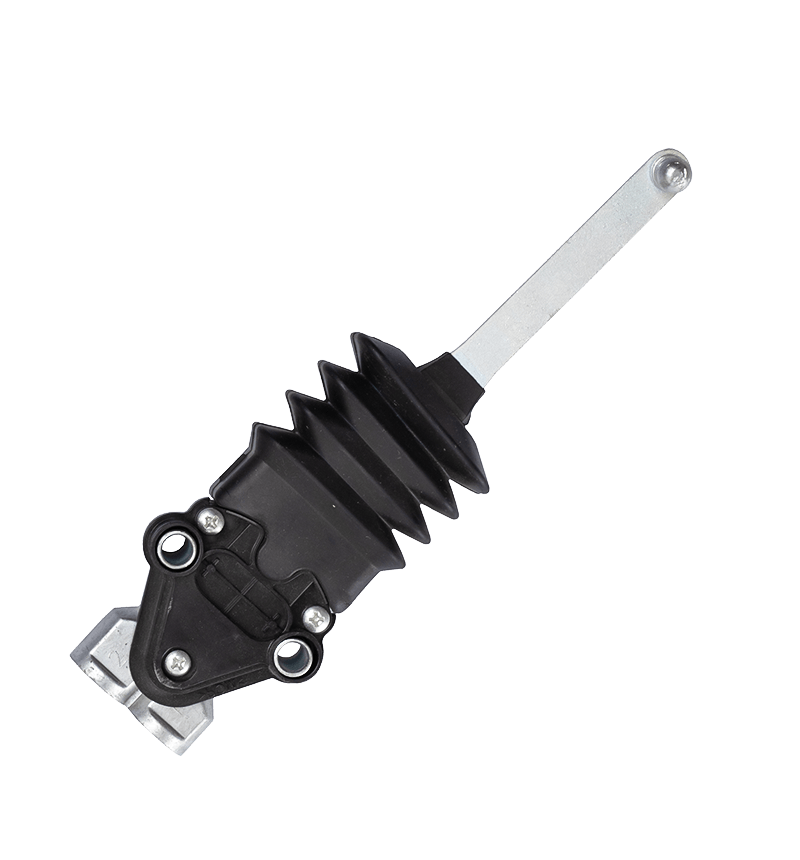 OEM/ODM Leveling Valves Manufacturers, Suppliers, FactoryZhuji Infia Auto Parts Co., Ltd. is China Leveling Valves Manufacturers and Leveling Valves Suppliers, our factory offer OEM/ODM Leveling...View Product →
Selecting an ECAS solenoid valve means matching both technical specifications and supplier capability. These criteria separate a dependable choice from a costly one:
Technical parameters are only half of the decision. The supplier must reproduce those parameters consistently across every production batch. A valve that performs well as a prototype but drifts in mass production creates warranty costs and fleet downtime. Supplier evaluation therefore belongs in the same conversation as product selection.
Compatibility works at three levels: electrical interface, pneumatic interface, and control behavior. The connector must fit the vehicle harness, or an adapter must be available. The air ports must match the tubing and fittings of the suspension system. And the valve must respond correctly to the signals the ECU sends, which means matching the voltage and current characteristics the controller expects.
Aftermarket programs often prefer universal valves with adapters so a single product can cover many vehicles. OEM programs require the opposite: a valve developed around the customer's drawings, test specifications, and installation space. A manufacturer with in-house development capability can verify fit, flow, and electrical behavior before mass production begins.
See our analysis of ECAS solenoid valve compatibility across vehicle models for a more detailed discussion.
ECAS solenoid valves fail for a small number of reasons. Knowing them keeps downtime short:
The symptoms are equally specific. The vehicle cannot reach its commanded height. One side sits lower than the other. The height fluctuates during driving. The ECU reports a fault code for the leveling circuit. The compressor runs more often than normal. For a detailed breakdown, read our guide to the symptoms of ECAS solenoid valve blockage or leakage.
When a fault is suspected, follow this sequence:
Most valve failures trace back to contaminated air. Water condensing inside the air tank reaches the valve block, accelerates corrosion, and degrades seals. Compressor oil carryover and desiccant dust cause similar damage. Drain the air tanks on schedule, and choose properly rated air dryers for moisture control with desiccant cartridges replaced on the manufacturer's interval. Also inspect fittings for leaks and never disconnect electrical connectors while the system is under pressure.
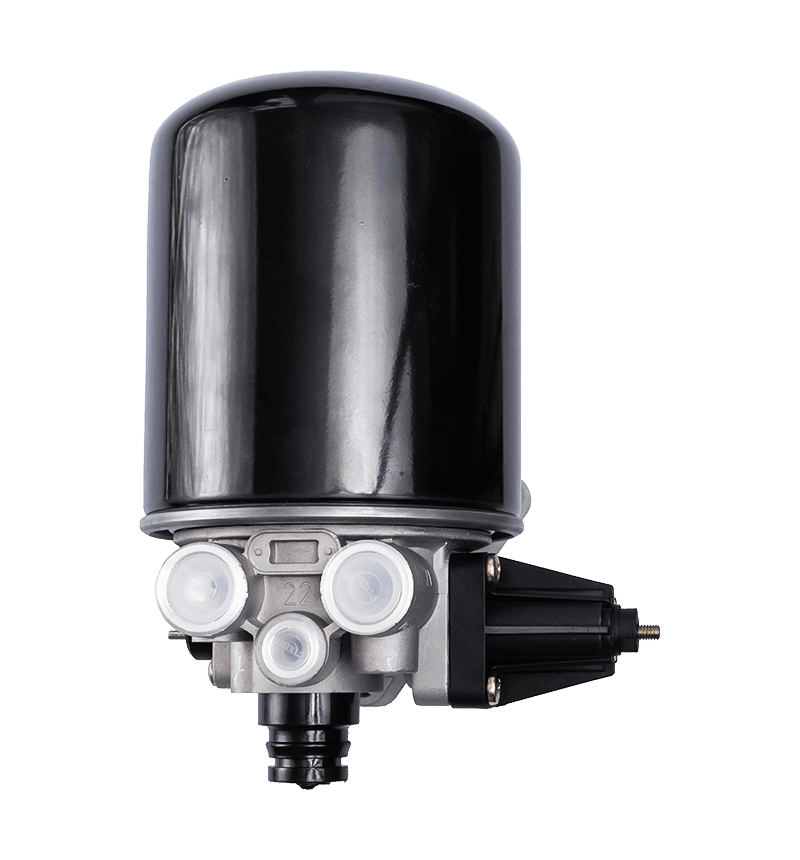 Wholesale Air Dryers Manufacturers, Suppliers, FactoryZhuji Infia Auto Parts Co., Ltd. is China Air Dryers manufacturers and Air Dryers suppliers, our factory wholesale Air Dryers.View Product →
Climate matters too. In cold regions, seals lose flexibility and may crack, especially when water is present. In hot regions, coil temperature rises and insulation ages faster. The valve and the surrounding system must be matched to the operating environment.
For a complete schedule of service actions, see our recommended maintenance practices to extend ECAS solenoid valve lifespan.
In a mass-produced ECAS valve, the difference between a good product and a poor one is rarely visible from the outside. It lives in the clearance between the spool and the bore, the consistency of the coil winding, and the quality of the seals. These are production issues, and they determine whether a valve serves its full life or fails early.
Inconsistent machining produces valves with different response times and leakage levels within the same batch. Uneven coil winding creates hotspots that age insulation quickly. Poor seal assembly leaks under pressure. None of these defects appear in a datasheet or a product photo. They surface later, as warranty claims and roadside failures. Our article on ensuring consistency and reliability in ECAS solenoid valve production explains the process controls that prevent them.
A serious manufacturer also offers custom development. That means reading a customer's drawing, converting it into a production-ready valve, and iterating on prototypes until performance matches the requirement. For OEM programs, where the valve must fit a specific installation envelope and communicate with a specific ECU, custom development is not a convenience; it is a necessity.
InfiaBrake, founded in 2007 in Zhuji, China, is a specialized manufacturer of valves for vehicle braking and air control systems. ECAS solenoid valves are a core product line within a range that spans more than twenty product families covering braking, suspension, and air management. The company develops products according to customer drawings and samples, and supports supply arrangements with a dedicated technical team and a direct sales channel. For procurement teams, that combination of specialization, development capability, and direct communication makes a dependable partner.
An ECAS solenoid valve is a small component with a large influence on vehicle safety, comfort, and operating cost. Select it on real technical data, match it to the vehicle's electrical and pneumatic architecture, and source it from a manufacturer with proven control over production quality. That is what keeps a fleet riding level mile after mile. To review specifications and discuss custom development for your platform, explore our ECAS solenoid valves product range, or contact our sales team directly by email or WhatsApp.
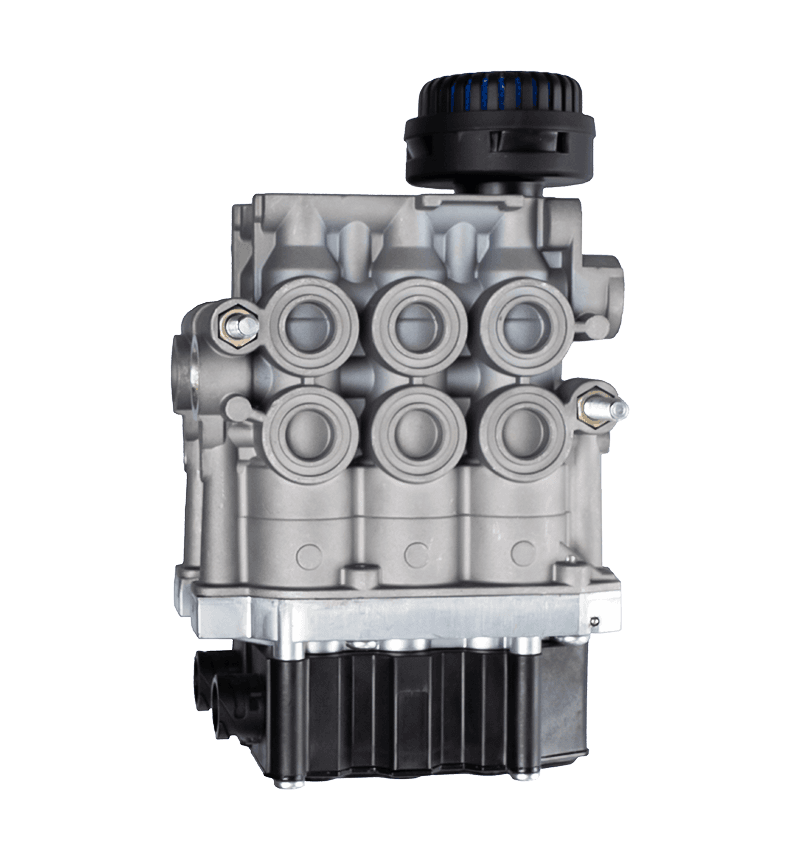 OEM/ODM Ecas Valve Manufacturers, Ecas Solenoid Valves SuppliersAs professional China ecas valve manufacturers and ecas solenoid valves suppliers, Zhuji Infia Auto Parts Co., Ltd. offer OEM/ODM ecas so...View Product →
 NO. 132 Xingye Road,Fengqiao Town ,Zhuji City,Zhejiang
 +86-13958007768 +86-13655857582
Copyright © Zhuji Infia Auto Parts Co., Ltd. All Rights Reserved.
Wholesale Truck/Bus Brake Parts Suppliers
 English
 Español