E-mail: [email protected]
E-mail: [email protected]Address: NO. 132 Xingye Road,Fengqiao Town ,Zhuji City,Zhejiang
Whatsapp: +86-13958007768
Whatsapp: +86-13655857582




Need Help
+86-13958007768
E-mail: [email protected]
E-mail: [email protected]
Address: NO. 132 Xingye Road,Fengqiao Town ,Zhuji City,Zhejiang
Whatsapp: +86-13958007768
Whatsapp: +86-13655857582
Our team is proud to offer on time guarantee and product guarantee to customer satisfaction.
Read MoreProtection Valves OEM/ODM
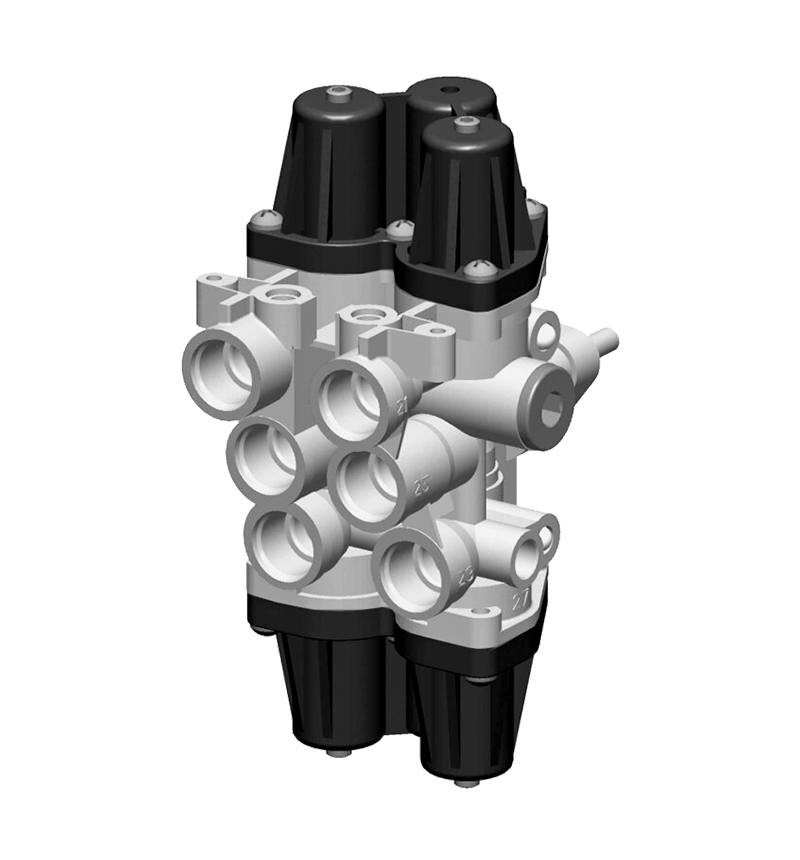
YFY No.
YFY12025
TECHNICAL DATAILS
Port 21,22,23,24,25,26=M22x1.5VOSS
Open Press: 21,22:9.0BAR,23,24,25,26:7.5BAR
VEHICLES
DAF,MERCEDES,MAN
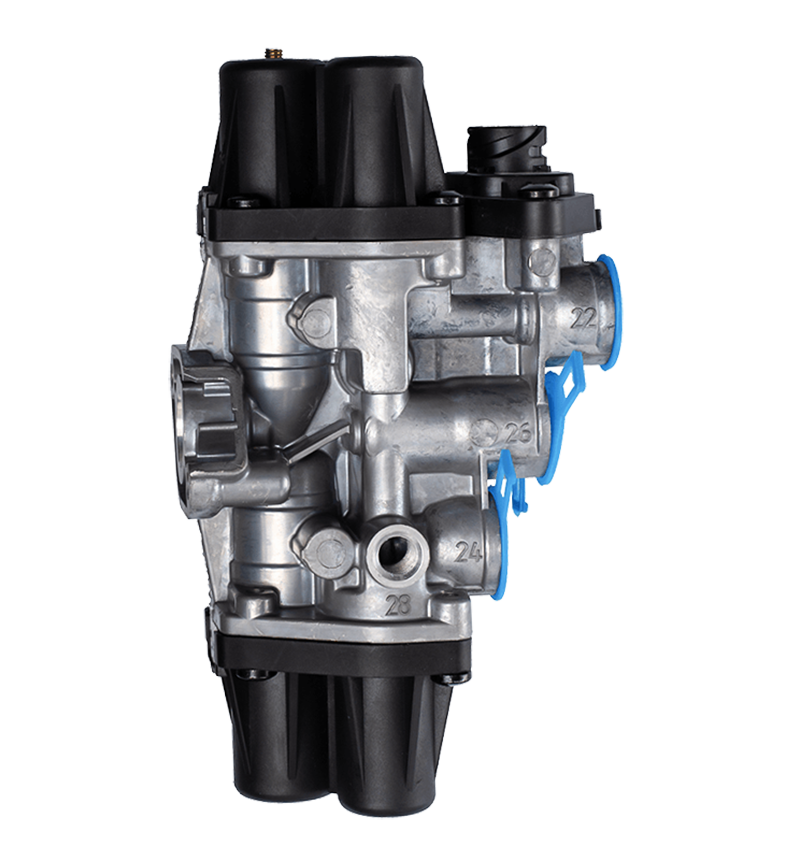
YFY No.
YFY12026
TECHNICAL DATAILS
Port 21,22,23,24,25,26=M22x1.5VOSS
Open Press: 21,22:9.0BAR 23,24,25,26:7.5BAR
VEHICLES
DAF,MERCEDES
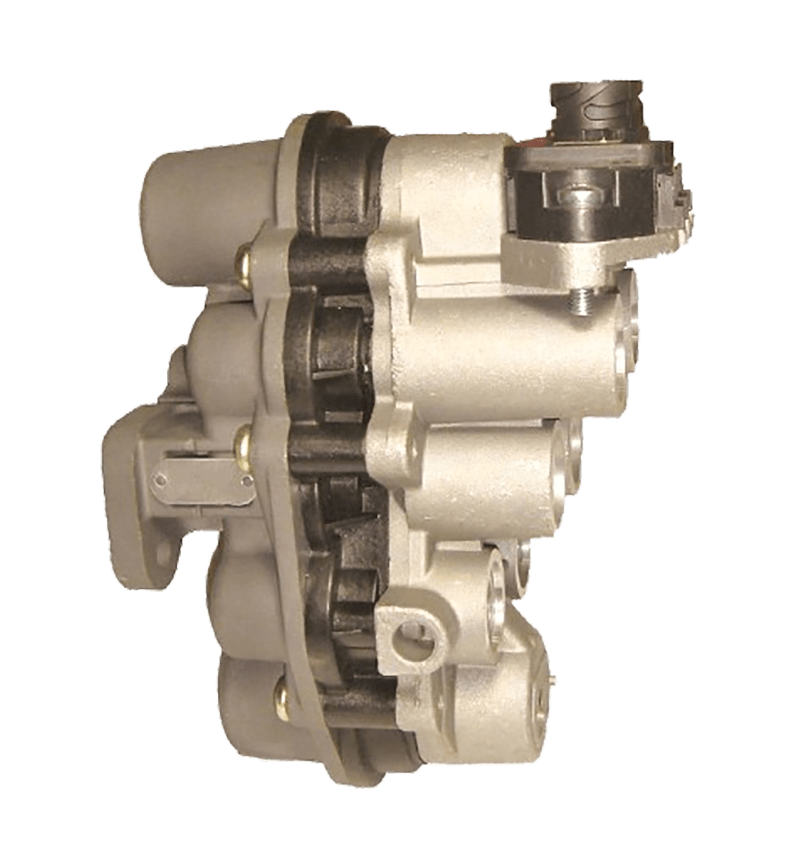
YFY No.
YFY12027
TECHNICAL DATAILS
Port 1,25,26=M16x1.5VOSS
Port 21,22,23,24,25,26=M22x1.5VOSS
Open Press: 21,22,24:7.5BAR 23:8.0BAR
VEHICLES
DAF
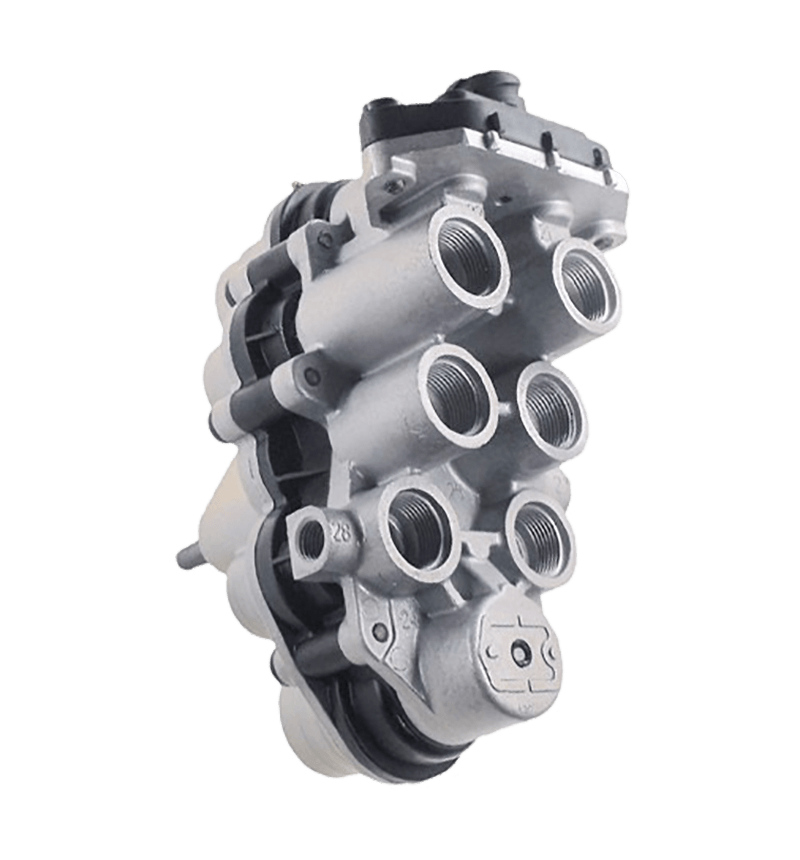
YFY No.
YFY12028
TECHNICAL DATAILS
Port 1,25,26=M22x1.5VOSS
Port 21,22,23,24=M22x1.5VOSS
Open Press: 21,22:9.0BAR,23,24:7.5BAR
VEHICLES
MERCEDES
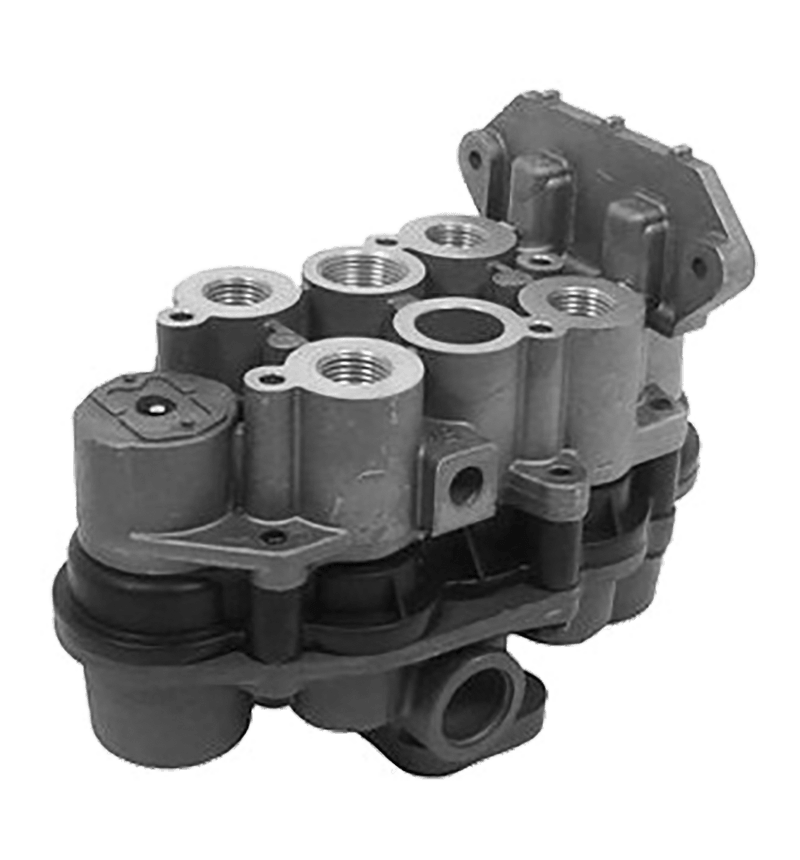
YFY No.
YFY12029
TECHNICAL DATAILS
Port 1,25,26=M22x1.5
Port 21,22,23,24=M16x1.5
Open Press: 21,22:7.5BAR,23,24:8.0BAR
VEHICLES
IVECO
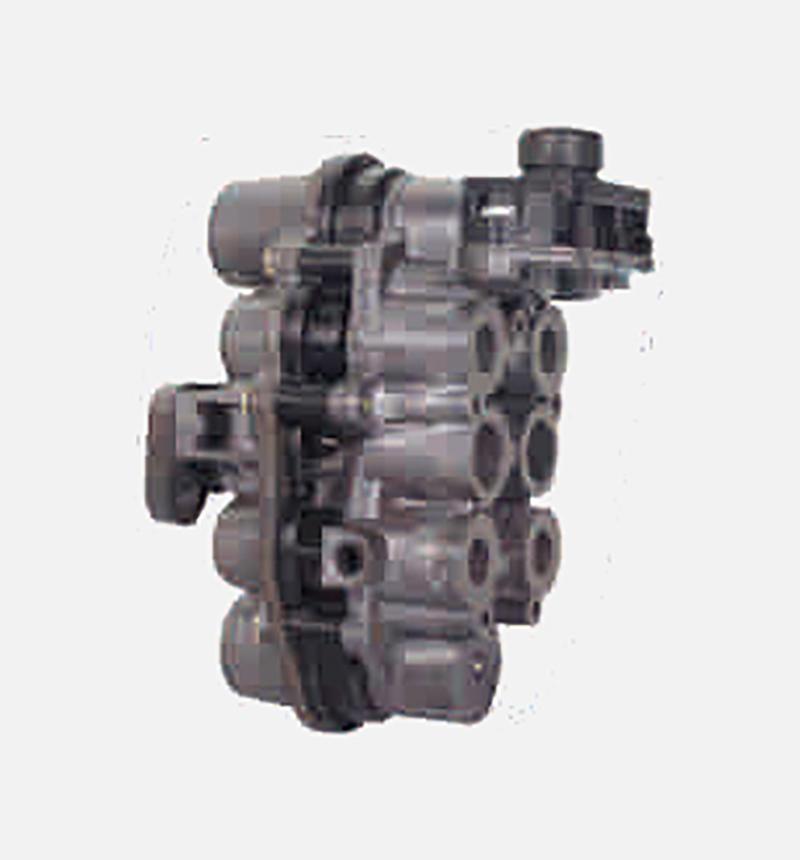
YFY No.
YFY12030
TECHNICAL DATAILS
Port 1,25,26=M22x1.5
Port 21,22,23,24=M16x1.5
Open Press: 21,22:7.5BAR,23,24:8.0BAR
VEHICLES
IVECO
The DAF Four Circuit Protection Valve is a critical component used in commercial vehicle braking systems. In large trucks and commercial vehicles, the reliability of the braking system is crucial as it is directly related to the safety of the vehicle and the lives of the driver and other road users. This protection valve is usually installed at a key location in the braking system, and its main function is to monitor and protect the four main circuits of the braking system. These four circuits usually correspond to different wheels or axles of the vehicle, and each circuit is responsible for controlling the braking of a part of the wheels. When there is a problem with the braking system, such as a leak or other failure in one of the circuits, the DAF Four Circuit Protection Valve will automatically detect and take measures to protect the normal operation of the entire braking system. It disconnects the affected circuit to prevent the problem from growing further or causing the entire braking system to fail. By using this protection valve, even if problems with certain brake system circuits occur, the vehicle can still maintain a certain degree of braking capability, thereby reducing the risk of accidents and increasing the safety of the driver and other road users.
ECAS Valve Overview: Precision Control for Modern Vehicles ECAS valves are essential components in electronic suspension systems. Electronic ECAS valves enable precise control of vehicle height and s...
View MoreIntroduction to Trailer Control Valves Trailer control valves play a crucial role in the braking and safety systems of trailers, especially in commercial vehicles. These valves are responsible for reg...
View MoreIntroduction to Vehicle Brake Valves Vehicle brake valves play a critical role in controlling the braking system's pressure and ensuring that the brakes function effectively and safely. These valves r...
View MoreUnderstanding the Role of ECAS Valves in Air Suspension Systems ECAS valves are key components in electronically controlled air suspension systems, where they regulate the intake and exhaust of compre...
View MoreRole of Response Speed in ECAS Valve Operation The ECAS valve, commonly used in electronically controlled air suspension systems, plays a central role in adjusting vehicle height and maintaining ride ...
View MoreMaterial Selection for High-Pressure and High-Temperature Environments One of the most important considerations when using solenoid valves for high-pressure or high-temperature fluids is the selection...
View MoreIntroduction to ECAS Valves The ECAS valve, short for Electronic Control Air Suspension valve, is a critical component in air suspension systems used in a variety of vehicles, particularly heavy-duty ...
View MoreIntroduction to ECAS Valves and Suspension Systems The ECAS (Electronic Control Air Suspension) valve is a vital component in modern air suspension systems, particularly in commercial vehicles, trucks...
View MoreAs an indispensable and important equipment in the field of industrial production and heating, the safety performance of steam boilers has always been the focus of attention inside and outside the industry. Among the many safety protection measures, the selection and configuration of protection valves are particularly important. In view of the specific working conditions and medium characteristics of steam boilers, the non-enclosed wrench full-lift safety valve has become the best among many choices. During the operation of the steam boiler, the heat generated by the combustion of fuel is continuously transferred to the water in the boiler, which gradually converts it into high-temperature and high-pressure steam. In this process, if the pressure inside the boiler cannot be controlled in a timely and effective manner, it may cause the boiler to operate at overpressure, which in turn causes serious safety accidents. Therefore, in order to ensure the safe operation of the boiler, a reliable safety valve must be set to automatically adjust and release excess steam pressure.
The reason why the non-enclosed wrench full-lift safety valve has become the first choice for steam boilers is mainly due to its following characteristics:
Adapting to the characteristics of steam medium: Steam is a compressible medium. When the pressure in the boiler increases, it needs to be discharged quickly and in large quantities to balance the system pressure. The fully open safety valve with a non-enclosed wrench has the function of fully opening. It can open quickly and completely when the pressure rises, discharge a large amount of steam, and effectively prevent the boiler from overpressure.
Excellent safety performance: This type of safety valve adopts high-precision springs and sensitive sensing mechanisms, which can accurately sense the pressure changes inside the boiler and respond quickly when the pressure exceeds the set value. Its large discharge volume and fast response speed ensure that the boiler can quickly reduce the pressure in an emergency and avoid safety accidents.
Convenience of operation and maintenance: The design with a wrench allows the safety valve to be manually operated when necessary, such as checking the flexibility of the valve disc and performing emergency pressure relief. This not only improves the flexibility of the safety valve, but also facilitates the inspection and replacement of the safety valve in daily maintenance. In addition, its simple structure, easy disassembly and cleaning characteristics also reduce maintenance costs and workload.
Economic and applicability: The fully open safety valve with a non-enclosed wrench is suitable for steam boilers of various capacities, especially medium and large boilers. Its moderate cost and high cost-effectiveness make it have a wide range of application prospects in the market. At the same time, its excellent performance and reliable quality have also won the trust and praise of users.
Performance in practical applications
In the actual operation of steam boilers, the non-enclosed wrench full-lift safety valve has demonstrated excellent performance and reliability. When the internal pressure of the boiler rises to the set value, the safety valve can quickly open and discharge a large amount of steam, thereby effectively preventing the boiler from overpressure operation. At the same time, its precise adjustment ability and stable discharge performance also ensure the smooth change of the internal pressure of the boiler, avoiding damage to the boiler equipment caused by excessive pressure fluctuations.
In addition, in emergency situations, such as serious accidents such as boiler explosions, the non-enclosed wrench full-lift safety valve can also serve as the last line of defense to reduce system pressure and slow down the development of accidents by discharging a large amount of steam. This provides valuable time and space support for subsequent rescue work.
 NO. 132 Xingye Road,Fengqiao Town ,Zhuji City,Zhejiang
 +86-13958007768 +86-13655857582
Copyright © Zhuji Infia Auto Parts Co., Ltd. All Rights Reserved.
OEM/ODM Protection Valves Manufacturers
 English
 Español
