E-mail: [email protected]
E-mail: [email protected]Address: NO. 132 Xingye Road,Fengqiao Town ,Zhuji City,Zhejiang
Whatsapp: +86-13958007768
Whatsapp: +86-13655857582




Need Help
+86-13958007768
E-mail: [email protected]
E-mail: [email protected]
Address: NO. 132 Xingye Road,Fengqiao Town ,Zhuji City,Zhejiang
Whatsapp: +86-13958007768
Whatsapp: +86-13655857582
Our team is proud to offer on time guarantee and product guarantee to customer satisfaction.
Read More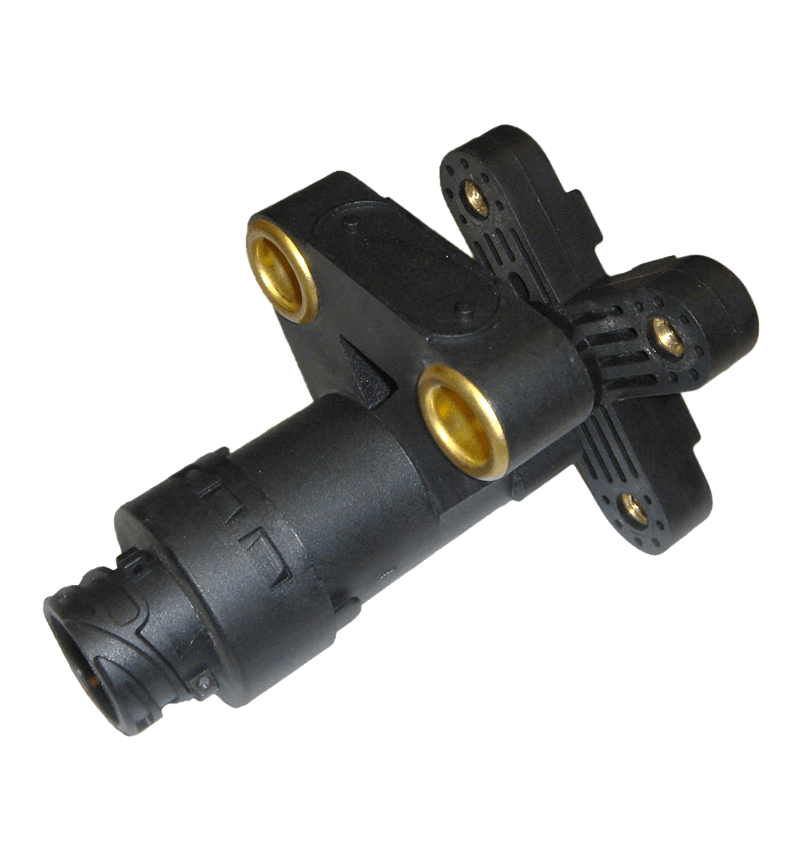
YFY No.
YFY03049
TECHNICAL DATAILS
BAYONET(DIN)72585/ 8-16V DC
VEHICLES
MERCEDES,MAN,IVECO,SCANIA
Semi Trailer Leveling Valve is one of the crucial components in the semi-trailer suspension system. Its function is to automatically adjust the vehicle height according to the vehicle's load and road conditions to ensure vehicle stability, driving comfort and safety. These valves have a variety of properties that make them a core component in a semi-trailer suspension system. The semi-trailer balance valve has an automatic adjustment function, which can instantly sense changes in vehicle load and quickly make adjustments to maintain vehicle body balance. Its high-precision design ensures fast and accurate response to load changes, ensuring that the suspension system remains stable under different conditions. These valves are typically made from durable materials to handle the various road conditions and environments the semitrailer operates in. This durability ensures long-term stable and reliable performance of the valve, reducing the need for maintenance and replacement and improving the overall reliability of the semi-trailer. The energy-saving and environmentally friendly characteristics of the semi-trailer balance valve are also worthy of attention. By effectively adjusting the suspension system, these valves can reduce the vehicle's fuel consumption, reduce its impact on the environment, and meet the requirements of sustainable development. safety performance of these valves. Maintaining body balance and stability is vital to the safety of drivers and other road users. The semi-trailer balance valve is designed to ensure that the semi-trailer maintains good stability and controllability during driving, thereby reducing the risk of traffic accidents. The semi-trailer balance valve plays an irreplaceable role in the semi-trailer suspension system and has various features such as automatic adjustment, high precision, durability, energy saving, environmental protection and safety. These characteristics make these valves a key guarantee for the performance, comfort and safety of semi-trailers, providing reliable support and guarantee for the operation of semi-trailers.
A compressed-air hiss under the cab usually means one thing: a brake valve has failed. A vehicle brake valve is not a single part, but a family of pneumatic components that control the pressure, timi...
View MoreWhen a heavy truck loses brake response at the pedal, a workshop might spend an afternoon checking slack adjusters, brake chambers and compressor output before finally removing the treadle valve from...
View MoreA truck that tilts to one side when parked, a suspension warning light that comes on after a cold morning, and an air compressor that runs almost constantly: these are signs of an ECAS valve that is ...
View MoreThe clutch pedal is stiff, the next gear is difficult to find, and a low hissing sound appears every time you push it down. If that sounds familiar, the clutch servo on your truck is probably not wor...
View MoreEvery fleet technician knows the complaint: the clutch pedal is getting harder to push, and by the end of a long shift the driver's left leg is tired. On modern commercial trucks and buses, that effo...
View MoreA city bus kneels at every stop so passengers can step aboard without strain. A highway tractor holds its deck level as the trailer load shifts. Both movements depend on a small component: the ECAS s...
View MoreExecutive Summary Optimizing electronically controlled air suspension systems relies heavily on the precise pneumatic regulation provided by ECAS solenoid valves. When choosing or troubleshooting t...
View MorePressure Limiting Valves: The Engineering Guide to System Protection and Safety Pressure limiting valves are the most critical safety components in any hydraulic or pneumatic system, preventing cat...
View More
Leveling valves, also known as vehicle suspension balancing valves, are an indispensable part of modern automobile suspension systems. The working principle of this valve is to precisely control the pressure in the air spring to ensure that the vehicle can maintain a stable suspension state under various driving conditions. Leveling valves are cleverly designed. They consist of precise inlet valves, outlet valves, intermediate chambers, and complex control mechanisms. When the vehicle load changes or it is driving on uneven roads, these valves will respond quickly and balance the vehicle height by adjusting the internal pressure, thereby providing optimal driving comfort and handling stability.
The working principle of leveling valves involves multiple fields such as fluid mechanics, material science, and precision manufacturing technology. In order to ensure the efficient operation of the valves, manufacturers need to use high-quality materials and advanced production processes. In addition, leveling valves also need to undergo rigorous testing and verification to ensure that they can work reliably under various extreme conditions.
With the rapid development of the automobile industry and consumers' pursuit of driving comfort, the market demand for leveling valves has shown a steady growth trend. At present, this valve has been widely used in various commercial vehicles, off-road vehicles and high-end passenger cars. Especially in the field of heavy trucks and buses, due to the complexity of load and road conditions, the demand for vehicle height adjustment is more urgent, so Leveling valves are more widely used.
In the future, with the rapid development of new energy vehicles and intelligent driving technology, Leveling valves will face more market opportunities and challenges. The lightweight and electrification trend of new energy vehicles will drive Leveling valves to develop in a more efficient and energy-saving direction. At the same time, intelligent driving technology has higher requirements for vehicle stability and comfort, which will also promote the continuous innovation and upgrading of Leveling valves technology. In order to meet these needs, manufacturers need to continuously invest in R&D resources to improve the technical content and added value of products.
As a professional Leveling valves manufacturer, in order to remain invincible in the fierce market competition, it is necessary to continuously carry out technological innovation and competitiveness improvement. The following are some specific strategies:
Strengthen technological research and development: increase R&D investment, introduce advanced technology and equipment, and improve the technical content and added value of products. Through cooperation with universities, scientific research institutions, etc., jointly carry out cutting-edge technology research and maintain technological leadership. In addition, you can also pay attention to the development trends in new materials, new processes and other fields, apply them to product design and manufacturing, and improve product performance and quality.
Optimize product design: Continuously optimize product design according to market demand and user feedback. Improve the cost performance of products by improving product structure, increasing material utilization, and reducing manufacturing costs. At the same time, pay attention to the reliability and durability of products to ensure that products can work stably in various harsh environments.
Expand application areas: Actively explore new application areas and markets. For example, you can pay attention to the development trends in new energy vehicles, intelligent driving and other fields, and provide customized products and solutions for these fields. In addition, you can also expand the international market and improve the international competitiveness of products.
Improve production efficiency: Improve production efficiency and product quality by introducing advanced production equipment and processes. At the same time, strengthen production management and quality control to ensure product consistency and stability. In addition, modern manufacturing technologies such as digitalization and intelligence can be used to improve production efficiency and flexibility.
Strengthen brand building: Pay attention to brand building and publicity and promotion. By participating in exhibitions, holding technical seminars and other activities, strengthen exchanges and cooperation with the industry and outside, and enhance the company's industry status and influence. At the same time, you can also strengthen the shaping and dissemination of brand image and improve brand awareness and reputation.
 NO. 132 Xingye Road,Fengqiao Town ,Zhuji City,Zhejiang
 +86-13958007768 +86-13655857582
Copyright © Zhuji Infia Auto Parts Co., Ltd. All Rights Reserved.
OEM/ODM Leveling Valves Manufacturers
 English
 Español
